

A repair shop can finish work and still face a cash-flow gap while waiting for customer payments. Net 30 accounts for auto repair shops let a business purchase from a vendor on terms and pay the invoice within 30 days. The value depends on whether the payment schedule fits the shop’s operating plan.
That timing matters, but vendor accounts do not all serve the same purpose. Before applying, consider what the account covers, whether its terms fit your expected income, and whether its application requirements and limit suit your shop. For example, an account for apparel or office supplies does not cover automotive parts.
This guide explains how Net 30 terms relate to working capital and what risks to weigh before opening an account. It also covers application decisions, payment habits, credit limits, and how to assess vendor reporting. Use these details to decide whether an account belongs in your shop’s purchasing plan, and what to understand before taking the next step.
Key Takeaways
- Calculate each Net 30 due date from the invoice date and build it into your accounts-payable routine.
- Compare vendor due dates with customer payment timing to spot cash-flow gaps before they strain working capital.
- Review credit application details and payment terms so the account fits your shop’s purchasing needs and cash position.
- Track vendor bills and statements regularly to catch discrepancies and avoid overdue balances.
- Use the article’s checklist to assess account risks and manage credit limits with a clear plan.
Cash-flow and working-capital management
Net 30 vendor terms give an auto repair shop time to pay an invoice, rather than paying immediately. The full balance is generally due within 30 days, but the payment period’s start can depend on the agreed terms. It may begin on the invoice date, ship date, or delivery date. Confirming that starting point helps establish the correct due date in your records.
The cash-flow benefit is timing, not extra income or profit. A shop may need parts and operational supplies before receiving payment for completed work. If customers pay on net-30 terms while a vendor requires payment in 10 days, the shop faces a cash-flow gap. Net 30 terms can give revenue more time to arrive before the vendor bill is due. The U.S. Small Business Administration says net 30 accounts can help businesses conserve cash while they wait for revenue.
Net 30 functions as short-term trade credit without added interest during the payment window. It shifts when cash leaves the business, but it doesn’t remove the obligation. A shop still needs enough cash to meet payroll, rent, utilities, and vendor invoices as they fall due. Map expected customer receipts against each payment date. That simple comparison can show whether a purchase fits the shop’s cash position.
Check the invoice terms before entering a due date. Adding 30 calendar days to the invoice date is a useful calculation only when the invoice date starts the payment period. If terms instead begin at shipment or delivery, use that stated date. Put the due date into your accounting system when the bill arrives. This reduces the chance that a busy service week pushes a payment past its deadline.
Early-payment discounts can change the calculation. Under 2/10 Net 30, a buyer receives a 2% discount for paying within 10 days; otherwise, the full balance is due within 30 days. A discount helps only when paying early won’t leave the shop short.
Manage incoming cash just as carefully. State payment terms and due dates clearly on customer invoices. Record payments promptly, then compare expected receipts with vendor obligations. If customer payments arrive later than planned, identify which bills are due first. This makes payment decisions more deliberate than relying on your bank balance alone.
- Enter bills promptly: Record vendor bills as they arrive, then compare them with vendor statements weekly.
- Review overdue balances: Check accounts payable aging weekly and identify bills 30 days or 60 days past due.
- Reconcile accounts: Reconcile bank and credit card accounts at least monthly.
- Reassess customer exposure: Review automotive parts customer credit limits quarterly.
These routines give the shop a current view of working capital. An accounts payable aging report separates outstanding bills by how long they’ve been unpaid. Weekly review can reveal a missed invoice or a mismatch before the balance becomes harder to manage. Set aside 30 minutes each week to match vendor statements with accounting records. Consistent checks reduce complexity and help owners make decisions using current figures.
Track discounts separately from ordinary payment activity. If discounts total $10,000 per month, that example may warrant a closer look at purchasing and payment patterns. Compare the savings with the cash used to pay early. Also review the timing of parts purchases against repair revenue and payroll dates. This helps distinguish a useful discount from a payment choice that strains available working capital.
Net 30 accounts for auto repair shops can support cash planning when the payment cycle matches the shop’s income timing. They can’t replace cash-flow tracking or make a weak margin stronger. Review bills as they arrive, keep due dates visible, and use aging reports to spot pressure early. That gives each payment a place in the operating plan, alongside payroll and other commitments.
What risks should auto repair shops consider before opening Net 30 accounts?
A Net 30 account creates a payment obligation, so assess its fit before applying. List current vendor balances, upcoming payroll, rent, and other operating commitments. Then compare those obligations with customer receipts the shop reasonably expects. A new account may improve purchase timing, but several bills can become due close together. Looking at all obligations together helps reveal whether the shop can manage another payment date without disrupting routine operations.
Don’t treat an approved credit limit as a spending target. It reflects the vendor’s approved exposure, not what your shop can safely repay. Order only the parts or supplies the business needs, and track every open invoice. If repairs take longer than expected or customers delay payment, you may still owe the vendor on schedule. Setting a conservative purchasing cap can help control that exposure.
Application details deserve careful attention, too. Use the business’s correct legal name, EIN, billing details, and supplier references when requested. A complete application can include 3-5 supplier trade references. Keep the submitted information and the account agreement together, so staff can resolve questions about authorized purchasing or payment terms. Don’t assume every vendor uses the same application criteria or grants the same terms.
Terms can also change as a supplier relationship develops. New customer relationships in automotive parts distribution commonly begin with COD or Net 15 terms. Suppliers may extend terms progressively from Net 15 to Net 30 and then Net 45 based on payment history. Build your plan around the terms currently granted. Don’t commit to purchases that require a longer payment window until those terms are actually in place.
Use a consistent process to manage account risks, from application through payment reporting:
- Apply: Submit accurate business details and requested references. Read the account terms, including how the due date is calculated and what happens if payment is late.
- Order: Purchase for a clear business need. Compare the order amount with open balances and the shop’s upcoming cash commitments.
- Pay: Enter the invoice in your payable records, schedule payment according to the agreement, and retain proof of payment with the invoice.
- Review reporting: Determine whether the vendor reports payment activity, which business bureaus receive it, and how often it is sent. Reporting doesn’t guarantee a particular credit result, and bureau display timing can vary.
- Repeat with oversight: Before placing another order, review the prior invoice, payment record, and remaining account balance. Reorder only when the purchase and repayment fit the operating plan.
Pay particular attention to reporting: having an account and having a reported tradeline are separate things. The vendor’s reporting practices determine whether payment activity is sent to business credit bureaus. Keep invoices, statements, and payment confirmations organized so you can track reported activity. If bureau information later differs from your records, these documents provide a clear transaction history to review.
Finally, distinguish the account’s purpose from its credit-building role. A net 30 apparel account, for example, may suit a shop buying planned staff apparel, but it won’t purchase automotive parts. Choose an account based on a real operating need first. If an EIN-based business account with no personal guarantee fits that need, review the business Net 30 account terms as part of your decision. A deliberate application and purchasing routine keeps each new obligation visible.
A shop that also extends credit to its own customers should account for those receivables when deciding whether it can take on supplier bills. The page recommends extending new customers from Net 15 to Net 30 after 3-6 months of consistent payment performance. Until payment patterns are established, keep expected customer receipts separate from cash already available, and avoid treating a longer customer payment window as guaranteed income. This helps the shop judge whether vendor invoices can be paid on schedule even when customer payments arrive later than expected.
Regular reconciliation can reveal timing gaps before they affect purchasing decisions. Auto repair shops should reconcile their bank and credit card accounts monthly, then compare recorded transactions with open invoices and planned expenses. Reviewing that commitment alongside parts purchases can help identify where spending plans may need adjustment, without mistaking a credit limit for available cash. Keep the review consistent so changes in receipts, balances, or planned costs are visible before another payment obligation is taken on.
The CEO Creative: net 30 apparel vendor
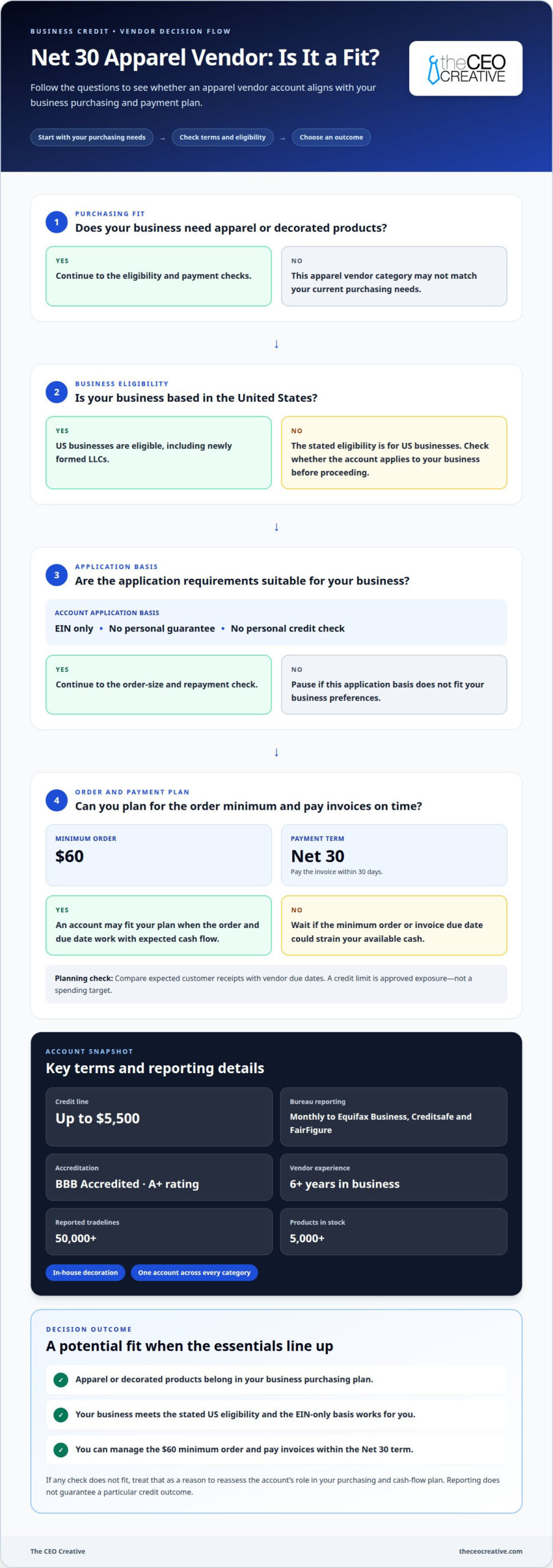
The CEO Creative offers a net 30 apparel vendor account for auto repair businesses that need staff clothing on vendor terms. Shops looking to outfit employees can explore the net 30 apparel vendor option, including t-shirts and embroidery. These purchases serve a different purpose from automotive parts, so consider them only when apparel is already part of your planned operating spend.
The CEO Creative offers an EIN-only account with no personal guarantee or personal credit check, and monthly reporting to Equifax Business, Creditsafe, and FairFigure. Reporting does not guarantee a particular credit outcome, and the timing of bureau updates can vary. Match each order to your budget and payment schedule before applying. For account details, visit theceocreative.com.
Choose terms that fit your next operating cycle
Before opening another vendor account, decide how it fits your shop’s purchasing plan. Identify a recurring business need, assign someone to track invoices, and make payment dates visible to the people managing cash. A clear process keeps credit use connected to planned operations instead of turning available terms into unplanned spending.
Evaluate net 30 accounts for an auto repair shop by matching the account’s purpose and repayment obligations with actual business needs. A vendor account may support a business-credit strategy, but it should also make sense as a purchasing relationship. Keep the decision grounded in affordability, accurate records, and a payment routine your team can maintain. This article provides general information, not financial or legal advice.
Build your account strategy one considered decision at a time. A steady process can give your business a stronger foundation for its next stage.
Frequently Asked Questions
What does Net 30 mean for an auto repair shop?
Net 30 means the business owes the invoice balance within 30 days of the term’s stated starting point. For example, if a supplier bases terms on delivery, the delivery date controls rather than the invoice date. Record the vendor’s trigger in your accounting system, then compare the due date with expected customer receipts. This helps avoid planning around the wrong date.
How do auto repair shops apply for Net 30 vendor credit?
Apply directly with a vendor that offers business Net 30 terms. Gather your business identity details, EIN, billing information, and supplier trade references if requested. Read the application and account agreement before submitting them. Note the vendor’s payment trigger, any credit limit, and reporting terms. After approval, place an order that fits your operating budget and keep the invoice with your payables records.
How can a new auto repair shop qualify for Net 30 terms?
A newly formed US business can apply with vendors whose eligibility includes new LLCs. The CEO Creative offers an EIN-only Net 30 account, with no personal guarantee or personal credit check. Prepare consistent business information and any application details the vendor requests. Approval depends on the vendor’s process, so plan purchases around terms actually granted, not a limit you hope to receive.
What are the best Net 30 accounts for buying auto parts and shop supplies?
Choose accounts based on what the vendor sells, the payment terms, and whether the approved limit suits your purchasing plan. For automotive parts, look for a parts supplier that offers business terms on those parts. A Net 30 office supplies vendor serves a different need, such as routine administrative purchases. The CEO Creative offers that category, but it is not an auto-parts account.