

Net 30 is a supplier payment arrangement, not a loan. Net 30 accounts for furniture stores let an eligible business buy from a vendor and pay the invoice in full 30 days after its invoice date. Whether those payments can support a business credit file depends on the vendor’s reporting practices.
For a furniture business, the key distinction is whether a vendor’s terms apply to furniture inventory or to other business purchases. This guide explains what to look for, how minimums and fees fit into the decision, and what to expect when applying. You’ll also learn how to understand the reporting terms and manage the account’s apply, order, payment, and reporting cycle. Use those details to assess which kind of vendor account fits your business needs and how to approach the next step.
Key Takeaways
- Check whether a vendor account covers purchases your furniture business actually needs; trade terms apply to eligible vendor purchases, not automatically to furniture inventory.
- Understand the account cycle: apply with an EIN, place an eligible order, pay under the stated terms, and allow time for bureau records to update.
- Reporting is monthly to Equifax Business, Creditsafe, and FairFigure, but when the information appears on a report can vary.
- Keep application details accurate and payment dates on your calendar. Reporting does not guarantee a particular credit result.
What You Can Order on Net 30 Terms
A NET 30 vendor account applies to purchases from the vendor granting the terms. The balance is due 30 calendar days from shipping. For furniture retailers, net 30 accounts for furniture stores can cover eligible business purchases, but they don’t automatically finance showroom inventory. The vendor’s catalog and account terms determine what qualifies.
Start with operating needs rather than assuming every furniture-related purchase qualifies. A store might need branded staff apparel, printed materials, drinkware, office supplies, or technology. These are examples of business purchasing categories, not a promise that every vendor sells them. Each account covers only items its vendor offers under its terms. A furniture supplier’s inventory sales don’t establish that it offers NET 30.
For example, an illustrative $200 supply invoice creates a balance due under the vendor’s terms. Paying as agreed can contribute payment history when the vendor reports it. Reporting is a separate account feature. Before relying on an account to build business credit or affect a business credit score, understand whether the vendor reports payment activity and which bureaus receive it.
NET 30 differs from business credit cards and lines of credit. A vendor account typically defers payment for purchases from that vendor. Cards and lines of credit are separate financing products with their own agreements. NET 30 can help manage cash flow between ordering and paying, but it doesn’t provide unrestricted spending at other businesses.
Amazon Business Pay by Invoice is a named invoice-payment option. Its name alone doesn’t establish NET 30 terms or payment-history reporting. Treat payment timing and reporting as separate account features. The account’s stated terms determine what applies.
Corporate clients should focus on the legal business applying, the approved account terms, eligible purchases, and payment timing. Approval requirements depend on the vendor’s application process. Confirm that the account is opened in the business’s name rather than used for personal purchases, and make sure staff understand which orders belong on the account.
When assessing net 30 accounts for furniture stores, separate vendor purchases from inventory financing. An eligible account might support routine needs through a NET 30 office supplies vendor. Choose based on goods the business needs, clear payment terms, and reporting relevant to its credit-building plan. Payments are reported to the major credit bureaus, but bureau display timing varies.
How the Account Works: Apply, Order, Pay, Report, Repeat
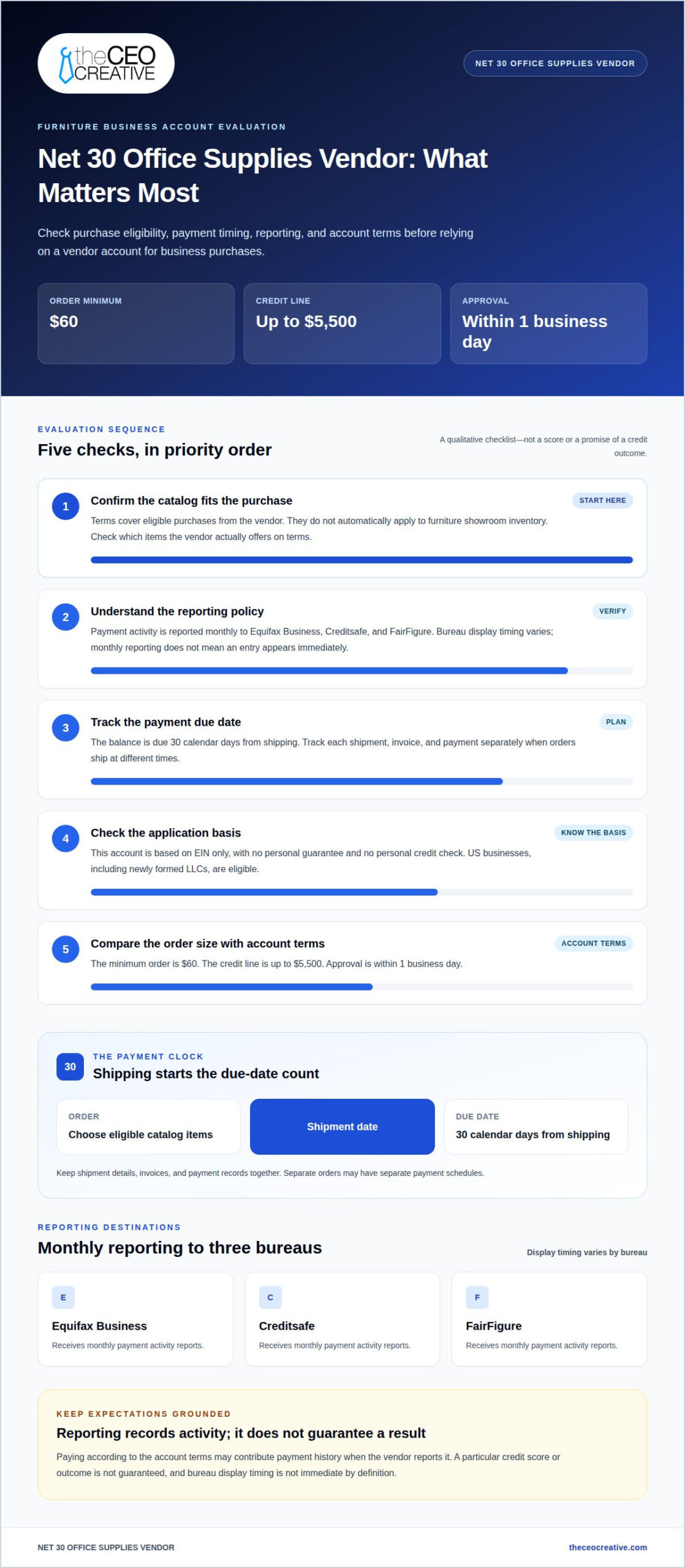
A furniture store begins by submitting a business application using its EIN. The account is based on EIN only, with no personal guarantee and no personal credit check. US businesses, including newly formed LLCs, are eligible, with no minimum time in business. Approval is within 1 business day.
After approval, the business can select eligible items from the vendor’s catalog and place an order. For example, a retailer could purchase eligible supplies for store operations through a NET 30 office supplies vendor. The category and catalog determine which items can be ordered on terms.
Once the order ships, the balance is due 30 calendar days from shipping. Use the shipping date and invoice records to schedule payment accurately. If a store places separate orders, track each shipment and balance independently. This helps the business manage cash flow and avoid treating multiple invoices as one payment obligation.
The account cycle follows these steps:
- Apply. Submit the business application with accurate EIN and business details.
- Order.
- Pay. Pay the balance within 30 calendar days from shipping.
- Report. Payment activity is reported monthly to Equifax Business, Creditsafe, and FairFigure.
- Repeat. Place further eligible orders as needed, then manage each shipment and payment on its own schedule.
Monthly reporting does not mean information appears in bureau records immediately. Equifax Business, Creditsafe, and FairFigure determine their own display timing. Keep order confirmations, shipment details, invoices, and payment records together so your business can track account activity and resolve billing questions.
Whether operating a traditional showroom or a bespoke design specialist like Finest Furniture Studio, a new furniture business can use a reporting vendor account to establish payment history through eligible purchases. Reporting may help build a business credit file, but it does not guarantee a particular credit score or result. Use the account for purchases your business needs, and plan each payment based on the shipping date.
Which Business Credit Bureaus Receive Reports
Net 30 suppliers don’t all report payment history to the same business credit bureaus. Reporting depends on the vendor’s policy, so a store should distinguish payment terms from reporting. An account can allow payment after purchase without sending activity to any bureau.
For this account, payments are reported monthly to Equifax Business, Creditsafe, and FairFigure. This identifies the reporting destinations, but it does not mean an entry appears immediately after payment. Each bureau sets its own display timing, so monthly reporting does not promise a specific posting date.
Reporting can give a furniture business a record of eligible vendor-account payment activity. For example, an invoice paid according to its terms may be included in a monthly report. The bureau takes its own time to display that information, so the reporting cycle and the report update are separate events.
Use this sequence to understand the process:
- Place an eligible order. The vendor creates an invoice under the account’s terms.
- Pay the invoice. The payment status becomes part of the account’s activity.
- Allow monthly reporting. The vendor sends account information to Equifax Business, Creditsafe, and FairFigure.
- Allow bureau processing. Each bureau determines when submitted information appears in its records.
Keep each invoice and its payment record together. If an entry later appears differently than expected, these documents help identify the transaction and payment. Accurate business details on the application also help connect account activity with the right business record.
Business owners often ask whether a reported payment will raise their business credit score. Reporting can add payment history to a business credit file, but it cannot guarantee a score change or a particular outcome. Bureaus use their own records and processes, and a vendor’s monthly submission is only one part of the information that may appear on a business report.
For a furniture store comparing net 30 accounts, ask two distinct questions: what payment terms apply, and which bureaus receive reports? The first explains when the invoice is due. The second explains where account activity is sent. Equifax Business, Creditsafe, and FairFigure receive monthly reports for this account, while display timing remains under each bureau’s process.
Checklist for Choosing and Using a Net 30 Vendor Account
Use this checklist to assess net 30 accounts for furniture stores against purchasing needs and account terms. Review the agreement before opening an account. A careful review helps the business plan orders, payments, and reporting without treating vendor credit as unrestricted financing.
- Read the payment terms. Confirm how the vendor defines the payment period and which date starts it. For this account, the balance is due 30 calendar days from shipping. Record the shipping date for each order, then set a reminder that matches the account’s stated deadline. Don’t calculate the due date from the invoice date.
- Review the purchase minimum and fees. Check that eligible purchases meet this threshold without adding items the store doesn’t need. Review the agreement for any recurring or order-related fees, and distinguish those charges from the minimum purchase requirement.
- Confirm eligibility and application details. This account is available to US businesses, including newly formed LLCs, with no minimum time in business. Use the business’s legal name and EIN consistently. Review each application field and billing detail before submission to reduce errors in account records.
- Match orders to business needs. Choose eligible items the furniture store already plans to purchase. Confirm that each item belongs to the vendor’s catalog and keep its order confirmation with the related account records. A purchase should serve an operating need, not exist only to create account activity.
- Plan payment procedures. Decide who tracks shipments, invoices, and payment dates. If several employees place orders, make sure each order is recorded under the correct business account. Reconcile the amount due against the shipment and invoice before payment, then retain the payment confirmation.
- Understand credit reporting. Confirm the reporting frequency and which business credit bureaus receive account activity. Monthly reporting and bureau display are separate steps. Keep records of account activity so the business can identify the relevant order if a bureau entry or payment record needs review.
When comparing net 30 accounts for furniture stores, weigh purchase fit, fees, payment timing, and reporting together. The account reports monthly to Equifax Business, Creditsafe, and FairFigure, but that reporting doesn’t guarantee a particular credit score or result. Organized shipment and payment records help the business manage each order on its own schedule.
Common Mistakes to Avoid
A furniture business can mismanage a net 30 vendor account by assuming its terms, purchases, and reporting work like other credit products. Avoid these five errors to keep invoices clear and expectations realistic.
- Ignoring the minimum order. A vendor’s purchase minimum is a condition of ordering, not a suggested target. Before submitting a cart, confirm that eligible items meet the minimum. Don’t add unnecessary products just to reach it. For example, choose supplies the store already needs rather than buying extras that strain cash flow.
- Confusing net 30 with a month-end due date. Net 30 means payment is due 30 days after the invoice date. It doesn’t mean the balance is due on the last calendar day of the month. Record each invoice date and due date separately, especially when a furniture store places orders on different days.
- Assuming every net 30 account reports. Payment terms and credit reporting are separate features. A vendor may offer deferred payment without reporting payment history. Before relying on an account to support business credit, understand whether the vendor reports, how often it sends information, and which business credit bureaus receive it.
- Submitting inconsistent application details. A mismatch between the business’s legal name, EIN, or billing details can complicate account records. Use the same accurate business information throughout the application and ordering process. If a furniture store has multiple staff members placing purchases, keep one clear record of the account name and billing details.
- Expecting a guaranteed score change or instant update. Monthly reporting doesn’t mean a payment appears in a bureau file immediately. Each bureau controls its display timing, and reported activity doesn’t guarantee a specific business credit score. Treat reporting as an account feature, not a promise of a particular credit outcome.
Keep the application details, invoice, and payment record together for each account. This straightforward recordkeeping helps your furniture business resolve billing questions and track what was ordered, when payment was due, and how the account was managed.
Apply for a Net 30 Account
A furniture store can use a vendor account for eligible business purchases, then pay invoices under net 30 terms. The CEO Creative offers a Net 30 account based on the business’s EIN only. It requires no personal guarantee and no personal credit check. The account supports eligible vendor purchases, not furniture inventory bought from unrelated retailers.
US businesses can apply, including newly formed LLCs. There’s no minimum time in business. The stated approval timeframe is within 1 business day. These are account terms; approval and the available credit line depend on the account decision.
Once approved, a business can order eligible items, receive an invoice, and pay it according to its net 30 terms. The account reports monthly to Equifax Business, Creditsafe, and FairFigure. Bureau display timing varies, and reporting does not guarantee a particular credit score or result.
Choose purchases that support your store’s operations. Eligible categories include apparel, T-shirts, embroidery, and office supplies. For example, a furniture retailer might use the account to purchase staff apparel or business office supplies. Check the account terms to see which catalog items qualify.
Enter accurate business information on the application and account. Keep the business’s EIN, legal name, and billing details consistent across application and order records. After ordering, retain invoices and payment records to track due dates and account activity.
The CEO Creative is BBB Accredited with an A+ rating. It has been in business for 6+ years, with 50,000+ reported tradelines and 5,000+ products in stock. These details describe the vendor; they don’t promise a specific credit outcome for an individual furniture store.
Review the account terms and eligible purchases before applying. Check whether any minimum order fits your planned business spending and whether the payment schedule works with your cash flow. The account is most useful when purchases are necessary and you can manage invoices on time.
Contact The CEO Creative to review the Net 30 account and application details.
Frequently Asked Questions
What are net-30 accounts?
NET 30 accounts let a business purchase eligible goods from a vendor and pay the invoice later under agreed terms. Check the account agreement or invoice for the payment due date; it can’t be determined from the invoice date alone here. For example, a store can match an order record with its invoice, then schedule payment according to the stated terms. Reporting is a separate account feature, so deferred payment alone doesn’t establish that a vendor sends payment activity to business credit bureaus.
What does Net 30 mean for furniture stores?
For a furniture store, NET 30 means eligible purchases from a vendor are invoiced for later payment under the account’s terms. It doesn’t automatically apply to furniture inventory bought from any retailer. A store might instead use a vendor account for business needs such as staff apparel or office supplies. Match each planned purchase to the vendor’s eligible catalog and check the account terms or invoice for its payment due date.
Which suppliers offer Net 30 accounts to furniture retailers?
Suppliers offering NET 30 terms set their own eligible product categories, so a furniture retailer should identify vendors whose catalogs match real operating needs. The CEO Creative offers vendor accounts for apparel, T-shirts, embroidery, and office supplies. These categories can serve business operations, such as staff clothing or office purchasing. Review the account’s reporting terms as well as its catalog, since vendor payment terms don’t automatically mean bureau reporting.
How does a furniture store apply for a Net 30 vendor account?
Complete the vendor’s business application with accurate company details and EIN. The CEO Creative’s account is EIN-based and does not require a personal guarantee or personal credit check. U.S. businesses, including newly formed LLCs, can apply, with no minimum time in business. Before submitting, make sure the legal business name and EIN are consistent. After approval, use the account for eligible purchases and keep order and invoice records together.
What documents do furniture suppliers require for Net 30 approval?
Documentation requirements vary by supplier and application. The CEO Creative’s account is based on the EIN and does not require a personal guarantee or personal credit check. Have the business EIN and accurate identity details ready when completing the application. A newly formed LLC can apply to this account without a minimum time in business, though other furniture suppliers may use different processes.
What fees, interest, or late-payment penalties apply to Net 30 accounts?
Fees, interest, and late-payment consequences depend on the vendor’s account agreement. Don’t infer them from the NET 30 label or assume all suppliers use identical terms. Review the agreement’s fee schedule, payment due-date terms, and consequences of late payment before opening an account. The client’s stated account facts do not provide a specific fee or penalty amount, so none should be assumed or applied here.