

The best net 30 accounts for event planning companies are vendor accounts that match the purchases a business already makes. Net 30 gives a business 30 days to pay for eligible purchases from the vendor, so the right fit depends on the supplies and services needed for upcoming events.
Choosing an account is about more than payment timing. Understand what you can buy, how the application and credit reporting work, and which terms apply before you commit. This guide explains how event-planning businesses can assess vendor accounts for their purchases, apply, pay on time, and make an account part of a business credit-building plan.
Key Takeaways
- Match vendor terms to purchases your event business already plans to make, rather than ordering just to open an account.
- Understand that vendor trade credit applies to purchases from that supplier, while other payment options work differently.
- Plan invoice due dates around client payments and existing commitments to reduce cash-flow pressure.
- Review application requirements and account terms before applying so you can decide whether the account fits your business.
- Track each invoice and payment carefully; overlapping balances can make it harder to pay on time.
Vendors that may suit event-planning business purchases
For event planners, a suitable vendor account connects genuine business purchases with manageable payment terms. Start with categories you already use for client work, rather than ordering products solely to open an account.
Reported Accounts for Building Business Credit
A vendor account can contribute payment activity to a business credit file when the vendor reports it. Before applying, compare the vendor’s reporting practices, the products you can buy, and whether those products fit your operations. An event company that regularly orders staff apparel, for example, may find an apparel vendor more relevant than one selling products unrelated to its work. Paying on time builds a payment record, but does not guarantee a particular credit outcome.
Trade Credit and Business Credit Cards
Trade credit is generally limited to purchases from the vendor extending it. A business credit card can be used wherever it is accepted. Cardholders may pay the full balance, make a minimum payment, or carry a balance and incur interest. Match the payment method to the purchase: vendor terms may suit a planned order from that supplier, while a card can cover purchases from different businesses.
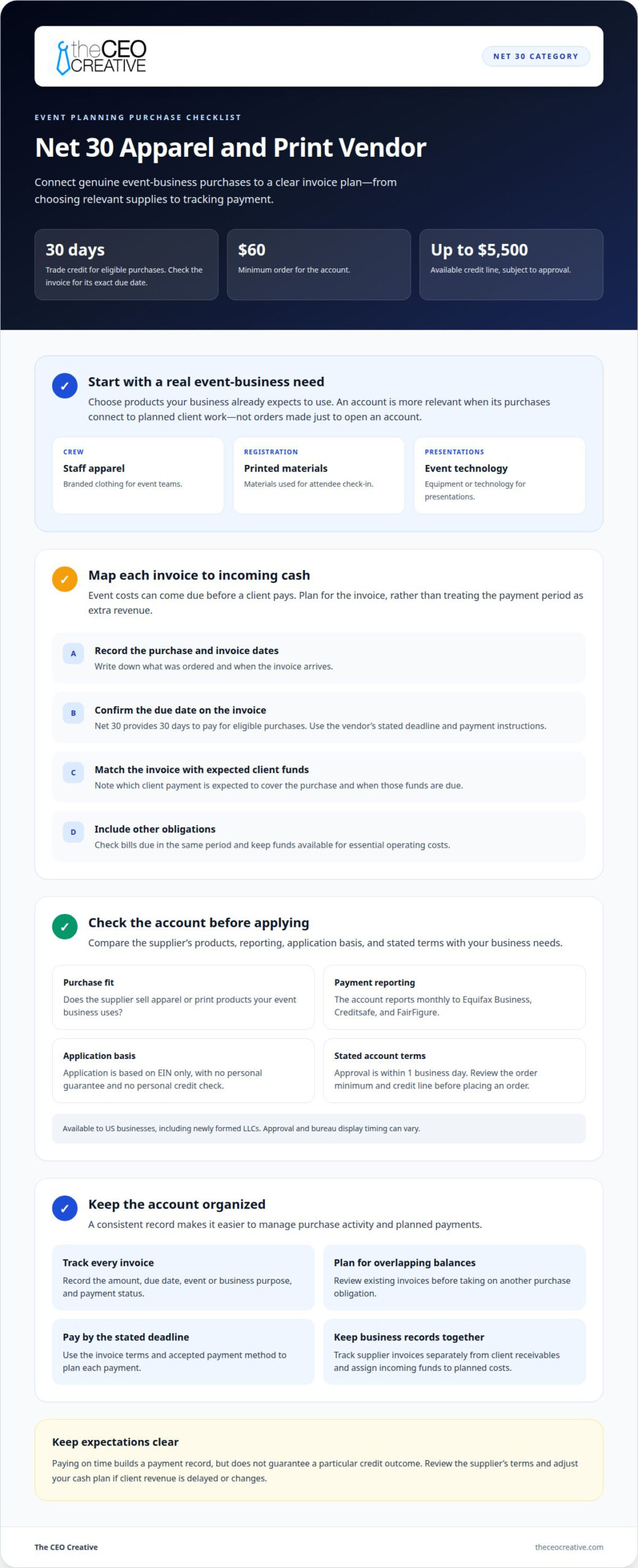
Map purchasing categories to event operations. You might need branded apparel for a crew, printed materials for registration, or technology for presentations. An account tied to a recurring business need can make purchasing and bookkeeping easier to organize. Record each order against its event or business purpose so account activity reflects genuine operating expenses.
Eligibility depends on the vendor’s application requirements. A supplier may request business information and review the application before extending credit. Distinguish an account based on business details from one that requires a personal guarantee. Read the stated criteria and terms before applying, particularly if your company is a newly formed LLC.
Credit-building opportunities come from using relevant accounts responsibly, not from opening as many as possible. The Consumer Financial Protection Bureau estimated that U.S. small businesses with under $1 million in annual revenue used more than $50 billion in trade credit in 2019. For an event company, a practical starting point is choosing a vendor connected to actual purchasing needs.
Use these comparison points:
- Does the vendor sell a category your business uses?
- Does it report payment activity to business credit bureaus?
- Do the purchase terms fit the company’s planned spending?
- Does the application describe any personal guarantee requirement?
Compare the account’s purpose with your purchasing plan. Vendor terms can support purchases from a particular supplier, while a business card has broader acceptance and may involve interest if you carry a balance. Choose based on the expense, payment structure, and role the account should play in your business credit history.
Cash flow and financing alternatives
Event costs often arrive before client payments. Map each supplier invoice against expected revenue before choosing how to pay. A net 30 purchase gives the business 30 days to pay, so it can bridge a timing gap when incoming funds are due within that period. It doesn’t replace cash-flow planning.
For example, an event planner may purchase presentation materials now and expect the client’s payment later. Net 30 terms can postpone that purchase’s cash outflow, but the invoice still needs a payment plan. A business credit card can also defer payment for supplier invoices. Paying the full card balance when its statement is due helps avoid interest charges.
Revenue-based financing is another option some businesses consider. Repayment is tied to business revenue, so its schedule can differ from a fixed vendor invoice. Before proceeding, understand how repayments are calculated, when they’re collected, and how they affect the cash available for event deposits, staffing, and other commitments. Approval and repayment terms depend on the financing arrangement.
Some suppliers may agree to extended terms, such as net 45, net 60, or net 90. These periods can keep cash on hand longer than net 30, but they require supplier agreement. Compare the due date with client payment timing and other bills. A longer term helps only if the business can meet the eventual obligation without disrupting planned purchases.
Consignment handles payment timing differently. Under a supplier consignment arrangement, payment may be deferred until the business sells the delivered product. This may suit event businesses that resell items, but not purchases consumed during an event. Clarify which goods qualify, when payment is due, and how unsold items are handled.
Use a simple cash-flow check before committing:
- List the purchase, invoice date, and due date.
- Record the client payment expected to cover that invoice.
- Include other obligations due during the same period.
- Choose terms that leave funds for essential operating costs.
Keep separate records for supplier invoices and client receivables. An event deposit, for example, may arrive before the final payment, so assign incoming funds to planned costs. If expected revenue is delayed or changes, revise the cash plan rather than relying on the original date.
For a purchase that fits vendor trade credit, review the business Net 30 account terms alongside your event schedule. Choose terms based on the invoice due date and available cash, not approval alone. This section is general information, not financial advice.
Payment timing and on-time payment practices
Net 30 gives a business 30-day trade credit on purchases. Build each payment date into the event’s budget before placing an order.
Net 30 Payment Terms
Net 30 means the business has 30 days of trade credit for a purchase. Review the vendor’s invoice and terms to identify the payment deadline and accepted payment methods. For an event scheduled around client deposits, align the purchase with expected incoming funds. Don’t treat the payment period as extra revenue; the invoice remains an amount owed.
Payment Structure and Interest
Vendor invoices and credit card balances follow different payment structures. A net 30 invoice is paid to the vendor under its terms. A business credit card allows a full payment, a minimum payment, or a carried balance. Carrying a card balance may result in interest. Plan to pay the full statement balance when due if avoiding interest charges is the goal.
Use an invoice tracker that records the vendor, purchase, invoice date, due date, and payment status. For example, if a planner orders $250 worth of supplies, record that obligation alongside the event’s projected revenue. Assign incoming client payments to upcoming bills instead of counting the same funds toward multiple costs. Update the tracker when a client payment or event schedule changes.
Timely payment starts with a consistent process. When placing an order, save the terms and invoice details together. Once the invoice arrives, add its due date to the company calendar. Before paying, match the invoice to the order and verify the amount. Then save the payment receipt and mark the invoice as paid. This creates a clear record for each vendor transaction.
Event planners can also manage receivables to support supplier payments. Send client invoices promptly and use a follow-up system to track outstanding amounts. Some suppliers may offer early-payment discounts, and businesses may offer them to customers. Before deciding, compare the discount with the cash needed for event commitments.
Use this sequence for each vendor invoice:
- Record the purchase and payment terms when ordering.
- Enter the invoice due date in the business calendar.
- Match the invoice with the order before paying.
- Save proof of payment and update the invoice status.
Keep separate records for vendor invoices and card statements. For instance, paying a supplier invoice by card may defer cash outflow, but the card statement still needs its own payment plan. A net terms calculator can help organize a payment timeline; use the actual vendor terms to guide payment. Consistent records help business owners spot upcoming obligations before they compete with event expenses.
Vendor account eligibility and application requirements
Vendor approval depends on the supplier’s criteria and review process. Keep trade credit distinct from a loan or line of credit: a vendor account applies to purchases from that supplier.
A business credit application helps a vendor assess whether to extend payment terms. Complete the form with consistent business details, including the legal business name, business address, and employer identification number (EIN) when requested. If your LLC is newly formed, use its registered business information rather than substituting an owner’s personal details. The vendor’s criteria determine which fields are required.
An online application generally follows a simple sequence: enter business information, provide requested details, review the terms, and submit the form. Check each field carefully. If the form requests a business phone number or address, use information associated with the business. Applying for vendor terms is not the same as applying for a revolving credit line; these are different arrangements.
Eligibility rules vary by vendor. A supplier may set approval standards that include reviewing the application and business credit information. Before applying, identify the purchase category, payment terms, and any stated eligibility conditions. For an EIN-based account, understand whether the vendor evaluates the business using its EIN and whether the agreement includes a personal guarantee. These terms determine what you’re agreeing to.
If a vendor declines an application, don’t resubmit the same form repeatedly without addressing the issue. Review any reason provided and compare it with your application details and the vendor’s stated criteria. Correct an inaccurate business address or legal name before applying again. If the concern relates to credit history, review your business records and payment obligations before deciding what to do next. Correcting a form does not guarantee approval.
Keep application records together. Save the submitted information, the terms presented, and any decision notice. These records help you compare vendor requirements and avoid inconsistent details in later applications. A simple checklist can keep the process organized:
- Confirm the vendor’s purchase category fits a planned business need.
- Read eligibility rules and payment terms before starting the form.
- Enter consistent legal business details and requested identifiers.
- Save the application and decision for business records.
Business owners comparing EIN-only Net 30 vendors can focus on how each application handles business identification, personal guarantees, and approval criteria. Treat a vendor account as a purchase-based agreement, not general-purpose financing. Review the terms that apply to the account before accepting them.
What risks should event planners consider before using net 30 terms?
Net 30 terms delay payment, but they don’t remove the invoice obligation. Event planners should assess timing, order size, and client revenue before relying on vendor credit. A purchase for one event can become difficult to cover if that event changes or the client pays later than expected.
Cash-flow gaps are a key risk. An event planner may owe a supplier before receiving the client’s final payment. Compare the invoice due date with expected client receipts and other bills. If funds won’t be available, reduce the order, use available cash, or reconsider the purchase. A pending client payment is not cash already received.
Demand can change after an order is placed. Guest numbers may shift, a venue may alter its requirements, or an event may be postponed. Before ordering, separate essential items from quantities that depend on final attendance. Confirm the amount of printed material needed before committing to a large order, for example. A vendor account is generally limited to purchases from the vendor providing credit, so it may not cover every event expense.
Read the complete terms before accepting an account. Note the payment due date, any minimum purchase, accepted payment methods, and whether a deposit is required. A deposit leaves less cash available for other event costs. If your customers pay slowly, you may also need to collect cash on delivery. Understand how missed or late payments could affect future purchasing arrangements.
Account activity does not guarantee a particular credit result. Reporting practices differ, and a new account may take time to appear on a business credit report. Keep invoices, payment confirmations, and account statements together. If you’re building credit with a vendor account, paying according to its terms matters more than opening accounts without a genuine purchase need.
Use this risk check before ordering:
- Match the order quantity to confirmed event needs.
- Schedule the invoice against client receipts and existing obligations.
- Keep funds available for deposits and other event commitments.
- Record the due date and payment confirmation for each purchase.
- Review whether the vendor’s terms fit the event’s cancellation risk.
For an event planner with unpredictable client payment dates, the safest choice may be to limit credit purchases to costs supported by a clear payment plan. Net 30 accounts for event planning companies can support planned vendor purchases, but they aren’t a substitute for cash reserves or careful budgeting. Results vary, and this information isn’t financial or legal advice.
The CEO Creative
The CEO Creative may suit event planners whose business purchases align with apparel or office supplies. For staff clothing purchases, review the Net 30 apparel vendor account alongside the business Net 30 account terms to assess fit with your planned orders and payment process.
If you’d like to discuss whether an account fits your event-planning purchases, contact The CEO Creative.
Make your next account decision part of a clear plan
Choosing net 30 accounts for event planning companies is most useful when it supports a deliberate purchasing routine. Start by identifying which expenses recur across client projects, then decide how your team will assign invoices, record payments, and review account activity. A consistent process can make each purchase easier to trace back to its event and budget.
Build this process into your bookkeeping before placing the next order. Assign each vendor invoice to the relevant project and save its payment record with the event’s other financial documents. This gives you a practical way to review purchasing patterns as your business takes on new work.
If you’re ready to consider an account that fits your planned business purchases, review the terms and application details before applying.
Take the next step with a clear view of your needs and a payment process your team can maintain.
Frequently Asked Questions
What are the Best Net 30 Accounts?
The best net 30 accounts for event planning companies support purchases the business already makes and provide terms it can manage. Compare each account’s vendor category, application criteria, reporting policy, and payment conditions. For example, a planner ordering branded crew apparel may prioritize an apparel supplier, while a company buying registration materials may prefer a print-related vendor. Choose based on operating needs rather than opening accounts just to increase account count.
What is a Net 30 Vendor?
A net 30 vendor sells eligible goods or services and gives an approved business a stated period to pay. The account is tied to that vendor’s purchases, not unrestricted spending. For example, an event planning company might order apparel from an apparel vendor and receive an invoice under the vendor’s terms. The business then pays that invoice according to the account agreement and records it with its other business expenses.
What does net 30 mean for event planning companies?
For an event planning company, net 30 means the vendor provides 30-day trade credit on eligible purchases. The company receives an invoice and plans payment under the stated terms. One practical approach is assigning each order to its event budget and recording the invoice alongside that project’s expected revenue. This helps the planner see which purchases are tied to a client project and which support general business operations.
Which vendors offer net 30 payment terms to event planners?
Event planners can look for vendors offering terms on categories relevant to their operations, such as apparel, printing, office supplies, or promotional products. The CEO Creative offers net 30 apparel, t-shirt, and embroidery supplier options. A planner can compare those categories with recurring needs, such as crew clothing or branded materials. Each vendor sets its own application requirements and account terms, so review those details before applying.
What credit requirements are needed to open net 30 vendor accounts?
Requirements differ by vendor and account. An application may request the business’s legal name, address, EIN, and other details. Some vendors may review business credit information or require a personal guarantee. The CEO Creative’s account is EIN-based and does not require a personal guarantee or personal credit check. Review the agreement and application criteria to understand how the vendor evaluates the business before submitting.
How can a new event planning business qualify for net 30 accounts?
A new event-planning business can begin by identifying vendors whose eligibility criteria include newly formed companies. The CEO Creative accepts U.S. businesses, including newly formed LLCs, without a minimum time-in-business requirement. Prepare consistent business details, choose a vendor whose product categories fit your needs, and submit the application. Approval depends on the vendor’s review, so submitting an application does not guarantee acceptance.
What are the best net 30 suppliers for event planning businesses?
The right supplier depends on what the business buys for its events and ongoing operations. An apparel vendor may fit staff clothing needs; a print supplier may be useful for event materials. The CEO Creative offers net 30 apparel, t-shirt, and embroidery supplier accounts. Compare the vendor’s purchase categories with your company’s planned orders, then consider its reporting approach and payment terms before choosing an account.
What fees, interest, or late-payment penalties apply to net 30 accounts?
Fees and consequences for late payment depend on the vendor’s written terms. The CEO Creative describes its Net 30 term as a 30-day interest-free loan. That description should not be assumed to apply to every vendor or to explain overdue payments. Before accepting an account, read the agreement for membership charges, interest treatment, payment deadlines, and any stated late-payment consequences. Keep the terms with your business records.