


Net 30 accounts for tutoring businesses let eligible purchases be paid under vendor terms and may contribute to business credit history when payment activity is reported. They can suit tutoring businesses when the purchase meets an operating need and the invoice fits the business’s cash flow.
Terms vary by vendor. Consider the purchase categories, payment obligations, and reporting details before choosing an account. The sections below explain how to assess the fit and manage the account responsibly.
Key Takeaways
- Choose vendor terms around supplies your tutoring business already needs, not purchases made only to build credit.
- Review the order minimum, available credit, eligibility, and payment deadline before applying.
- Plan invoice payments around your cash flow, and keep account records organized as you order and pay.
- Track bureau updates over time, but treat reported activity as a record of payments, not a guaranteed credit outcome.
What Tutoring Businesses Can Order on Net 30
Net 30 accounts let a business purchase eligible items and pay according to the vendor’s invoice terms. For a tutoring business, the practical question is whether a category supports regular operations. A purchase could serve lesson preparation, administration, virtual instruction, or outreach. Choose based on a current business need, not simply the possibility of establishing credit history.
Office products can support planning and classroom work. For example, a tutor might need notebooks or writing supplies for organizing lesson materials. A Net 30 office supplies vendor offers an account tied to that category. Consider whether the items suit the business’s work before placing an order. Keep the purchase connected to a clear operational purpose.
Paper and print products can help prepare materials for students or promote tutoring services. A business might use printed handouts for lessons or business cards when sharing contact details. These are examples of how a tutoring company could use a relevant vendor category. They don’t mean every vendor carries every type of print product, so match the order to the vendor’s stated offerings.
Technology and electronics may be relevant when a tutoring business purchases equipment for virtual lessons or administration. The category is distinct from office supplies, apparel, and printing. Think through the intended use first. For instance, equipment used for online instruction may support service delivery, while unrelated electronics may not fit the business’s current needs.
Apparel, T-shirts, and embroidery may suit tutoring businesses ordering staff clothing or branded items. Drinkware and other promotional products can also support planned outreach. Choose items the business expects to use, rather than purchasing products solely to access vendor terms.
Marketing and web services are another possible business expense category. A tutoring provider might consider them when planning service promotion or a business website. Paper and print, promotional products, and marketing services each address different needs. Review the category and purchase details before ordering so the item or service aligns with the project.
Distinguish account terms from membership conditions, as they govern different parts of the purchasing relationship. Read both before committing and check that the order fits the tutoring business’s budget and planned expenses. Every vendor purchase creates an invoice obligation, so keep it tied to an actual business need.
How the Net 30 Account Works
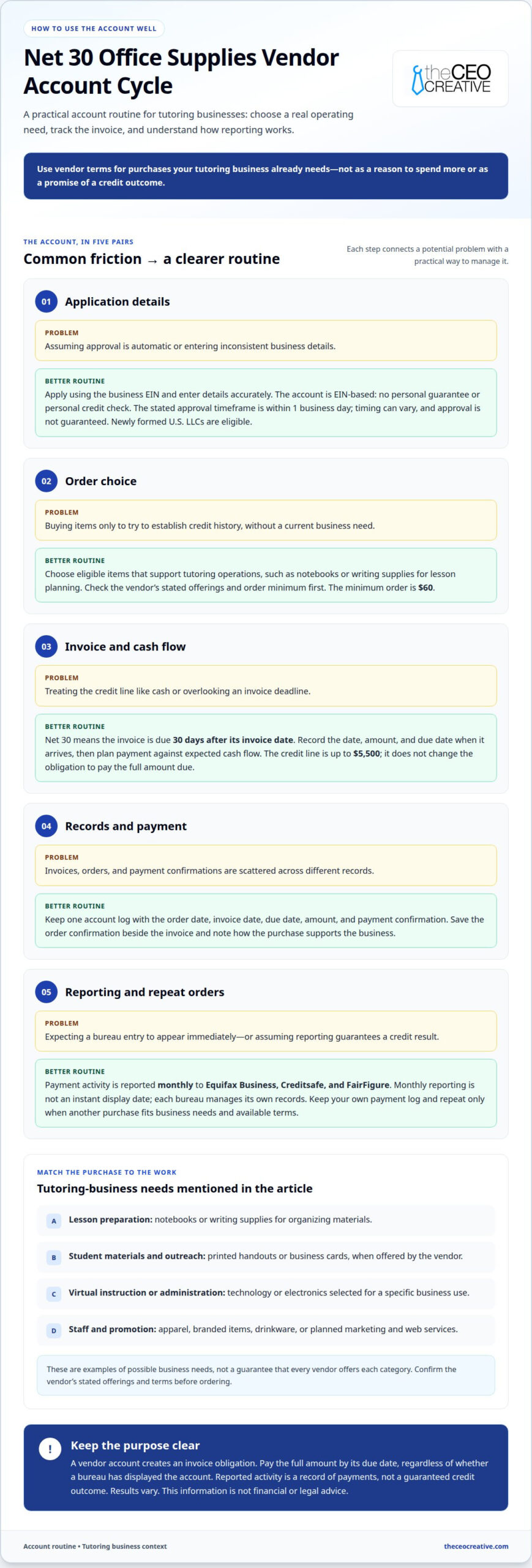
A reporting Net 30 account follows a cycle: apply, place an eligible order, pay the invoice, and repeat when another purchase fits. For a tutoring business, organize each step around the items it needs and the cash available for payment. That makes the account easier to manage alongside routine expenses, such as lesson materials or administrative purchases.
- Submit the application. The application is based on the business EIN. No personal guarantee or personal credit check is required. The stated approval timeframe is within 1 business day, but timing can vary and submitting an application does not guarantee approval. Enter business details accurately so the application can be assessed using the information provided.
- Review the account terms. The available credit line determines the account’s purchase capacity. Before ordering, consider the total of the planned purchase and any outstanding invoice obligations. Don’t treat the credit line as cash or as a reason to buy more than the business needs.
- Place an eligible order. Choose from the vendor’s offered categories and submit an order that meets the minimum. Save the order confirmation and note what the purchase supports, such as tutoring administration or planned staff apparel. Keeping this record beside the invoice helps connect the expense to the business’s operations.
- Record and pay the invoice. Net 30 means the invoice is due 30 days after its date. Note the invoice date, amount, and payment deadline when it arrives. Schedule payment against expected business cash flow, then keep the payment confirmation with the invoice. The account’s terms don’t remove the obligation to pay the full amount due.
- Track reporting and repeat thoughtfully. Payments are reported monthly to business credit bureaus. Reporting frequency and bureau display timing are separate; a bureau controls when information appears in its records. Keep your own transaction log, and place another order only when it fits business needs and the account’s available terms.
A simple account log can include the order date, invoice date, due date, amount, and payment confirmation. This gives the tutoring business one place to follow purchases and obligations, even as it manages other expenses. Review the EIN-based Net 30 account details as part of understanding the account structure before applying.
Which Business Credit Bureaus Receive Reports?
A Net 30 vendor can report payment activity to business credit bureaus, but reporting depends on the vendor. This account reports monthly to Equifax Business, Creditsafe, and FairFigure. Monthly describes the reporting frequency, not when a bureau displays an account. Each bureau manages its own records, so display timing can vary.
For a tutoring business, bureau names matter because an account’s payment history is useful only where it is reported and recorded. Equifax Business, Creditsafe, and FairFigure are the reporting destinations for this account. Do not assume that a vendor’s reporting to one bureau means it reports to every bureau. Confirm the named destinations in the vendor’s account terms before relying on a tradeline.
Reporting is separate from invoice payment. The business must pay the full amount by its due date, whether or not a bureau has displayed the account. Save each invoice and payment confirmation to track the account independently of bureau updates.
Monthly reporting does not mean an entry appears immediately after payment. A bureau may need time to process submitted data and match it to the correct business profile. Keep identifying details consistent across application and account records. If an entry is missing later, compare the account information and payment records before drawing conclusions.
Use a simple tracking routine: record each invoice date, due date, payment date, and amount, then note the vendor’s reporting destinations. These records provide a clear reference when reviewing business credit files and help separate payment obligations from the longer process of building credit history.
Business credit reporting does not guarantee a score change. Equifax Business, Creditsafe, and FairFigure maintain their own files and may display information differently. A reported payment contributes data, but each bureau’s recorded information shapes the resulting profile. Pay according to the invoice terms and treat reporting as one part of business credit management.
Before opening any reporting Net 30 account, read the reporting language alongside the payment terms. Look for the bureaus named, the reporting frequency, and the business details used for account identification. For this account, reporting is monthly to Equifax Business, Creditsafe, and FairFigure. Those specifics help a tutoring business understand where payment activity is sent without assuming when it will appear.
Checklist: How to Apply for and Manage a Net 30 Account
Use this checklist to assess eligibility, submit accurate business details, and manage vendor invoices. A tutoring business can keep the process orderly by matching each purchase to an operating need and recording its payment activity.
- Confirm the business qualifies. Check the vendor’s stated eligibility for U.S. businesses and newly formed LLCs. Sole proprietors and home-based tutors should review the application requirements for their business structure. Don’t assume every vendor uses the same criteria.
- Prepare the EIN details. Use the business’s EIN where the application requests it. For an EIN-only account, enter the business information consistently and review each field before submission. The account terms describe whether a personal guarantee or personal credit check applies.
- Choose a relevant order. Select eligible items the tutoring business already needs, such as office supplies or printed materials. Check the account’s minimum order and available credit before submitting the purchase. Avoid adding unnecessary items just to increase order activity.
- Save the invoice and due date. When the vendor issues an invoice, record its date, total, and payment deadline. Match the invoice to the order confirmation. This gives the business a clear record of what it owes and when payment is due.
- Schedule payment deliberately. Add the invoice deadline to the business’s payment calendar and plan around tutoring revenue. Keep the payment confirmation with the invoice. Paying according to the stated terms supports a clear account history, but doesn’t guarantee a particular credit result.
- Review activity and repeat responsibly. Track each order and payment in one account log. Note whether the vendor reports monthly and which bureaus receive information. Bureau display timing can vary, so keep the business’s own records rather than relying only on a bureau file.
Before applying, compare the account’s terms with the tutoring business’s normal purchasing cycle. A guide to EIN-only Net 30 vendors can help clarify what this application basis means. Keep the application, invoices, payment confirmations, and account terms together. This routine makes it easier to follow obligations, spot missing records, and manage future orders without confusing vendor credit with available cash.
Common Mistakes and Limitations to Avoid
Net 30 terms can support business credit history, but they still create payment obligations. Avoid these mistakes when assessing an account for a tutoring business.
- Don’t submit an order just to create activity if the tutoring business doesn’t need the items. An unnecessary purchase still creates an invoice that must be paid under the account’s terms.
- Treating 30 days as extra income. Net 30 sets an invoice payment deadline; it doesn’t increase revenue or remove the debt. Record the invoice date and due date, then schedule payment around expected cash flow. A late payment can undermine the payment history you’re trying to establish.
- Assuming bureau display is immediate. Monthly reporting and bureau display are separate steps. Equifax Business, Creditsafe, and FairFigure process submitted information on their own schedules. Keep invoice and payment records, and don’t treat a missing entry as proof that a payment wasn’t made.
- Expecting a specific credit outcome. A reporting tradeline adds payment information to a business credit profile; it doesn’t guarantee a score, approval, or future credit limit. Dun & Bradstreet and Experian are not listed as reporting destinations for this account. Don’t assume every business credit bureau receives the same data.
- Buying outside the tutoring business’s needs. Office supplies can be a practical purchase when they support tutoring operations. Avoid ordering items solely to build business credit. Also, don’t treat a vendor account like a credit card, or assume an early-payment discount applies unless the account terms state one.
Before applying, review the payment terms, minimum purchase, and reporting details together. Identify an eligible order, match its invoice to the purchase, and plan to pay by the stated deadline. Keep the records after payment, too. This helps track account obligations and distinguish your payment history from bureau updates, without assuming a particular credit outcome.
A Net 30 Vendor Option for Tutoring Businesses
The CEO Creative is a business credit vendor for tutoring businesses seeking Net 30 terms on relevant business purchases. Its eligible offerings include apparel, T-shirts, and embroidery. A tutoring business might consider these categories for staff apparel or branded items it already plans to purchase. The account is most useful when its purchasing options match real operating needs, rather than orders made only to create credit activity.
The application uses the business’s EIN. The stated approval timeframe is 1 business day, but timing may vary and approval is not guaranteed. These are account terms, not a promise of approval or a particular credit outcome. The business remains responsible for paying each invoice according to its terms.
Consider the purchase before applying. For example, a tutoring company planning staff shirts could assess the Net 30 apparel or T-shirt supplier categories. A business that needs embroidered apparel can consider the embroidery supplier category. These examples describe relevant purchase types, not a requirement to buy. Choose a category only when the items fit the business’s plans and budget.
An EIN-based account may suit owners applying with business identification, but vendor credit is not revenue. Include the invoice payment in the business’s cash-flow plan and keep order and payment records together. A reported tradeline can contribute payment information to a business credit profile, but it cannot guarantee a score change or future approval. Bureau display timing also varies.
Review the account terms and eligible categories before deciding whether this vendor fits. Check how the minimum order, payment deadline, credit line, and reporting work together with the tutoring business’s expected purchases. If the categories do not match the business’s needs, taking on an unnecessary purchase solely for credit building may not be a sensible fit. Net 30 accounts work best when the business can use the purchase and meet its payment obligation.
For tutoring businesses with a suitable purchase and a plan to pay on time, The CEO Creative offers an EIN-based vendor account with business credit reporting. Review the terms and decide whether they fit your purchasing and payment plans.
Choose a Credit-Building Step That Fits Your Business
Use your tutoring business’s purchasing plan to decide whether vendor terms fit. A useful next step is to connect planned expenses with invoices you can manage from current cash flow. That keeps credit-building activity tied to real operations, not purchases made just to create an account history. Net 30 accounts for tutoring businesses are worth considering when the vendor’s eligible categories match an upcoming business need.
The CEO Creative offers Net 30 apparel, T-shirt, and embroidery vendor options. These may suit tutoring businesses planning staff apparel or branded items. Consider the account only if the purchase fits your plans and you can meet its payment terms. Results vary, and reporting activity does not guarantee a particular credit outcome. This information is general and isn’t financial or legal advice.
Build your credit process around deliberate purchases and organized payment records. This manageable approach gives your tutoring business a practical foundation for the next step.
Frequently Asked Questions
Do Net 30 accounts require a personal credit check or guarantee?
Requirements depend on the account. The CEO Creative’s Net 30 account uses an EIN only, with no personal guarantee and no personal credit check. For a tutoring business, this means the application is based on business identification rather than a personal credit inquiry. Read the account terms carefully so you understand the applicant information required and the business’s payment responsibility before placing an order.
What is Net 30?
Net 30 is a vendor payment arrangement where the invoice is due 30 days after its date. For example, if a tutoring business receives an invoice for eligible supplies, it records the invoice date and schedules payment by the stated deadline. The payment term defers payment for that purchase; it does not remove the amount owed or guarantee a credit benefit.
What does Net 30 mean for a tutoring business?
For a tutoring business, Net 30 can allow eligible business purchases to be invoiced for later payment under the vendor’s terms. A tutoring company might use an account for a planned purchase of business apparel, then track the invoice alongside its operating expenses. The business should choose purchases it genuinely needs and plan payment from its cash flow, not assume credit reporting will produce a particular result.
Which vendors offer Net 30 terms to tutoring businesses?
The CEO Creative offers Net 30 vendor options for apparel, T-shirts, and embroidery. These categories may fit a tutoring business planning staff clothing or branded items. The right vendor depends on the items the business actually intends to purchase and the account’s terms. Before ordering, match the product category to the business need, then review the invoice deadline and reporting details.
What credit score or business documents are required for Net 30 accounts?
Requirements vary by vendor. The CEO Creative’s account is EIN-based, and its terms state there is no minimum time in business for U.S. businesses, including newly formed LLCs. No personal credit check is required for this account. Prepare accurate business identification for the application and review its fields and terms. Other vendors may have different application requirements or approval criteria.
What are the risks of using Net 30 accounts for a small tutoring business?
The main risk is taking on an invoice the business cannot pay by its deadline. Before placing an order, account for uneven enrollment or delayed customer payments. Reporting does not guarantee a credit score or approval, and bureau display timing can vary, so keep payment records and manage the invoice directly.