

Net 30 terms can help a travel agency manage the timing between business purchases and incoming payments, but they still require a plan for paying invoices on time. Net 30 accounts for travel agencies work by letting an approved business buy from a vendor on invoice and pay within 30 days of the invoice date.
That payment window can make expenses easier to schedule, but it is not extra income: the balance remains due, and late payment can undermine efforts to build a reliable business credit history. Reporting also varies by vendor, so review the account’s terms and reporting practices before applying.
This guide explains how Net 30 accounts work, what travel agencies should weigh before opening one, and how to apply, place an order, pay, and build a consistent payment history. You’ll also see common mistakes to avoid and how a reporting vendor account can fit into a broader business-credit plan.
Key Takeaways
- Choose a vendor account for purchases your travel agency already needs, such as apparel, drinkware, stationery, or office supplies.
- Review the payment terms before ordering, then track the invoice due date and pay on time.
- Reporting is monthly to Equifax Business, Creditsafe, and FairFigure; bureau display timing varies.
- Use the numbered checklist to organize your application, order, payment, and reporting follow-up.
- Treat a vendor tradeline as one part of a business-credit plan, not a promise of a particular credit outcome.
What Travel Agencies Can Order on Net 30 Terms
A travel agency can use a Net 30 vendor account for eligible purchases that support its own business operations. Focus on items with a clear use in the agency, not purchases made only to create account activity. For example, staff apparel may be useful at a travel fair, while office supplies can support day-to-day administration and client document preparation.
For staff clothing, a travel agency could consider shirts or embroidered apparel for employees attending an event or representing the business. A Net 30 apparel vendor is relevant when the planned purchase fits that need. Promotional products or drinkware may also suit agency events or business outreach, provided the items serve a practical purpose.
Paper and print purchases can support an agency’s internal paperwork or printed materials. Office supplies can help organize forms and records, while technology and electronics may support routine office work. Keep these purchases separate from expenses tied to a traveler’s booking. A vendor account covers the vendor’s eligible goods or services, not the cost of a client’s trip.
Before choosing a category, identify what the agency needs and how it will use the items. Staff apparel, for example, should serve a real workplace or event need. A supply order should fit the agency’s administrative routines. This helps clarify each transaction’s business purpose and supports accurate recordkeeping.
Review the vendor’s eligible categories and account terms before ordering. Keep the confirmation and invoice with the agency’s business records so the purchase can be traced to its intended use and its payment managed alongside other operating expenses. A useful vendor account should support planned spending, not encourage the agency to buy products it does not need.
How a Net 30 Account Works
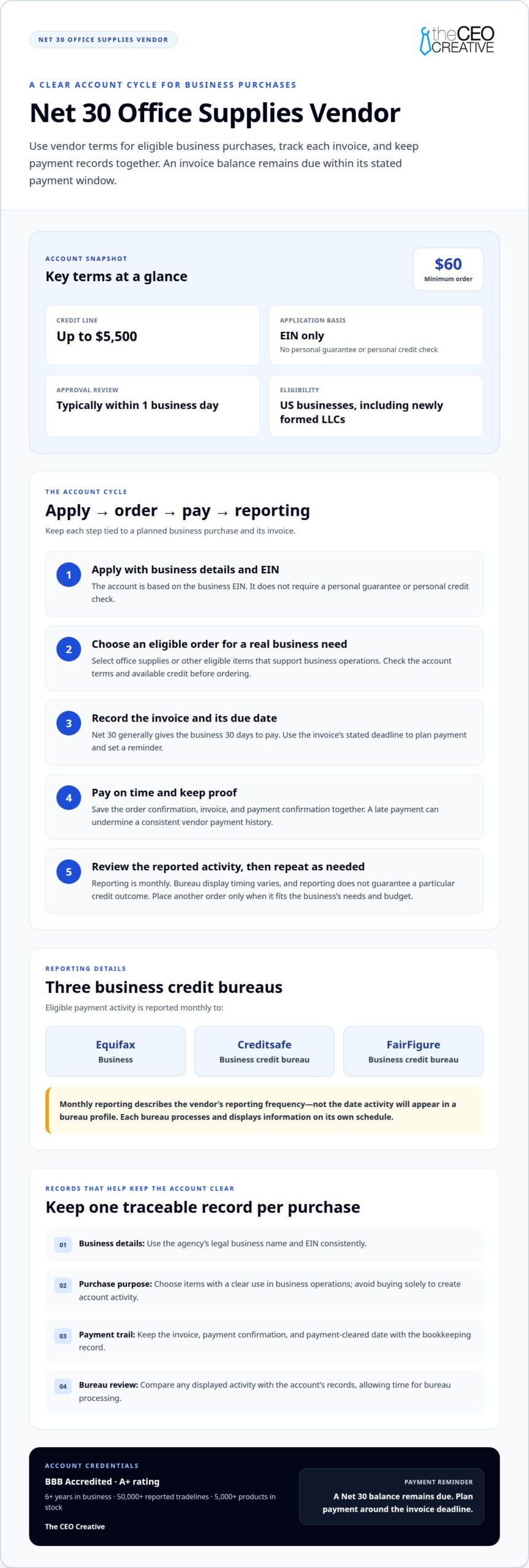
A travel agency uses a Net 30 vendor account through a simple cycle: apply, order, pay, and build a payment record. The account described here uses the business’s EIN only, with no personal guarantee or personal credit check. Newly formed US LLCs are eligible, and there’s no minimum time in business.
Start by submitting the application with the agency’s business details and EIN. Applications are reviewed, with decisions typically made within 1 business day. Once approved, the agency can place an eligible order under its account terms. Stay within the available credit and choose items the agency can use in its operations.
After an order, the vendor issues an invoice with its due date. Net 30 generally gives the business 30 days to pay, but use the invoice’s stated deadline to plan payment. For example, an agency can record the invoice in its bookkeeping system, set a payment reminder, and keep funds ready before the deadline. Paying on time supports a consistent vendor payment history; a late payment can undermine that record.
The vendor then reports eligible payment activity to business credit bureaus. Reporting can help establish a business credit file, but it does not guarantee a particular score or outcome. A bureau may take time to display reported activity. Keep the order confirmation, invoice, and payment record together so the agency can trace the transaction if questions arise.
Then repeat the cycle only when another eligible purchase fits the agency’s budget. Regular, necessary orders and timely payments create a clear account history without relying on unnecessary spending. The EIN-only Net 30 account terms explain the account structure and application details.
Which Business Credit Bureaus Receive Reports
Net 30 account reporting is monthly to Equifax Business, Creditsafe, and FairFigure. These are the three business credit bureaus named for this account. For a travel agency, that means vendor payment activity is submitted to those bureaus on a monthly basis. Reporting does not mean the account will appear instantly in every bureau profile.
Each bureau has its own process for receiving and displaying information. The date a payment is submitted may differ from the date it appears in a business file. An agency might see activity in one profile before another, or not see it immediately. Monthly reporting describes the vendor’s reporting frequency, not a guaranteed display date.
Keep a simple record for each purchase. Save the vendor invoice, payment confirmation, and date the payment cleared. For example, record a stationery order and its payment in the same bookkeeping entry. These documents make it easier to trace a reported trade account to a specific business transaction.
Use the agency’s legal business name and EIN consistently on the account and in its records. Different spelling or business details on an invoice can make it harder to connect the transaction to the correct company file. Keep account documents together so the business can review its profile and compare displayed information with its payment history.
Business credit files can provide a broader view of how an agency handles vendor obligations, but a single tradeline does not determine a credit outcome. Timely payments and accurate business details create a clearer record than relying on an expected score change. Treat Equifax Business, Creditsafe, and FairFigure as separate profiles, and allow each bureau to process and display information in its own time.
Checklist for Using a Net 30 Vendor Account
Use this sequence to organize vendor terms, agency spending, and payment records. A clear process helps you manage each account responsibly and assess whether it supports your business-credit goals.
- Choose a vendor for a real business need. Match its eligible categories to planned purchases, such as office supplies for booking records or branded apparel for a travel event. Avoid buying items solely to create account activity.
- Read the account terms before applying. Note the minimum order, available credit, payment deadline, reporting practices, and any account conditions. Make sure the terms work with your agency’s cash flow and ordinary purchasing schedule.
- Prepare consistent business details. Use the agency’s legal name and EIN on the application. Keep the information aligned with your business records, so the vendor can associate the account with the correct company.
- Submit the application and review the result. Save the application confirmation and any account decision. Once approved, understand the available credit before placing an order, and don’t assume approval means every purchase will fit the account limit.
- Place an eligible order. Select items the agency can use and keep the order confirmation with its business records. For example, file an office-supply order under administrative expenses rather than mixing it with a client’s travel costs.
- Record the invoice and schedule payment. Enter the invoice date, amount, and due date in the agency’s bookkeeping system. Set a reminder early enough to arrange payment before the deadline, including during busy booking periods.
- Pay and retain proof. Keep the payment confirmation alongside the invoice. Then review the agency’s business credit profiles periodically and compare any displayed account activity with your records. Bureau display timing varies, so a report may not appear immediately.
Use vendor accounts only for planned purchases the agency can pay for on schedule. A vendor tradeline can contribute payment history, but it cannot guarantee a particular credit result. Keep accurate records and use them to manage each account, not to justify spending the business does not need.
Common Net 30 Account Mistakes
A Net 30 account can contribute vendor payment history, but it also creates an obligation to manage. Avoid these mistakes when your agency chooses a vendor and plans purchases.
- Paying late. A missed deadline can undermine the payment record you’re trying to build. Enter each invoice due date in your bookkeeping system when it arrives. Set a reminder early enough to arrange payment, especially during busy booking periods.
- Misreading the 30-day terms. Net 30 generally means payment is due within 30 days of the invoice date. Don’t assume the clock begins when a client pays or when your agency finishes using the purchase. Follow the due date stated on the vendor invoice.
- Ordering without a cash-flow plan. A payment window doesn’t remove the obligation. Before ordering supplies, consider whether the agency can cover the invoice if a commission is delayed or a customer changes a booking. Keep funds for vendor bills in view alongside expected receivables.
- Buying items the agency doesn’t need. An unnecessary purchase can strain cash flow without supporting operations. Choose office supplies or other eligible goods for a real business purpose. Record why the agency made the purchase, and don’t treat account activity alone as a reason to spend.
- Expecting a guaranteed credit result. Vendor reporting can contribute to a business credit history, but it doesn’t promise a particular score or future decision. Equifax Business and other bureaus control their own display timing, so reported activity may not appear immediately.
Do not treat one vendor tradeline as a complete credit-building plan. It records activity with that supplier, while accurate bookkeeping and spending discipline remain essential to the agency’s operations. Keep invoices, payment records, and account correspondence together so you can trace a purchase if an account record needs review.
Use Net 30 terms only when the purchase fits the business and the payment deadline fits its cash plan. This article is for general information and isn’t financial or legal advice. Consider your agency’s circumstances before making financial or business decisions.
The CEO Creative
The CEO Creative provides reporting Net 30 vendor accounts for businesses that want to make eligible purchases and build business credit history. For a travel agency, the account may fit when planned spending includes apparel, embroidery, or office supplies the business already needs. It is a vendor account, so its role is tied to purchases from the vendor, not to funding travel bookings.
Choose purchases according to your agency’s actual operations. A travel business may need staff shirts, embroidered apparel for a consistent team look, or office supplies for everyday administration. These categories offer practical options without making credit-building a reason to buy items the agency does not use.
The account is also relevant to business owners who want to establish payment history through vendor transactions using the business’s EIN. The CEO Creative’s Net 30 account is based on EIN only, with no personal guarantee and no personal credit check. US businesses, including newly formed LLCs, can apply without a minimum time in business. Approval decisions are typically made within 1 business day.
Before applying, consider whether the agency can use the permitted categories and manage an invoice payment schedule. Those terms help define the size of an eligible purchase, but they don’t change the need to budget for the balance when it comes due. Payment activity is reported monthly to Equifax Business, Creditsafe, and FairFigure. Bureau display timing varies, and reporting does not guarantee a particular credit outcome.
An account may be a practical option for an agency seeking a vendor tradeline and planning purchases in apparel or office supplies. It may not suit a business with no eligible purchasing need or one expecting a vendor account to pay for travel services. Base the decision on the agency’s operating budget and intended use.
Put Your Next Business-Credit Step on a Clear Path
For an agency considering net 30 accounts for travel agencies, the next step is to connect account use to purchases the business already plans to make. Set a simple routine: record each invoice, schedule its payment, and keep the confirmation with your business records. That structure can make vendor activity easier to manage as the agency grows.
Choose an account based on its terms, eligible purchases, and reporting practices. The CEO Creative offers vendor accounts for agencies planning purchases in apparel, T-shirts, or embroidery. Use an account only when the purchase makes sense for the business, and keep expectations realistic: credit outcomes vary, and reporting does not guarantee a particular result.
A sound process starts with a considered choice and consistent follow-through. Take the next step at a pace that fits your agency’s plans.
Frequently Asked Questions
How do NET 30 accounts work?
A vendor account records purchases made from that vendor, with payment governed by the account’s invoice terms. For net 30 accounts for travel agencies, keep each vendor transaction distinct from client trip expenses in your bookkeeping. This separation helps you identify which purchases relate to agency operations and reconcile them against vendor invoices without confusing them with traveler payments or booking records.
What does NET 30 mean for a travel agency?
NET 30 describes a vendor payment arrangement, not a way to pay for a traveler’s trip. An agency might use eligible vendor purchases for its own operations, then manage those obligations separately from client bookings. For example, record an agency supply purchase under business expenses rather than including it in a customer’s itinerary or trip account.
How can a travel agency qualify for NET 30 business accounts?
Qualification depends on the vendor’s application criteria and account terms. Before applying, identify the legal business entity that will hold the account and confirm that your intended purchases fit the vendor’s categories. Review the application carefully and provide consistent business information. Approval for one vendor account does not establish eligibility for another vendor’s program.
What credit score, business history, or references are required for NET 30 accounts?
There is no universal credit score, operating-history standard, or reference requirement for every vendor account. Each vendor sets its own application criteria. A travel agency should review the specific account’s stated requirements rather than assume personal credit, business references, or a particular time in operation will always apply. The account type and vendor’s review process determine which information matters.
What risks should travel agencies consider before opening NET 30 accounts?
Consider whether the agency can meet its vendor obligations if a client delays payment, a booking changes, or expected revenue arrives later than planned. A purchase still affects cash flow even when it supports daily operations. Net 30 accounts for travel agencies also don’t ensure a particular credit result. Keep spending tied to business needs and account for invoices in cash-flow planning.
Can a travel agency use a vendor account to pay for client travel bookings?
A vendor account applies to purchases the vendor provides under its terms. It is not a general payment method for airfare, lodging, or other client trip costs. Keep vendor purchases and customer booking transactions in separate records. This distinction helps the agency track its operating expenses without mixing them with money collected or managed for travelers.