


Grants can fund eligible projects without repayment, while net 30 vendor credit applies to supplier purchases that must be paid later. Choosing grants vs vendor credit for funding a startup depends on the expense, eligibility, and payment obligations.
This guide compares the options and explains how to assess grant conditions, supplier terms, and other non-dilutive funding for your business.
Key Takeaways
- Match each funding option to the expense it can cover, its eligibility rules, and any restrictions on how funds are used.
- Separate grants from supplier terms: one may fund eligible activities, while net 30 vendor credit applies to purchases from that vendor.
- Compare the account’s minimum order, credit line, payment terms, and reporting details before placing an order.
- Use a checklist to weigh timing, repayment obligations, reporting, and fit before choosing an option or combining funding sources.
Government Grants and Startup Resources
Government grants usually support defined public goals, not every startup expense. The U.S. Small Business Administration says it generally does not provide grants to start or expand a business. Knowing this can help founders focus on relevant programs instead of treating grants as standard launch funding.
At the federal level, SBIR and STTR programs fund small businesses conducting research and development related to federal priorities. A research-focused startup can compare its project with agency priorities and program eligibility rules. These awards are competitive, so having a business plan alone does not establish a fit.
State and local government grants often emphasize economic development and community impact. A program, for example, may prioritize businesses serving a particular community or supporting a local industry. Before applying, review its goals, eligible expenses, ownership criteria, required documents, and award conditions.
Government contracting assistance serves a different purpose: it helps businesses prepare to compete for public contracts rather than receive grant funds. Start by identifying the agency’s requirement and the work your business can deliver. Then organize a capability statement, relevant experience, ownership details, and required bid materials. A contract can generate revenue for completed work, but it is not a grant, and applying does not guarantee an award.
Keep the two paths distinct. A grant application should explain how the proposed project serves the funder’s goals and how the funds will be used. A contract response should address the specific scope, delivery requirements, and evaluation criteria. For either option, compare your business profile with the written eligibility rules before investing time in an application. If the criteria exclude your ownership structure, location, industry, or project stage, look for a program whose stated purpose is a closer match.
Grant Conditions and Other Non-Dilutive Options
Non-dilutive financing lets founders seek capital without selling ownership. Grants and pitch competitions may provide funding without equity dilution or repayment, but awards are competitive and limited to eligible activities. A reimbursement grant may require a startup to pay eligible costs upfront and then seek reimbursement. When weighing grants vs vendor credit for funding a startup, the key question is whether you need project funding or supplier purchases.
These awards support defined research work, not unrestricted operating costs. Before applying, connect each proposed expense to the award’s purpose and plan for its reporting requirements.
A startup can use a grant and vendor credit together if the grant’s terms allow it. Keep their uses separate: grant funds cover approved activities, while vendor credit pays for purchases from that supplier. Don’t rely on a pending award to pay a supplier invoice by its due date. When comparing grants vs vendor credit for funding a startup, account for each option’s conditions and payment timing.
Grant risks include competitive selection, restricted spending, upfront costs under reimbursement arrangements, and documentation duties. Vendor credit has different obligations: the business must repay the supplier under the account terms, so due dates and cash flow matter. Neither option guarantees approval or funding.
Reporting requirements depend on the award. Read its conditions for permitted expenses, payment arrangements, reports, and supporting records. Some awards use reimbursement; others follow their stated payment schedule. For vendor credit, record each purchase and payment, then track the due date. Nonprofits and small businesses seeking federal support should follow the written award terms, since program requirements can differ.
What You Can Order on Net 30 Terms
Net 30 vendor credit is tied to a purchase from a supplier, not cash deposited for general startup expenses. A business orders eligible goods, receives an invoice, and pays according to the agreed terms. It doesn’t provide grant funding, remove repayment obligations, or require giving up equity.
Eligible purchases depend on the supplier. They may include apparel, t-shirts, embroidery, office supplies, tech and electronics, drinkware, promotional products, or printed materials. For example, a startup preparing branded shirts for a launch can use an apparel supplier account for that order, rather than treating the credit as unrestricted revenue.
That distinction shapes the decision. A grant may support a project tied to a funder’s mission or economic development goals, subject to its eligibility rules. Vendor credit applies to purchases the supplier accepts under its account terms. The criteria differ too: grant funders assess the proposed activity, while a supplier reviews the business account application.
Before ordering, match the goods to a real operating need and confirm they fit the vendor’s eligible categories. Then review the minimum order, available credit, payment due date, and any reporting terms. An invoice creates a repayment obligation, so plan to pay from business cash flow rather than assuming a grant or future customer revenue will arrive in time.
Use supplier terms for planned purchases that fit the vendor’s catalog and your business needs. Use a grant for an eligible project when its conditions fit. The two are not interchangeable: vendor credit pays for specified goods, while grant awards follow the funder’s purpose and restrictions. This practical difference is central to comparing startup funding options.
How a Net 30 Account Works
Start with the application. This account is based on an EIN only, with no personal guarantee and no personal credit check. Eligible applicants include US businesses and newly formed LLCs, with no minimum time in business. Approval is stated as within 1 business day, but that timeframe isn’t guaranteed.
After approval, choose goods that fit your business needs and the supplier’s categories. The account covers purchases from the supplier, not cash for unrelated expenses. Review the order total and payment terms before placing an order.
Once the order is placed and shipped, the supplier issues an invoice under the net 30 terms. The balance is due 30 calendar days from shipping. Track the invoice date, amount, and due date in your bookkeeping system. Set a reminder before payment is due, and pay according to the account terms.
Payment activity is reported monthly to the business credit bureaus. That does not mean a bureau will display the information immediately; timing varies. Keep order confirmations, invoices, and payment records together so your books accurately reflect each transaction.
Repeat the cycle only when another planned purchase fits the account. Confirm available credit before ordering, and leave room in your cash flow to pay the invoice on time. A timely payment may contribute to business credit history, but it doesn’t guarantee a particular credit outcome. The net 30 account with no personal guarantee separates business purchasing terms from personal repayment responsibility. Review the terms for each order, then keep clear records of purchases and payments.
Which Business Credit Bureaus Receive Reports
Payments on the net 30 account are reported monthly to Equifax Business, Creditsafe, and FairFigure. These are the three business credit bureaus that receive reports for the account. Reporting is one part of a business credit file; it does not guarantee a particular score or outcome.
Reporting and bureau display are separate steps. Payment information is sent monthly, but each bureau controls when its systems process and display it. Because timing varies, information may not appear immediately after a payment or reporting cycle. Don’t treat a specific posting date as a promise.
Keep a clear transaction record. Save the order confirmation, invoice, payment date, and payment confirmation together. If you later review a business credit file, these records help you compare account activity with what appears. They also make it easier to identify the transaction or reporting period you’re reviewing.
For a new LLC, consistent business details matter. Use the same legal business name and EIN associated with the account in your records. If your company details change, keep the account information and bookkeeping records aligned. Accurate, consistent identifiers help connect the trade account to the correct business profile.
A business net 30 account can establish a supplier payment record through purchases and payments made under its terms. Pay invoices as agreed and retain supporting documentation. Then allow time for bureau processing. Monthly reporting describes the reporting frequency, not the exact date an item will appear in every file. Review your records periodically and focus on accurate account information, paid invoices, and a clear history of business transactions.
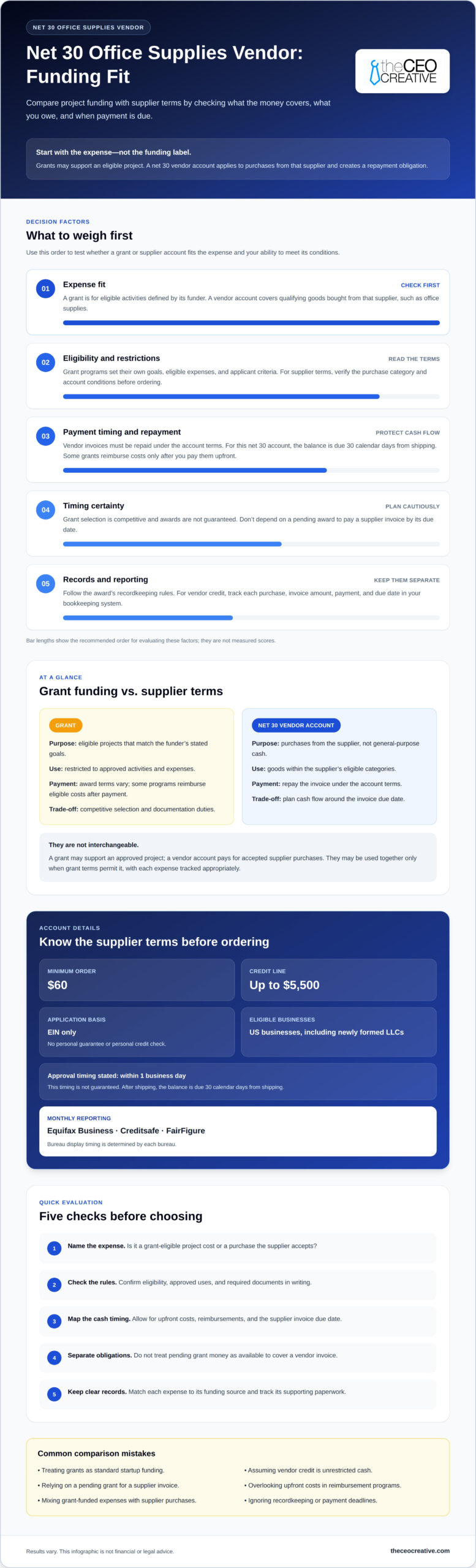
A Checklist for Choosing a Startup Funding Option
Grants can fund eligible projects without repayment, while net 30 vendor credit covers supplier purchases and must be repaid. Comparing grants vs vendor credit for funding a startup means weighing the expense, timing, restrictions, and obligations, not just the funding label. Use this checklist to assess which option fits your business need.
- Define the expense. Identify the specific need, such as research work, branded apparel, or office supplies. A grant may suit a defined project; supplier credit applies to eligible goods from that vendor.
- Assess your stage. A pre-revenue startup may have fewer capital options. Compare program eligibility with supplier terms that fit planned purchases and current business development needs.
- Review eligibility. Match your business profile, ownership, location, and project to each program’s written criteria. For a grant, connect the proposed expense to the funder’s stated purpose.
- Map cash flow. Record when funds or goods are needed, how grant payments are made, and when supplier invoices are due. Include repayment and payment obligations in your operating plan.
- Separate program types. Tax credits for businesses or investors differ from grant awards and vendor terms. Review their eligibility and tax treatment separately, and keep their requirements distinct in your planning.
For example, a startup ordering branded shirts can compare supplier terms with its budget and ability to pay. A research startup can assess whether a grant’s eligible expenses and reporting conditions fit its project. Your grants vs vendor credit for funding a startup decision should reflect the intended use, access requirements, and obligations of each option. Record the decision and the cash-flow assumptions behind it, then revisit them if the project or purchase plan changes.
Common Mistakes When Comparing Grants and Vendor Credit
A funding comparison is only useful when it reflects the actual expense and its obligations. Avoid these mistakes when reviewing grant conditions and net 30 supplier terms.
- Treating an award as unrestricted cash. Grants often support specific eligible activities. If a funder approves research costs, don’t assume the award can also cover unrelated inventory or routine purchases. Match each planned expense to the written award conditions.
- Assuming an application means funding is available. Grant applications are competitive, and selection is not guaranteed. Don’t place an order based on expected award money. Consider the payment arrangement, including whether eligible costs must be paid before reimbursement.
- Confusing supplier credit with general startup capital. Net 30 terms apply to purchases from a vendor, not cash for payroll, rent, or unrelated expenses. Check that the goods fit the business need and the supplier’s categories before relying on the account.
- Ignoring repayment timing. A supplier invoice must be paid under its stated terms, even if customer revenue arrives later. Record the due date and make sure planned cash flow can cover payment. A grant may not require repayment, but its restrictions and reporting duties still apply.
- Comparing only the amount offered. A larger potential award may have narrow eligible uses or documentation requirements. A smaller supplier purchase account may be more relevant to a specific order. Compare access, flexibility, conditions, and obligations, not just the headline figure.
Keep each option in its proper role. A grant can fund an approved project, while supplier terms support eligible purchases that must be repaid. Separate budgets and records make it easier to track grant spending, supplier invoices, and the business cash available for each payment.
The CEO Creative: Business Credit Vendor
The CEO Creative is a business credit vendor for startups that need supplier terms for planned purchases. Its net 30 apparel vendor, net 30 t-shirt supplier, and net 30 embroidery supplier options connect business purchasing with vendor trade credit. This may fit when a company has a real need for branded apparel and wants supplier terms rather than unrestricted grant funds.
Use the account for purchases that fit its categories, not expenses such as payroll or rent. Grants and vendor credit serve different purposes: grants support eligible activities under the funder’s conditions, while supplier credit applies to orders and carries a repayment obligation. Keep the order, invoice, due date, and payment records with your business bookkeeping.
For example, a startup preparing branded shirts for an event can consider a net 30 apparel vendor when that purchase matches its operating plan. A business needing embroidery can use a supplier option suited to that order. The key decision is whether the goods are necessary and whether the business can pay the invoice under the account terms.
Vendor credit is not a replacement for grant funding. It does not provide cash for unrestricted startup needs, and it does not remove the obligation to pay for ordered goods. It may suit a business seeking a vendor tradeline through purchases it already plans to make. A grant may better fit a defined project if the business meets the funder’s eligibility rules and can follow its conditions.
Compare the order with your budget, business needs, and payment plan before proceeding. Use the account for relevant purchases and keep transaction records organized.
Contact The CEO Creative to discuss its business credit vendor account.
Frequently Asked Questions
What if you don’t qualify for either?
Revisit the expense and eligibility criteria before abandoning the funding plan. A grant application may fail because the project, business profile, or ownership does not match the program. Supplier terms may not fit if you don’t need eligible goods or can’t manage repayment. Consider narrowing the project to a funder’s stated purpose, postponing optional purchases, or exploring competitions and foundation programs whose criteria better match your startup.
When does a grant make sense?
A grant makes sense when your project fits the funder’s purpose and you can meet its conditions. For example, a research startup could consider an SBIR or STTR opportunity tied to federal research priorities. Before applying, match the planned work, expenses, reporting, and payment arrangement to the program rules. A reimbursement award also requires enough cash to cover eligible expenses before reimbursement arrives.
What types of grants are available to U.S. startups, and who qualifies?
U.S. startups may find federal research and development grants, state or local economic development programs, foundation awards, and corporate competitions. Eligibility varies by program. A research-focused business may fit an SBIR or STTR opportunity, while a local program may prioritize community impact. Before preparing an application, check each funder’s criteria for business stage, location, industry, ownership, project purpose, and eligible expenses.
What is vendor credit or net-30 trade credit for a startup?
Vendor credit lets a business order from a supplier and pay the invoice later under the supplier’s terms. For example, a startup ordering branded apparel may use net 30 terms for that purchase, then record the invoice and payment in its business books. It isn’t unrestricted cash. The business remains responsible for paying the supplier, and any credit reporting depends on the account’s reporting arrangements.
What are typical vendor credit limits, fees, interest rates, and repayment terms?
There isn’t one standard limit, fee, interest rate, or repayment schedule across vendors. Terms depend on the supplier and the specific account. Before relying on an account, compare the credit limit, minimum order, invoice due date, fees, interest, and consequences of late payment. Base your decision on the written terms and expected cash flow for the particular purchase, not assumed industry averages.
Where can U.S. startups find grants and vendor credit programs in their state or industry?
Search federal agency grant announcements and Grants.gov to track grant applications. For state or local opportunities, review government economic development pages and their eligibility rules. Industry-specific grants may also appear on foundation or corporate program pages. For vendor credit, look for suppliers whose eligible categories match a planned business purchase, then review the supplier’s account terms.