


Post type: HOW TO USE THE ACCOUNT WELL
Net 30 accounts for notary businesses can connect eligible business purchases with an invoice due within 30 days and monthly reporting to business credit bureaus. The CEO Creative offers Net 30 terms on business categories such as office supplies, printing, apparel, drinkware, and promotional products.
Choose an account based on the items your notary business actually needs, the terms you can manage, and the account’s reporting details. Approval or reporting does not guarantee a particular credit result. This guide covers practical ways to assess fit, keep records, and manage invoices.
Key Takeaways
- Match net 30 accounts for notary businesses to real operating purchases, not spending undertaken just to create account activity.
- Consider relevant categories such as office supplies, printing, apparel, drinkware, and promotional products.
- Understand the account sequence: apply, place an eligible order, pay the invoice, then allow the monthly reporting cycle to take place.
- Keep business details consistent and track order records, invoice due dates, and payment confirmations together.
- Reporting does not guarantee that a bureau will display a tradeline or that your business will achieve a particular credit outcome.
Why a Net 30 Account Can Fit a Notary Business
A reporting vendor account pairs eligible purchases from a supplier with an invoice and payment obligation. If the vendor reports account activity, that information may be added to a business credit file. For an independent notary, the account is worth considering when its terms support planned business purchases and fit the way the business manages cash flow.
Net 30 means the invoice is due within 30 days under the account’s terms. It is a payment arrangement, not a promise of a credit result. For a brief overview of the payment term, see Understanding Net 30 Payment Terms.
What a reporting vendor account means for a notary
The account connects a business purchase with a payment obligation. The CEO Creative reports monthly to Equifax Business, Creditsafe, and FairFigure. Monthly reporting describes the vendor’s reporting schedule. It does not mean that every bureau will display an account at the same time or in the same way. A reported account does not guarantee a tradeline display, approval for other credit, or a particular score.
Think of the account as one part of your business records. Before applying, consider whether the eligible categories match your expenses and whether you can keep track of invoices through their due dates. This is more useful than choosing an account based only on the expectation that reporting will change a credit profile.
Why business-use purchases matter
Notary work includes administrative tasks as well as appointments with clients. An independent operator may need supplies for organizing business paperwork, printed materials for sharing business information, or branded items for a particular outreach plan. Those ordinary business needs can guide a sensible order.
For example, paper, notebooks, and writing supplies may support general administration. Business cards, brochures, or flyers may suit a planned effort to share contact details. These are examples of general business items, not specialized notary equipment. The Net 30 office supplies vendor category offers options for general office needs.
Before ordering, connect each item to a task. Is it for recordkeeping, printing business information, or a specific branding use? If you cannot identify a current business purpose, leave it out. A focused order is easier to budget for and reconcile against its invoice.
That is the practical value of net 30 accounts for notary businesses: they can connect eligible purchases with a payment record while serving day-to-day business needs. Use the account for purchases that fit, pay according to the invoice terms, and keep expectations realistic. Results vary. This information is educational and is not financial or legal advice.
What a Notary Business Can Order on Net 30 Terms
Choose purchases by their role in your business, not simply because they are available on terms. A notary may have regular administrative needs, occasional printing projects, and separate plans for branding. Sorting purchases into those purposes helps keep an order connected to real work and easier to manage.
Office and printing purchases for daily operations
Writing supplies, paper supplies, notebooks, filler paper, and pads can support routine recordkeeping and office administration. These are general business items. If you are reviewing options for recurring office needs, the Net 30 office supplies vendor category is relevant.
Printing can serve a different purpose. Business cards, brochures, and flyers may help a notary share contact details or explain services to potential clients. They are optional client-facing materials, not necessary purchases for every notary. Include them when they fit an actual outreach plan.
One practical test is to write down the task beside each item before ordering. Paper and notebooks might be for administration; printed materials might be for sharing business information. If the use is unclear, reconsider the item. This simple check helps keep purchases focused without suggesting that every notary needs the same supplies.
Branding purchases for a notary business
Apparel, drinkware, and promotional products may support a consistent business identity when they fit how you operate. Branded apparel, for example, may make sense for client meetings or events. Promotional items may suit a specific outreach effort. Drinkware can be considered as a branded business item. Treat these as choices tied to a plan, not automatic additions to an order.
Before placing an order, consider the item’s purpose, the quantity you can use, and how the expense fits your budget. A purchase without a clear business use can add cost without practical value. Choose from the relevant Net 30 categories based on what your notary business actually uses.
Business credit education also emphasizes maintaining a distinct business credit profile and managing business obligations responsibly. Commerce Bank’s overview of Building Business Credit for Notaries offers broader context. A vendor account can connect eligible purchases with reported payment activity, but reporting does not ensure bureau display or a specific credit outcome.
For net 30 accounts for notary businesses, category fit matters as much as the payment arrangement. Start with purchases that belong in your operating budget. Then consider whether brand-related items support a specific plan. Keep the order aligned with your business’s actual needs.
How the Notary Net 30 Account and Reporting Process Works
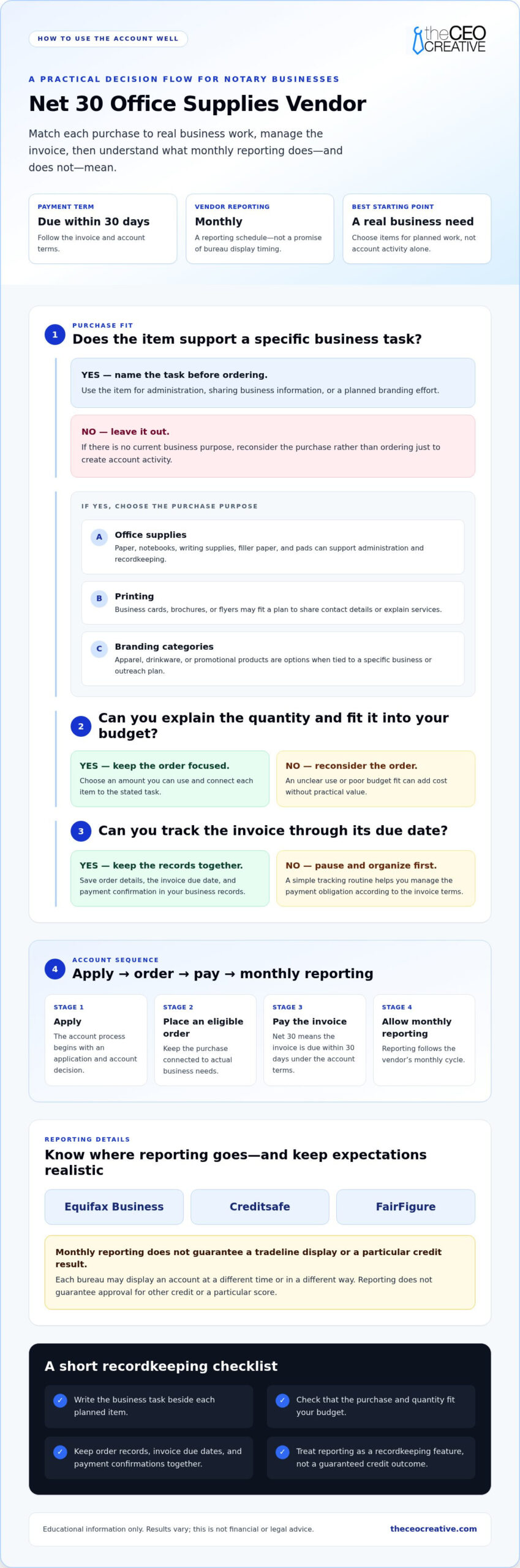
The process has distinct stages: apply, receive an account decision, place an eligible order, pay its invoice, and allow the vendor’s monthly reporting cycle to occur. Keeping these steps separate makes it easier to manage purchases and track payment records. The account is based on the business’s EIN and does not require a personal guarantee or personal credit check.
Application and first eligible order
U.S. businesses can apply, including newly formed LLCs, with no minimum time in business. The stated approval window is within 1 business day, but approval is not guaranteed. Choose items that fit your notary business’s office, printing, or other eligible purchasing needs, and review the account terms before ordering.
- Apply. Submit the business application using the EIN-based account process. Keep your business details consistent so you can track the application and account records.
- Receive a decision. Wait for the application decision before placing an order on the account. The stated approval window is within 1 business day, not a promise of approval.
- Place an eligible order. Select items with a clear business purpose. Save the order record so you can match it to the invoice.
- Pay the invoice. Follow the Net 30 terms and due date shown on the invoice. Record the payment and retain the invoice and payment confirmation for your bookkeeping.
- Allow reporting to occur. The account reports monthly to Equifax Business, Creditsafe, and FairFigure. This is the reporting frequency, not a guaranteed date for bureau display.
Invoice payment and monthly bureau reporting
Use the due date shown on your invoice as your payment reference. Add a reminder to your bookkeeping system or calendar when the invoice arrives. Paying according to the invoice terms is within your control. Whether and when a bureau displays reported activity is not.
Monthly reporting to Equifax Business, Creditsafe, and FairFigure connects eligible account activity with those business credit reporting destinations. Each bureau controls its own processes and display timing. An account may not appear immediately, and reporting does not guarantee a tradeline display, approval elsewhere, or a particular credit outcome. Results vary.
After payment, save the records and review the account as part of your regular business administration. If you place another eligible order, repeat the same process: confirm the business need, track the invoice, pay according to its terms, and retain proof. This creates a clear record of account use without treating purchases as a guaranteed way to build credit. This information is educational and is not financial or legal advice.
A Practical Checklist for Using a Notary Net 30 Account
A consistent routine can keep account use organized. For net 30 accounts for notary businesses, focus on purchases your business needs, accurate business details, and invoices that fit your cash-flow schedule. The goal is responsible account use, not spending for an assumed credit result.
Before placing an order
Check that the purchase supports your notary business and fits your current budget. Keep your business name and other identifying details consistent across the application, order, invoice, and payment records. If you are preparing an application, review the basics of EIN-only Net 30 vendor applications to understand the account’s application basis.
- Confirm your business details. Use consistent business identity information in the application and your records. Matching details make it easier to connect paperwork to the right account.
- Select items you need. Choose eligible purchases for real office, printing, or business-brand needs. Skip items that do not serve a current business purpose.
- Review your application. Check the information before submitting it and keep a copy of the details you provide.
- Track each invoice. Save the order confirmation and invoice together. Record the due date in your bookkeeping system or calendar instead of relying on memory.
- Pay on time and retain proof. Follow the invoice terms, save payment confirmation, and file it with the related order and invoice.
Mistakes that can undermine a careful process
Small administrative habits can make account management harder than it needs to be. Watch for these avoidable mistakes:
- Buying unnecessary items. Do not place an order just to create account activity. Purchases should fit your business and budget.
- Mixing personal and business spending. Keep account orders tied to business needs and store records with your business files.
- Missing invoice due dates. Set reminders when invoices arrive, then check that payments are completed and documented.
- Keeping incomplete records. An order without its invoice or payment confirmation can be harder to reconcile. Save the documents together.
- Expecting a guaranteed credit result. Account use does not guarantee approval, bureau display, or a particular credit outcome.
Monthly reporting is not the same as immediate bureau display. Bureau processing and display timing vary, so do not treat a reporting schedule as a promise about when an account will appear. Keep your own records current and review the account activity you can control.
Keep the routine practical: buy what your business needs, track what you owe, and pay according to the invoice terms. That approach supports clear business records without relying on a predicted score change.
Is The CEO Creative a Fit for a Notary Business?
The CEO Creative may fit a notary business when its available categories match purchases the business already needs, the account terms suit its plans, and the owner can track and pay invoices on time. Consider it as a vendor account connected to business purchases and reporting, not as a promise of a credit result.
Where the account may fit
Office supplies and printing can support administration or client-facing materials, depending on the needs of the business. The catalog also includes apparel, drinkware, and promotional products. Choose among these categories when an item has a clear business purpose and fits your budget.
The account is based on an EIN, requires no personal guarantee, and reports monthly to Equifax Business, Creditsafe, and FairFigure. Bureau display timing varies. Reporting does not guarantee approval, a tradeline display, or a particular score increase. These terms may suit owners who want eligible purchases and account reporting connected through one vendor relationship.
| Notary business need | Relevant category | Account consideration |
|---|---|---|
| Routine administrative purchases | Office supplies | Choose items that support actual business tasks. |
| Printed business materials | Printing | Consider these only if they fit your outreach or operations. |
| Consistent business presentation | Apparel | Keep branded purchases tied to a specific business use. |
| Optional client-facing or promotional needs | Drinkware or promotional products | Assess whether the purchase fits your plans and budget. |
Use the table as a fit check, not a shopping list. If the categories do not match purchases you would make anyway, or you cannot comfortably manage invoice due dates, the account may not suit your current routine. The purpose is to connect eligible business spending with a disciplined payment process, not to create spending for an assumed credit benefit.
A clear next step
Before applying, review the account terms and compare them with your purchasing needs and invoice-management habits. If you are comparing vendor options, the Net 30 vendors comparison offers broader vendor context. For net 30 accounts for notary businesses, assess fit by the actual purchases, stated terms, and your ability to keep records and payments organized.
Results vary. This information is for general education and is not financial or legal advice.
Make Your Next Credit-Building Step Deliberate
Make the account decision part of your business plan, not a reaction to a hoped-for score change. Set a regular time to review purchases, invoices, and payment records. That routine can help you decide whether net 30 accounts for notary businesses fit the way you manage business expenses.
The CEO Creative has been in business for 6+ years and is BBB Accredited with an A+ rating. These details provide context as you evaluate the account, but they do not predict how a bureau will display information or determine a credit outcome. Keep expectations measured and let your purchasing needs and ability to manage invoices guide the decision.
Review the terms with your business priorities in mind, then choose the next step that fits your plans.
Steady, well-planned decisions can help you maintain clear business routines. Keep purchases purposeful, invoices organized, and payment records current.
Frequently Asked Questions
Can a mobile notary business use a Net 30 vendor account?
Yes. A mobile notary business can apply if it meets the account’s eligibility requirements and chooses eligible business purchases. The fact that appointments take place away from an office does not determine account fit. Consider whether the vendor’s categories serve your operations, such as general office supplies, printing, or business branding.
Does paying a Net 30 invoice guarantee a business credit score increase?
No. Paying as agreed does not guarantee a score increase. A vendor account is one element of a business credit profile, and reporting does not ensure bureau display or a particular credit outcome. Choose an account for purchases that make business sense, not because you expect a specific score change or future approval.
How long does it take for a Net 30 tradeline to appear on a business credit report?
There is no set display date to rely on. The vendor reports monthly, but bureau processing and display timing are controlled by each bureau. When monitoring an account, note the reporting frequency and review your file periodically. Do not treat the absence of an entry on a particular date as proof that payment was missed or reporting failed.
What should a notary do if a reported tradeline does not appear?
Compare the business name and EIN associated with the account against the identifiers on the bureau file. Review your account records and the relevant bureau file for mismatches. If you believe information in the file is incomplete or inaccurate, follow that bureau’s process for questions or corrections. Keep your order, invoice, payment, and business identity records together.
Can a newly formed notary LLC apply for a Net 30 account?
Yes. Newly formed LLCs can apply, and time in business is not a minimum eligibility condition. Use the LLC’s legal business details and EIN consistently in the application. Review the information for mismatches, such as a business name that differs from the entity’s records. Applications are subject to approval, so eligibility does not mean approval is automatic.
What records should a notary keep for Net 30 purchases and payments?
Track each purchase in your bookkeeping system with its business purpose, invoice due date, and payment status. Reconcile account activity against your business expense records so a purchase is not overlooked or recorded twice. Save the order confirmation, invoice, and payment confirmation together. Sorting records by vendor and invoice date can make account reviews easier.