


For a veterinary clinic, a Net 30 account provides time to pay a supplier invoice under agreed terms. Net 30 accounts for veterinary clinics may also help establish business credit when the vendor reports payment activity.
Before applying, compare the due date with your clinic’s cash flow and review the account’s eligibility and reporting terms.
This guide explains the risks to consider, how to build business credit, and what to look for when assessing vendor accounts for your practice.
Key Takeaways
- Compare payment due dates with your clinic’s cash flow before opening supplier terms.
- Check whether a vendor reports payment activity to business credit bureaus, and identify which ones.
- Review eligibility and approval requirements before applying, including the business information the vendor uses.
- Use planned purchases and on-time payments to build a consistent account history without taking on more than your clinic can repay.
- Consider vendor categories that match your clinic’s actual operating needs, such as apparel or office supplies.
What risks should veterinary clinics consider before opening Net 30 accounts?
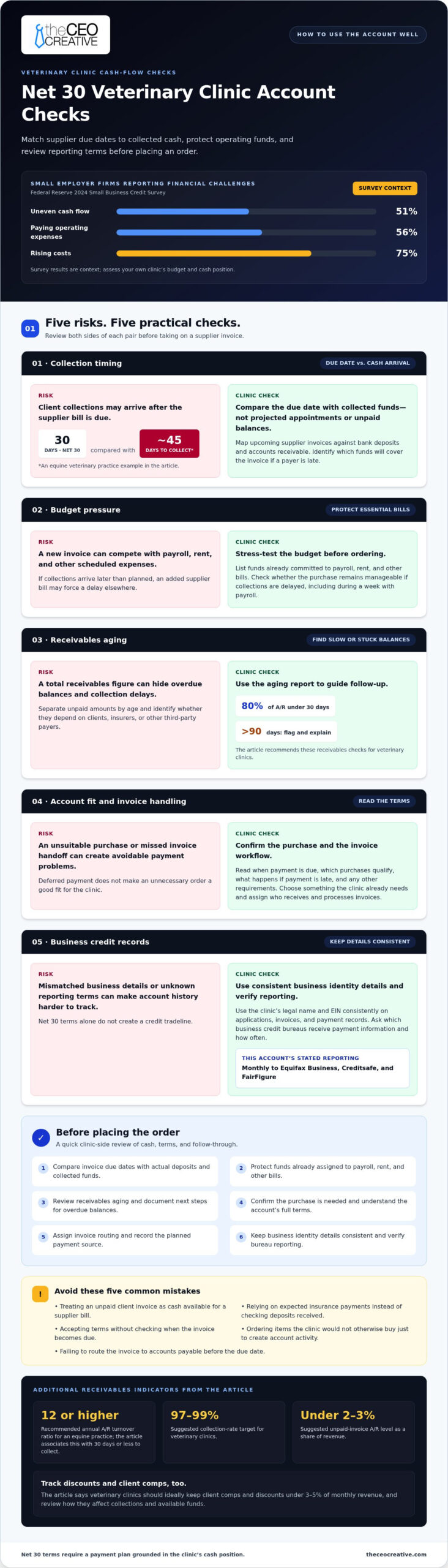
- Compare supplier due dates with actual collections. Review bank deposits and accounts receivable before taking on a new invoice. An equine veterinary practice example took roughly 45 days to collect, longer than a Net 30 payment window. That difference can create a cash gap even when the clinic expects payment. Map upcoming supplier invoices against collected funds, not projected appointments or unpaid client balances. The Federal Reserve’s 2024 Small Business Credit Survey found that 51% of small employer firms cited uneven cash flow as a financial challenge.
- Stress-test the budget against operating expenses. Identify which funds already cover payroll, rent, and other scheduled bills. The Federal Reserve’s 2024 Small Business Credit Survey found that 56% of small employer firms cited paying operating expenses as a challenge. Its survey also found that 75% cited rising costs of goods, services, and wages. Use those findings as context, then assess your clinic’s own budget. Model whether an added supplier invoice would force a delay elsewhere if collections arrive later than planned.
- Review receivables aging for warning signs. Separate unpaid balances by age and identify which ones depend on client payments, insurers, or other third-party payers. A third-party payment may reach a veterinary practice’s account within a few days after a visit, but that timing shouldn’t replace review of actual clinic deposits. In the equine practice example, annual accounts receivable turnover was 8.33. The provided guidance recommends an annual turnover ratio of 12 or higher for an equine practice, corresponding to 30 days or less to collect.
- Assess the account’s total cost and practical fit. Read the full agreement before relying on deferred payment. Check when payment is due, which purchases qualify, what happens if a payment is late, and whether the account has other requirements. Choose a purchase the clinic already needs. An order that doesn’t fit the clinic’s budget or operations can leave a balance without meeting a genuine need. Also decide who will receive and process invoices, since a missed handoff can lead to avoidable payment problems.
- Plan for delayed collections. Before ordering, identify the funds that will cover the invoice if a client or payer pays late. Don’t rely on one expected deposit if other bills fall due at the same time. Record the planned payment source and compare it with the clinic’s current cash position. Consider a scenario such as a delayed reimbursement during a week with payroll. This can help show whether the new obligation is manageable without disrupting essential operations.
Common mistakes to avoid
- Treating an unpaid client invoice as cash available to pay a supplier bill.
- Relying on expected insurance or third-party payments instead of checking which deposits have arrived.
- Accepting terms without reading when the invoice becomes due.
- Ordering items the clinic wouldn’t otherwise buy just to create account activity.
- Failing to assign invoice routing, so the due date passes before accounts payable sees the bill.
To successfully navigate these risks when utilizing **net 30 accounts for veterinary clinics**, management must carefully evaluate their financial position before placing the order, and keep the clinic’s collection process visible alongside its supplier commitments. Veterinary clinics should provide cost estimates before procedures and have clients sign consent forms acknowledging payment responsibility. These steps clarify what clients are expected to pay, but they do not replace monitoring collections. Veterinary clinics should aim to keep accounts receivable from unpaid invoices below 2-3% of revenue and target a collection rate of 97 – 99%. Review these measures regularly, and compare the collection rate with the balances still outstanding so that a strong overall result does not obscure overdue accounts. If collection performance weakens, consider whether the clinic’s payment follow-up and estimates are supporting timely payment before committing to more deferred purchases.
Age balances and identify exceptions that need attention. Veterinary clinics should aim to keep 80% of accounts receivable under 30 days old. Review the aging report to see whether balances are concentrated in particular client accounts or payment sources, and document the next step for unresolved amounts. Veterinary clinics should flag and explain every accounts receivable entry older than 90 days; a written explanation can help staff distinguish a disputed balance from one that simply needs follow-up. Also review client comps and discounts, which veterinary clinics should ideally keep under 3-5% of monthly revenue. Track their effect on collections and revenue so the clinic can assess whether they are contributing to unpaid balances or reducing the funds available for bills. Use these checks together when deciding whether a Net 30 commitment fits the clinic’s cash position, and revisit them as receivables change.
How can a veterinary clinic build business credit using Net 30 accounts?
- Keep the clinic’s business identity consistent. Apply using the business’s legal name and EIN, and use the same details on vendor applications, invoices, and payment records. A mismatch between an LLC’s legal name and a shortened clinic name can make account records harder to match. Keep the EIN, business address, and entity name consistent in bookkeeping files. For a newly formed LLC, establish this recordkeeping routine before opening a supplier account. Consistent details help vendors and reporting bureaus associate payment activity with the right business.
- Choose accounts that report payment history. Net 30 terms alone don’t create a credit tradeline. Ask which business credit bureaus receive payment information and how often the vendor reports. This account reports monthly to Equifax Business, Creditsafe, and FairFigure. A vendor that doesn’t report your account activity won’t help establish a tradeline through those payments. Keep a written record of the reporting bureaus and the account’s reporting schedule. That makes it easier to understand where to look when reviewing the clinic’s business credit files.
- Build a manageable reporting mix. The article’s guidance recommends starting with three to five net 30 accounts that report to multiple bureaus. Treat that as a planning reference, not a target that overrides the clinic’s budget. Begin with vendors tied to real operating purchases. For example, separate routine office orders from other supplier purchases, then track each vendor’s balance and due date. Several accounts create several obligations. Add another only when the clinic can manage the invoices and pay them on time.
- Apply with complete business details. Gather the clinic’s EIN and matching business information before submitting an application. Review the vendor’s eligibility and approval criteria, including whether it considers time in business, business credit history, or payment records. An EIN-based account may suit a clinic seeking to build business credit without a personal guarantee. Read the terms as carefully as the application fields, then save the approval decision and account instructions with the vendor’s billing information.
- Place a useful first order. Choose something the clinic already needs, rather than buying solely to generate activity. Net 30 supplier terms defer payment for 30 days on eligible purchases, so record the purchase date and calculate the due date from the vendor’s invoice terms. Keep the invoice with the order confirmation and enter the amount in the clinic’s accounts payable system. A clear paper trail helps connect the purchase, payment, and vendor account if you later review the clinic’s records.
- Pay according to the invoice terms. Set a payment reminder before the due date and assign responsibility to a specific staff member. Record the date paid, amount, and payment confirmation. A net 30 account creates a payment history only when the vendor receives and reports the account activity; late payment can undermine the record you’re trying to establish. Don’t assume that placing an order or making a payment immediately changes a credit file. Keep invoices and confirmations available for reconciliation.
- Review the business credit files over time. A new vendor account may take 60 days to appear on a business credit report. Check the bureaus the vendor reports to and compare the account name and payment history against your records. If activity hasn’t appeared, keep the invoice and payment confirmation handy while you track the account’s reporting cycle. Review each file for accuracy, then continue using the account for planned purchases and on-time payments. For terms and application details, review the business Net 30 account. This is general information, not financial or legal advice.
terms. If the clinic uses a credit card to pay supplier invoices, pay its full balance when the statement becomes due to avoid interest charges. The CEO Creative requires businesses applying for net-30 terms to have no late payments listed on business credit for the past 6 months, so review the clinic’s payment record before applying. SCORE identifies the three major business credit bureaus as Dun & Bradstreet, Experian, and Equifax.
Sound credit practices can also support cash flow from customers. Ask customers to complete a business credit application, send invoices promptly, and follow up systematically on receivables. Extend credit terms only to customers who meet the business’s credit approval process.
Vendor accounts
- Separate supplier credit from other payment arrangements. A vendor account lets a business buy from a supplier and pay later under agreed terms. Net 30 means the invoice is due within 30 days. It’s trade credit tied to a purchase, not cash deposited into the clinic’s bank account. For example, a clinic might order routine office items on terms, then pay the supplier’s invoice by its due date. Record each vendor account separately in accounts payable. This helps staff distinguish supplier obligations from client receivables and track the purchases connected to each invoice.
- Choose vendors based on what the clinic needs. Veterinary practices have different operating needs, so consider the purchase category before comparing account terms. A clinic might need front-desk office supplies, staff apparel, or promotional products for community events. Identify the item, who will use it, and whether it fits the current budget. This helps prevent the account from driving unnecessary spending. Record the vendor and purchase purpose with each invoice so the clinic can assess whether the account supports routine operations.
- Compare the payment window with the invoice process. Net 30 vendor terms move the payment date without adding interest, according to the stated market information. The clinic still needs to understand when the supplier starts counting the 30 days and how it delivers invoices. A delay in routing an invoice internally doesn’t change the supplier’s due date. For example, assign one employee to receive invoices and another to enter them into accounts payable. Then set reminders based on the actual invoice terms, not the date someone first notices the bill.
- Ask whether different terms suit the purchase. Some businesses negotiate longer supplier payment terms, such as net 45, net 60, or even net 90 days. A longer window can change when cash leaves the business, but it doesn’t remove the debt. Terms depend on the supplier and its agreement with the buyer. Some suppliers also offer early-payment discounts, so compare the discount against the clinic’s cash needs and the stated due date. Put any agreed terms in writing and ensure the accounts payable team uses them when scheduling payment.
- Understand alternatives to a standard invoice account. A supplier may deliver products on consignment and require payment only after those products sell. That arrangement differs from a regular Net 30 invoice, where the buyer owes payment under the agreed deadline. A veterinary clinic should map who owns the goods before sale, how sales are recorded, and when payment becomes due. For example, if a clinic carries consigned items, staff need a clear method to record each sale and report it to the supplier. Don’t assume consignment and Net 30 have identical billing rules.
- Consider trade credit within the clinic’s broader obligations. In 2019, US small businesses with under $1 million in annual revenue used more than $50 billion in trade credit. That figure describes business use overall, not a recommended borrowing amount for an individual clinic. Review the clinic’s existing supplier invoices, due dates, and expected cash before adding another account. Net 30 terms can help time purchases and payments, but several invoices may become due close together. Track each account in one schedule so the owner can see total obligations and upcoming payment dates.
- Keep terms and records together. Save the application, approved terms, invoices, payment confirmations, and supplier correspondence in one business record. If a vendor changes its billing instructions or agrees to a different due date, update the clinic’s payment calendar. Consistent records also help resolve a mismatch between an invoice and the order. Review the file during regular bookkeeping, then keep the account active only for planned purchases the clinic can manage. For a reporting vendor account, review the business Net 30 account details before deciding whether its terms fit.
The CEO Creative: net 30 apparel vendor
The CEO Creative offers a net 30 apparel vendor account for veterinary clinics with planned apparel purchases. Options also include a net 30 t-shirt supplier, embroidery supplier, and office supplies vendor. The account uses an EIN only, with no personal guarantee or personal credit check. US businesses, including newly formed LLCs, are eligible, with no minimum time in business. Review the business Net 30 account terms and reporting details to decide whether they fit your clinic’s needs.
Make your next credit decision part of a system
Choosing net 30 accounts for veterinary clinics is ultimately a systems decision. Set a clear purchasing policy: identify which expenses belong on vendor terms, who approves orders, and who tracks invoices through payment. That structure helps a clinic use supplier accounts deliberately instead of treating each application as a separate credit-building tactic.
Decide what a useful business credit profile would support in your clinic’s future operations. Keep business records consistent, review account activity regularly, and include payment history in routine bookkeeping. Credit-file outcomes vary, and this information isn’t financial or legal advice.
When considering an account, compare its terms and application requirements with your clinic’s needs.
A consistent process helps make each vendor relationship a considered business decision. Choose a next step that fits your clinic.
Frequently Asked Questions
What does Net 30 mean for veterinary clinics?
Net 30 means the clinic pays a supplier’s invoice within 30 days under the agreed terms. Net 30 accounts for veterinary clinics can help schedule payment for planned business purchases, but the clinic remains responsible for the full invoice. For example, a practice could use an account for routine staff apparel, then enter the invoice into accounts payable and assign a due-date reminder.
Which vendors offer Net 30 accounts to veterinary clinics in the United States?
The CEO Creative offers Net 30 apparel and office supplies vendor accounts that may fit a clinic’s operating purchases. Its relevant options include a Net 30 apparel vendor, a Net 30 t-shirt supplier, and a Net 30 embroidery supplier. These categories can suit staff clothing or branded apparel needs. They aren’t a substitute for veterinary medical supply purchasing, so match each vendor account to the clinic’s actual needs.
What veterinary suppliers offer Net 30 payment terms for new customers?
Net 30 terms depend on each supplier’s account program and approval criteria. For non-medical business purchases, The CEO Creative offers vendor accounts for apparel and office supplies. A new clinic can consider those categories for planned items such as staff apparel or administrative supplies. Before applying, identify the intended purchase and review the vendor’s terms, application requirements, reporting practices, and payment process.
What are the eligibility requirements for a veterinary clinic to qualify for Net 30?
Requirements vary by vendor. The CEO Creative accepts US businesses, including newly formed LLCs, with no minimum time in business. The account uses the business EIN and doesn’t require a personal guarantee or personal credit check. Prepare the clinic’s legal business name and EIN, and keep those details consistent across the application and business records. Review the account terms before applying.
How can a veterinary clinic apply for a Net 30 account?
Start by selecting a vendor account tied to a purchase the clinic already plans to make. Gather the business’s EIN and legal details, then complete the supplier’s application using consistent information. Review the payment deadline, eligible purchases, and reporting terms before submitting. After approval, save the account terms with invoices and payment records. Assign a staff member to monitor the account so orders and due dates stay organized.
Are Net 30 terms available to new or small veterinary practices and mobile clinics?
Yes. The CEO Creative accepts US businesses, including newly formed LLCs, with no minimum time in business. A mobile veterinary practice can apply using its business identity and EIN. Organize the clinic’s legal business details and identify a planned purchase that fits the account before applying. Review the account’s eligibility criteria and payment terms carefully.