


Paying for practice overhead on terms can create breathing room, but it only helps if the bill fits your cash flow. Net 30 accounts for therapy practices let eligible business purchases be invoiced for payment within 30 days, and vendor reporting can help build a business credit history. The tradeoff is straightforward: you gain time to pay, but you still need to manage the due date and budget carefully.
Running a therapy practice means balancing clinical work with recurring business needs, from office supplies to branded materials. It’s reasonable to ask whether a vendor account can support those expenses and contribute to your business credit profile, and whether the terms are worth the added responsibility. This article explains how Net 30 vendor accounts work, what overhead purchases may fit, how reporting factors in, and the advantages and drawbacks clinicians should weigh before applying.
Key Takeaways
- Match vendor terms to routine practice purchases so the account supports real overhead needs.
- Understand how applying, ordering, paying, and reporting fit together before you rely on a vendor tradeline.
- Use reported payment history as one part of a broader business credit-building approach, not a guaranteed score increase.
- Set a payment routine that protects cash flow and helps you avoid missed due dates.
- Weigh the flexibility of delayed payment against the responsibility to pay the full invoice on time.
How do therapy practices apply for net 30 vendor credit?
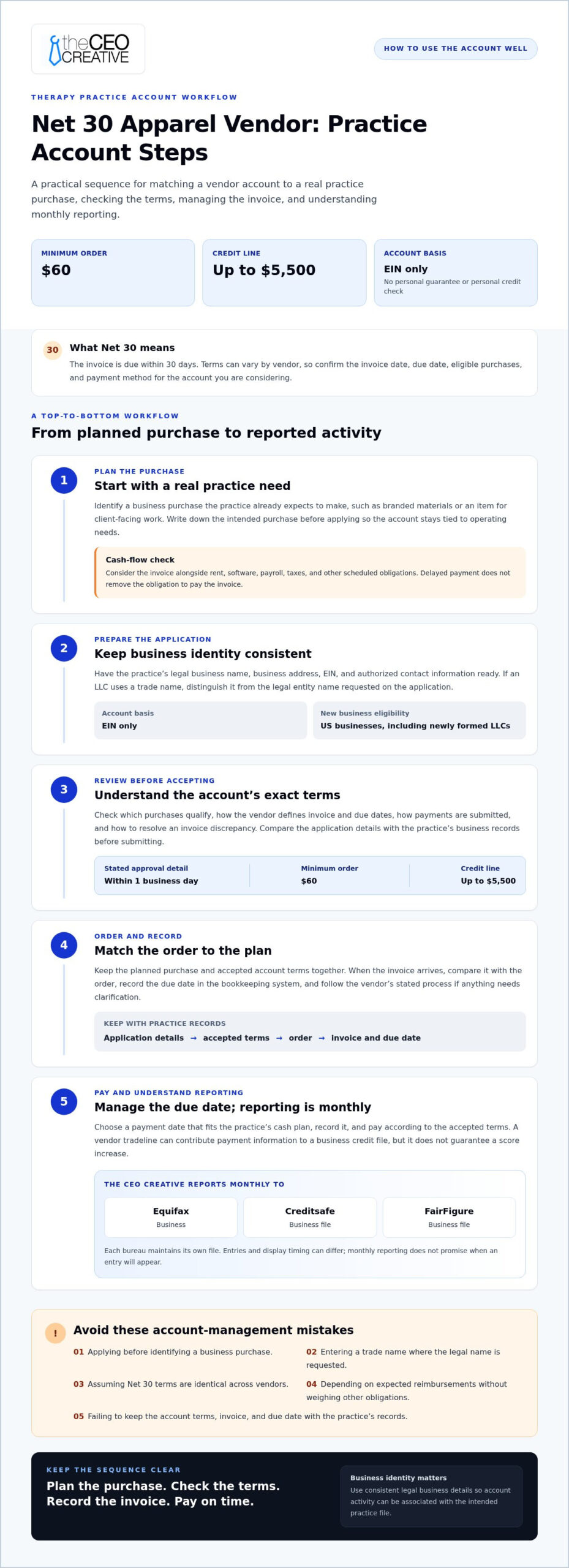
A therapy practice applies by selecting a vendor, completing its business application, and accepting the vendor’s payment terms. Net 30 generally means an invoice is due within 30 days. The practice should approach the application as an operating decision, not just a credit-building task. First identify a legitimate business purchase, then determine whether the payment schedule fits the practice’s cash-flow plan.
Choose a vendor category that meets a real practice need. A solo clinician may need supplies for client-facing work, while a group practice may need items for a shared workspace. Write down the intended purchase before applying. This keeps the decision grounded in practice operations and makes it easier to assess whether the account terms fit.
Prepare consistent business information for the application. Use the practice’s legal name and business address, along with its EIN and an authorized contact’s details when requested. If an LLC uses a trade name, distinguish the legal entity from the name clients see. Compare the application with existing business records before submitting it to reduce avoidable mismatches.
Read the account terms before accepting them. Confirm how the vendor defines the invoice date and due date, which purchases qualify, and how payments are submitted. Payment windows can vary by vendor. Check how to resolve invoice discrepancies, too, so the practice knows what to do if an order and its bill do not match.
Consider cash flow across the practice, rather than looking only at the invoice. A therapist may have rent, software, payroll, and tax obligations alongside vendor bills. For self-employed clinicians, the Internal Revenue Service states that self-employment tax in the United States is 15.3%, applied to 92.35% of net profit. Include tax planning when deciding whether the practice can comfortably take on another payment obligation.
Use this checklist to organize the application:
- Identify a business purchase the practice already expects to make.
- Write down the legal entity name, business address, EIN, and authorized contact information.
- Compare the application details with the practice’s existing business records.
- Review the vendor’s invoice, payment, and dispute terms before accepting the account.
- Choose a payment date that fits the practice’s cash plan and record it in its bookkeeping system.
These common mistakes can make a vendor account harder to manage:
- Applying before identifying a business purchase, which can lead to unnecessary ordering.
- Entering a trade name where the application requests the LLC’s legal name.
- Assuming Net 30 works identically across vendors instead of reading the specific terms.
- Budgeting from expected reimbursements without considering other scheduled obligations.
- Submitting an application without keeping a copy of its terms and business details.
After applying, keep the submitted information and accepted terms with the practice’s records. Refer to them when reviewing later vendor communications. This creates a clear record of what the practice requested and agreed to, and connects the application with day-to-day financial management.
Another common mistake is treating an approved vendor account as available spending instead of a payment obligation. Keep the planned purchase and account terms together, and confirm that the goods ordered match the reason for opening the account. When an invoice arrives, compare it with the order and record the due date in the bookkeeping system. If anything is unclear, follow the vendor’s stated process to seek clarification before paying or setting the issue aside. This keeps the account connected to practice operations and makes the payment visible alongside other commitments.
Also avoid assuming that vendor credit changes the cost of running the practice or makes every purchase affordable. The article estimates that credit-card processing could reduce revenue by 2-3 percent of the session fees processed by card. Consider that estimate when reviewing the practice’s cash plan, but keep the vendor invoice and its due date as distinct obligations. Before accepting an account, decide how the planned purchase will be paid and where the payment will be recorded. Afterward, review the account record against the invoice and the practice’s available cash. If the purchase no longer fits the plan, pause before placing another order. A deliberate review helps the practice use credit for an expected operating need without losing sight of its other obligations.
How can net 30 accounts help build business credit for a therapy practice
A vendor-reported account can add business payment information to a therapy practice’s credit file. This information is called a tradeline. It links an account to the business and records activity reported by the vendor. For a practice building its business profile, a vendor tradeline can contribute to its credit history alongside other eligible business accounts.
Opening an account alone does not create a record of how the practice manages it. The activity a vendor reports is what matters, and the business file must be associated with the correct practice. The CEO Creative reports monthly to Equifax Business, Creditsafe, and FairFigure. Each bureau maintains its own file, so entries and display timing can differ.
Connect the account to the practice
Consistent business identity helps connect reported activity to the intended file. Use the practice’s legal name and EIN consistently on the vendor account and in business records. If an LLC uses a separate trade name, keep the legal entity clear. This is especially useful for a newly formed practice building a distinct business profile.
A practice might choose a vendor account for purchases it already makes, such as administrative supplies. For example, a clinician planning a routine supplies order can review a Net 30 office supplies vendor and consider whether its account terms fit the practice. The purchase should serve an operating purpose; credit reporting is a secondary benefit of a suitable vendor relationship.
Make payment history useful
Once an account is active, the practice’s financial process should make every invoice easy to track. Record the vendor, invoice, due date, payment, and supporting confirmation in the bookkeeping system. These records help distinguish a completed payment from an open balance and support accurate reconciliation. They also give the owner a clear history of business purchases and account management.
In a group practice, assign responsibility for reviewing invoices and recording payments. Clinicians should not assume someone else has handled a bill unless the practice’s process makes that clear. In a solo practice, a recurring calendar reminder can bring upcoming invoices into view alongside other business obligations. These systems make timely account management part of routine operations.
Use a broader credit-building approach
One tradeline is only one part of a business credit profile. Focus on accurate business records, appropriate vendor accounts, and consistent payment administration rather than opening accounts just to generate activity. Before adding an account, consider whether its purchases suit the practice and whether the payment schedule fits existing commitments.
Keep expectations grounded in what a vendor account does: it creates a business purchasing relationship and may contribute reported activity to a business file. It does not replace cash-flow planning or other financial records. A therapist can include a vendor relationship in a deliberate business-credit routine while continuing to manage ordinary expenses through the practice’s bookkeeping system.
For practices comparing account terms, The CEO Creative’s business Net 30 account information explains an option to consider alongside the practice’s planned purchasing needs. The practical next step is to compare account terms with actual expenses, then maintain a consistent record of each transaction and payment.
Credit-building also works best when it sits alongside cash-flow planning. That ongoing cost makes it useful to keep business obligations visible and avoid treating a vendor account as a substitute for cash reserves. The Federal Reserve’s 2025 report found that 70% of owners of businesses with no employees who faced a financial challenge used personal funds to get through it. Separating practice spending from personal finances and keeping a clear view of upcoming bills can help an owner plan for routine costs as well as unexpected pressure.
Tax planning is another part of that picture. In Heard’s 2026 survey, taxes were the number one business challenge for therapists, named by 53.6%. U.S. estimated tax payments are due April 15, June 15, September 15, and January 15 of the following year, or the next business day. A practice can account for those obligations when deciding what it can responsibly charge to a vendor account and when payments should be scheduled. Net 30 terms are most useful when the invoice fits the practice’s normal purchasing needs and its payment process can reliably cover the due date. Credit history may grow over time, while careful budgeting helps protect the practice’s day-to-day stability.
The CEO Creative: net 30 apparel vendor
The CEO Creative offers a net 30 apparel vendor option for therapy practices that need branded apparel and want vendor terms connected to business credit building. Consider it when an apparel purchase fits your practice’s real operating needs and you can plan for its invoice deadline. The account can also suit practices seeking a net 30 t-shirt supplier, net 30 embroidery supplier, or net 30 office supplies vendor, depending on the purchase.
Choose a category that matches your planned purchase, then review the account terms and payment schedule before ordering. The goal is to pair useful practice spending with a manageable payment routine, not to buy items solely to generate credit activity. Visit theceocreative.com to explore The CEO Creative’s account and decide whether it fits your practice.
Make Your Next Credit-Building Step Deliberate
Business credit grows through consistent decisions, not a single account opening. For clinicians considering net 30 accounts for therapy practices, the next step is to choose vendor terms that fit planned business purchases and the practice’s payment routine. Treat each order as an operating decision first. Credit reporting is a potential benefit, not a substitute for sound cash-flow management.
Before applying, decide what the practice needs and how the invoice will fit alongside other obligations. Review the account terms and reporting details carefully. This preparation can support an informed decision and clear recordkeeping as your practice develops.
To explore an account for your practice, review the details and decide whether the terms align with your needs.
Build your practice’s financial systems one considered step at a time.
Frequently Asked Questions
What does net 30 mean for a therapy practice?
For a practice, the practical effect is a vendor bill that must fit into its accounts-payable schedule. Record the invoice in the correct accounting period, assign it to the appropriate expense category, and note its due date. For example, a practice that closes its books monthly can match the vendor invoice to the order record before reconciling that period’s expenses.
Can a newly formed therapy practice apply for a vendor account?
Newly formed US LLCs can be eligible for The CEO Creative’s vendor accounts, and the business states there is no minimum time in business. Before applying, organize the LLC’s legal name, EIN, business address, and authorized contact details. Consistent records help the practice manage account correspondence and distinguish business transactions from personal ones.
How should a therapy practice decide what to order?
Start with a documented operating need, such as supplies for the administrative workspace or apparel to identify staff. Consider whether the purchase supports current practice operations and whether the team will use it. A group practice could gather requests from clinicians before ordering; a solo therapist could compare the proposed purchase with existing supply inventory.
What records should a practice keep for a vendor account?
Keep the application, accepted account terms, order confirmation, invoice, payment confirmation, and related bookkeeping entry together. A digital folder labeled with the vendor’s name makes these records easier to find during reconciliation. In a group practice, clarify who can access the folder and who records transactions, so the owner can trace an invoice without relying on one person’s memory.
What should an owner do if account details look incorrect?
Compare the account entry with the practice’s application, invoice, and payment records. Check the legal business name, address, and account information for inconsistencies. Make a dated note of the specific mismatch and keep the supporting documents. Then use the relevant bureau’s established process to request a review of inaccurate file information, retaining copies of correspondence in the practice’s records.
How can a practice fit vendor payments into its bookkeeping routine?
Include vendor invoices in the same review process as other business payables. A solo clinician might review open bills during a weekly bookkeeping session; a group practice could include them in its regular accounts-payable review. Match each recorded payment to the bank transaction and invoice, then keep the records together. This makes the account activity easier to understand later.