

Post type: HOW TO USE THE ACCOUNT WELL
Table of contents: Why studios consider Net 30; eligible studio purchases; how the account works; account checklist; The CEO Creative account.
Net 30 accounts for tattoo studios can help owners buy eligible business and branding products on terms while building a record of vendor payment activity. The CEO Creative offers Net 30 terms on categories such as apparel, printing, office supplies, drinkware, phone accessories, and promotional products.
A vendor account is useful only when its product categories match purchases your studio already needs and you can manage the invoices. Before applying, understand how the account is based on your business information and EIN, what reporting means, and when payment is due. Opening an account or having activity reported does not guarantee a particular credit result.
This article covers which purchases fit the account, how to apply, order, pay, and manage records, and which business credit bureaus receive monthly reports. Use the account for eligible studio needs, plan payments around your cash flow, and treat credit building as an ongoing business practice rather than an assured outcome.
Key Takeaways
- Net 30 means payment is due within 30 days under the account terms. Check each invoice and plan for its due date.
- Net 30 accounts for tattoo studios can support eligible business and branding purchases, including apparel, printing, office supplies, and promotional products.
- The CEO Creative has no minimum order limit. Choose purchases for a real business need, and confirm each item fits an offered category.
- Use a consistent routine to apply, order, pay on time, and keep invoices and payment records together.
- Monthly bureau reporting records account activity. It does not guarantee a particular credit outcome or when information will appear.
Why tattoo studios consider Net 30 vendor accounts
A reporting vendor account lets a tattoo studio purchase eligible business items and establish a record of vendor payment activity. With Net 30 terms, payment is due within 30 days under the account terms. This is a purchasing arrangement, not a general-purpose loan. Its usefulness depends on whether the vendor’s categories match the studio’s needs and whether the business can pay invoices by their due dates.
For a studio building its business credit profile, distinguish between having account activity reported and achieving a specific credit result. A tradeline records account information that may be reported to business credit bureaus. Monthly reporting does not guarantee approval for other products, a score increase, a particular bureau result, or when information will appear. The practical reason to open an account is to purchase items the studio needs and manage the payment obligation responsibly.
It can help to understand the basic structure of Net 30 payment terms before applying. Review the due date, invoicing process, and reporting details when assessing whether an account fits your business. Net 30 vendor fundamentals offer more context about how purchase terms and tradeline reporting relate to one another.
What a Net 30 vendor account does for a studio
When the studio places an eligible order, it becomes responsible for the invoice and its stated due date. Set up a simple process for every purchase: send the invoice to the person who handles bills, record the due date, and save proof of payment with the studio’s business records. That routine helps keep vendor-account activity separate from client revenue, artist payments, and other operating transactions.
A vendor tradeline is a record of account activity, not a promise of financing or credit improvement. Choose an order because it serves the business, not solely because the account may report activity. Consider whether the studio could pay the invoice on time if appointments or sales change. This is especially useful for businesses with uneven monthly revenue, where income can vary with bookings, seasonal demand, or promotions.
Which tattoo studio needs may fit the account
Eligible categories include apparel, drinkware, office supplies, printing, phone accessories, and customizable promotional products. A studio might use apparel for staff presentation, printing for business materials, or office supplies for routine administration. The CEO Creative’s product categories are designed for business and branding purchases. Select items from those categories rather than assuming every expense connected to tattooing is covered.
Before ordering, write down the business purpose and identify who will use or track the item. For example, note whether apparel is for the team, printing is for studio information, or office supplies are for administration. This makes it easier to classify the purchase and review its value later. Net 30 accounts for tattoo studios are most useful when owners understand that purchasing and credit reporting are related but separate parts of the process.
What tattoo studios can purchase on Net 30 terms
Start with the vendor’s actual product categories and the studio’s planned business purchases. The CEO Creative offers apparel, drinkware, office supplies, printing services, phone accessories, and customizable promotional products on Net 30 terms. These categories can support team presentation, brand visibility, and administration. They do not cover every possible studio expense, so create a list based on the vendor’s products instead of the studio’s entire operating budget.
Branded apparel and promotional products for studio identity
Team apparel can help artists and staff present a consistent studio identity. A studio might order shirts or sweatshirts for staff, or branded apparel as a retail item for clients. The Net 30 apparel vendor category includes apparel such as T-shirts, sweatshirts, hoodies, long-sleeves, and V-necks. Choose styles and quantities based on a defined use, such as team wear or studio branding, and keep the order within the available category.
Customizable promotional products can also support how a studio presents its brand. For instance, a studio could use branded drinkware or other promotional items in client-facing settings, or use printed materials to keep its business communications consistent. Make a short plan before ordering: name the item, its intended audience, and how the studio will use it. That avoids buying miscellaneous products simply because they are available.
When considering custom branding, make sure the design and the product have a practical purpose. The CEO Creative offers customizable products and professional logo design services. A studio that needs branded items can plan around its existing logo or consider logo design as part of establishing a consistent business identity. Keep the planned purchase connected to the studio’s brand needs and budget.
Printing and office purchases for everyday operations
Printing can support routine ways of sharing studio information. Business cards can provide contact details, brochures can introduce the studio, and flyers can communicate business announcements. Think about what information clients need, where the material will be used, and who will keep it up to date. Planning those details first helps avoid ordering printed materials without a clear administrative or promotional role.
Office supplies can support everyday business tasks. Writing supplies, paper supplies, and notebooks may help staff manage routine office work and keep information organized. Phone accessories such as chargers, cables, and phone cases are also part of the available product categories. Match these purchases to an actual work need, then record who will use the item and where the invoice should be filed.
When evaluating net 30 accounts for tattoo studios, make a short list of planned purchases and the business reason for each one. Separate branding and administration from the studio’s other operating needs. This gives you a clear basis for deciding whether an order belongs with an eligible vendor account instead of assuming every product a tattoo business uses is available through it.
How the tattoo studio Net 30 account works
The account cycle is straightforward: apply with business details, place an eligible order, pay the invoice by its due date, and allow the vendor to report account activity monthly. Each step has a practical recordkeeping task. Keep the application information consistent, save order and invoice details, note the due date, and retain payment confirmation. A routine like this helps the studio manage purchases and set realistic expectations about reporting.
Application, eligible order, and invoice payment
The application is based on the business’s EIN, and no personal guarantee is required. Submit the studio’s business information accurately and keep a copy of the information used. Approval is not guaranteed. Once approved, choose an eligible business purchase and review the account terms before placing the order.
The account provides up to $5,500 in credit per account. This is a maximum, not an amount every business will receive or need to use. The CEO Creative has no minimum order limit. Choose an order that fits the studio’s needs and payment capacity, then review the invoice for its amount and due date. Net 30 means payment is due within 30 days under the applicable terms, so use the invoice to track the specific obligation.
- Apply. Submit the business application using the studio’s EIN and requested business information. Keep the details consistent with the studio’s records.
- Order. Select a product in an eligible category and check the order against the account terms and the studio’s budget.
- Pay. Review the invoice, record its due date, and arrange payment by that date. Save the invoice and payment record with the studio’s business files.
- Report. The CEO Creative reports account activity monthly to Equifax Business, Creditsafe, and FairFigure.
- Repeat. Place further orders when the studio has an eligible need, and follow the same invoice and payment routine for each purchase.
This sequence keeps the account tied to real business purchases rather than treating it as open-ended spending. Record the order date, item, invoice details, due date, and payment confirmation in one place. A basic spreadsheet or bookkeeping system can help the owner see what has been ordered and what still needs to be paid. It also makes it easier to review account activity if an invoice or bureau record needs attention.
Monthly reporting and realistic expectations
The CEO Creative reports monthly to Equifax Business, Creditsafe, and FairFigure. Monthly describes the vendor’s reporting schedule. It does not control when a bureau processes information or displays a tradeline on a business file. Keep your own records so you can compare account activity with what appears on bureau reports over time.
Monthly reporting records account activity. It does not guarantee approval, a score increase, a particular bureau result, or when a tradeline will appear. Results vary. Treat timely payment and organized records as sound account management, not as a promise of a specific credit outcome.
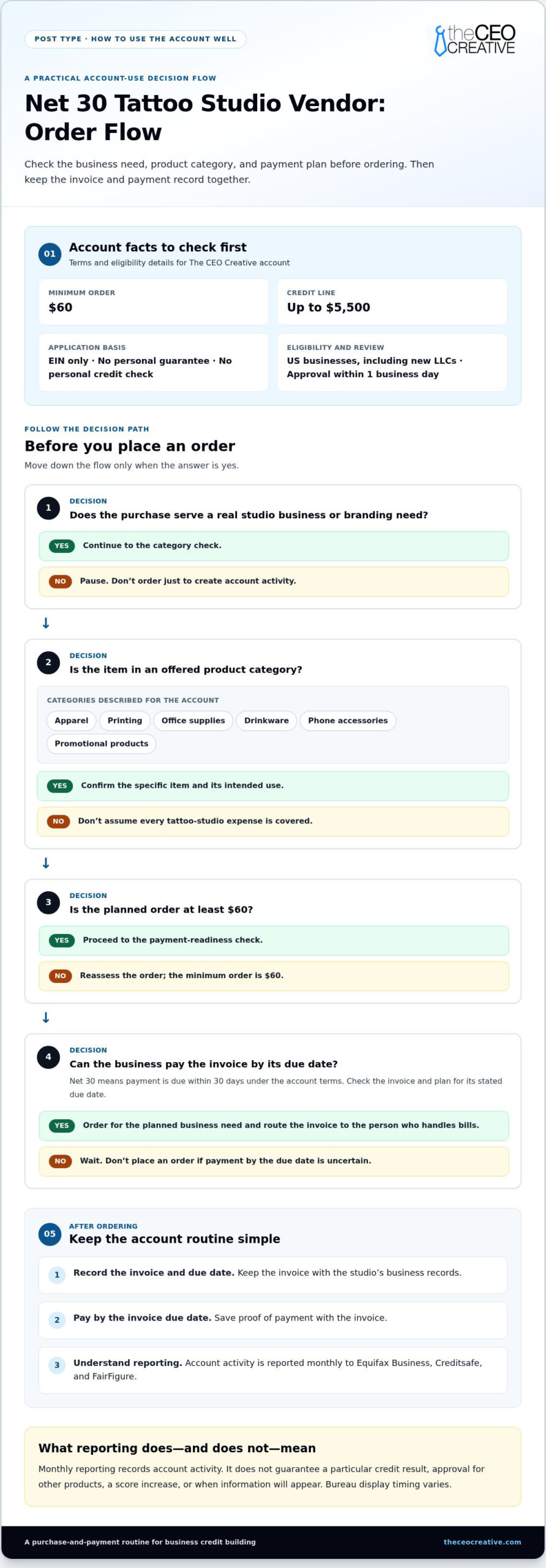
A checklist for choosing and managing a tattoo studio account
Before applying, make sure the studio’s planned purchases fit the vendor’s categories and that the business can manage the invoices. Use this checklist to assess whether net 30 accounts for tattoo studios suit your needs. It also provides a routine to follow after the account is open.
Before applying: confirm the account fits studio purchasing
- List planned purchases. Identify business needs in eligible categories, such as apparel, drinkware, promotional products, printing, phone accessories, or office supplies. Give each item a clear purpose.
- Check the available products. Compare the planned order with the product categories offered. Keep the purchase list focused on products that support the studio’s operations, branding, or administration.
- Assess payment capacity. Make sure the studio can pay each invoice by its due date without relying on uncertain future income. Consider upcoming expenses and the timing of expected client payments.
- Understand the credit line. The account provides up to $5,500 per account. This is a maximum, not an automatic approval amount or a guarantee that the full amount will be available.
- Use consistent business details. Have the studio’s business information and EIN ready, and use matching details across the application and business records.
- Keep the purchase purpose clear. Decide how each order will be used before placing it. A short note about the business purpose helps with bookkeeping and later review.
After opening the account: keep payment and reporting records
Set up a simple record for each order. Save the invoice, note its due date, and retain payment confirmation with the studio’s bookkeeping documents. Record the product category and business purpose too, so the owner can see how the purchase supports the studio. Keep the account’s business details in the same file to review activity without searching across scattered records. Pay according to the invoice terms.
Reporting is monthly, but bureau processing and display timing are outside the vendor’s control. If a tradeline does not appear immediately, do not assume that means a particular credit result. Keep account records and review bureau information on its own schedule. Consistent documentation will make it easier to compare the studio’s payment history with the information on its business files.
Common mistakes to avoid
- Paying late: Missing an invoice due date can disrupt a careful account-management routine. Record the due date as soon as the invoice arrives.
- Ordering without a business purpose: Do not buy items just to use the account. Select eligible products that serve a real studio need.
- Assuming every studio expense is covered: Build the order from the vendor’s stated product categories, not from the studio’s full list of operating expenses.
- Leaving records incomplete: Missing invoices or payment confirmations make it harder to track orders and review account activity.
- Expecting a guaranteed outcome: An account or monthly reporting does not guarantee approval, a score increase, or a specific bureau result.
Use the checklist to assess whether the account suits your studio’s eligible purchasing needs. If the categories and payment routine fit, review the application details before applying.
The CEO Creative Net 30 account for tattoo studios
The CEO Creative provides Net 30 terms for eligible studio branding and business purchases. For studios that already buy apparel, printing, promotional products, drinkware, phone accessories, or office supplies, the account brings those categories into one purchasing option. The account also reports payment activity monthly, but reporting does not guarantee a particular credit result. Plan orders around actual studio needs and pay invoices according to their terms.
Why one account may fit eligible studio purchases
A studio may have related purchases across several business categories. Team apparel can support a consistent professional identity, while printing and office supplies can serve administrative tasks. Drinkware and other customizable promotional products can carry the studio’s branding into client-facing settings. The practical approach is to use Net 30 terms for eligible products the business needs and maintain a clear record of each order.
The CEO Creative is BBB Accredited with an A+ rating and has been in business for 6+ years. These details provide context about the vendor, but do not change the account terms or promise a credit outcome. Studios should still consider whether an order fits their budget and whether they can pay each invoice by its due date.
The account provides up to $5,500 in credit per account, subject to approval. There is no minimum order limit. Use the account for eligible apparel, promotional products, printing, drinkware, phone accessories, and office purchases that match the studio’s operations or brand plans. Choose items based on a real need, not simply to generate account activity.
Take the next step with clear expectations
The application is based on the business’s EIN, and no personal guarantee is required. Approval is not guaranteed. If approved, place an eligible order, review its invoice, and pay by the stated due date. The CEO Creative reports monthly to Equifax Business, Creditsafe, and FairFigure. Each bureau controls its own processing and display timing, so a tradeline may not appear as soon as a report is sent.
Payment discipline matters. Keep the invoice, due date, and payment confirmation in the studio’s business records. Monthly reporting records account activity; it does not guarantee approval, a score increase, or a specific bureau result. Results vary. Consider whether the account fits your eligible purchasing needs and whether your studio can manage each invoice before applying.
Put a clear purchasing routine in place
Before applying, decide how a vendor account would fit into the studio’s regular business purchasing. Choose eligible products with a clear purpose, then set a routine for reviewing invoices, arranging payments, and retaining records. That practical foundation matters more than opening an account simply to pursue a credit result.
Net 30 accounts for tattoo studios can form part of a deliberate business-credit approach when purchases suit the studio and payment terms fit its cash flow. Keep expectations realistic: reported activity does not guarantee a particular bureau display, approval for other products, or a specific change to a credit profile. Results vary.
If the account’s eligible categories and payment process fit your studio’s plans, review the application details and decide whether you are ready to manage the terms consistently.
Build a repeatable process around each order: document why the studio needs it, save the invoice, record the due date, and retain proof of payment. That makes it easier to manage account activity and review business records. This article provides general information, not financial or legal advice.
Frequently Asked Questions
Can a tattoo studio use a Net 30 account to buy tattoo supplies?
The CEO Creative’s Net 30 account covers its listed business product categories, including apparel, promotional products, printing, drinkware, phone accessories, and office supplies. Tattoo supplies are not among those listed categories. Build an order around the products offered and the account’s payment terms. This keeps studio purchasing plans grounded in eligible business and branding needs.
Which business credit bureaus does The CEO Creative report to?
The CEO Creative reports monthly to Equifax Business, Creditsafe, and FairFigure. Monthly reporting means the vendor sends account information on a monthly schedule. Each bureau handles its own processing, so the date information appears in a business credit file can differ from the reporting schedule. The vendor does not promise a display date or a credit result. Keep invoices and payment confirmations for your account records.
Does a tattoo studio need a personal guarantee to apply?
No personal guarantee is required under the account terms. The application is based on the business’s EIN, so prepare the studio’s business information and EIN for the application process. These terms describe the application basis, not a promise that an application will be approved. Keep the details you submit consistent with the studio’s own records, and review the account terms before placing an order.
Is there a minimum order for this Net 30 account?
The CEO Creative has no minimum order limit. That means you can plan an order around a real eligible need instead of adding unrelated products to reach a threshold. The order still needs to fit the account terms and the studio’s budget. Review the invoice and due date, and make sure the business can pay on time.
How much credit can an approved tattoo studio receive?
The account offers up to $5,500 per account. “Up to” states the maximum, not an amount every applicant will receive. Do not assume the approved amount before an application decision. Treat the account as a vendor purchasing arrangement with an invoice to pay, not as a loan or credit card. Plan purchases around the amount approved and the studio’s ability to pay.
Does monthly tradeline reporting guarantee a higher business credit score?
No. Monthly tradeline reporting does not guarantee a higher score, approval for other credit, or a particular date when an account appears in a bureau file. Results vary. For net 30 accounts for tattoo studios, focus on what the studio can control: submit accurate business information, pay invoices according to their terms, and retain payment records. This is general information, not financial or legal advice.