

Putting your personal credit score at risk for every business purchase is a strategic mistake that limits your growth. Most freelancers use personal credit cards for business expenses. This creates high utilization rates. It often leads to lower personal scores and rejection from traditional lenders. Establishing business credit as a freelancer in 2026 allows you to build a separate financial identity using your EIN.
You likely started your business to gain independence, but tied your personal finances to your company’s daily operations. This guide explains how to separate those finances by establishing credit tradelines. You’ll learn how to qualify for a Net 30 office supplies vendor account with a $5,500 credit limit. We will cover the specific workflow of applying, ordering, and paying to ensure your activity is reported monthly to Equifax Business, Creditsafe, and FairFigure. Results vary and there are no guaranteed outcomes or specific score boosts. This content is not financial or legal advice.
Key Takeaways
- Separate your personal and business financial identities by using an Employer Identification Number (EIN).
- Follow a specific process for establishing business credit as a freelancer by using a Net 30 office supplies vendor.
- Access a business credit line of up to $5,500 with a decision within one business day and no personal guarantee.
- Ensure your account activity is reported monthly to Equifax Business, Creditsafe, and FairFigure.
- Maintain eligibility for reporting by meeting the $60 minimum order requirement on every purchase.
Understanding Business Credit for Freelance Operations
Business credit is a financial profile linked to your Employer Identification Number (EIN). It functions independently of your Social Security Number. While personal credit tracks how you manage consumer debt, business credit tracks how your company pays its bills. Establishing business credit as a freelancer allows you to build a reputation that lenders and suppliers can verify without looking at your private finances. This profile becomes a public record of your company’s fiscal discipline.
Business credit scores are calculated differently than personal FICO scores. Personal scores often focus on credit mix and age of accounts. Business scores emphasize payment performance. Paying a vendor early often results in a higher score than simply paying on time. This distinction is vital for freelancers who need to demonstrate reliability to larger corporate partners. Results vary and there are no guaranteed outcomes or specific score boosts. This content is not financial or legal advice.
Why Freelancers Need Separate Business Credit
Separating your financial identities protects your personal credit utilization. If you put $3,000 of tech equipment on a personal card, your score may drop due to high usage. Moving that debt to a business account keeps your personal score stable. This separation also builds professional credibility. When you apply for larger contracts, having a verified business credit history proves your business is a legitimate entity.
You can prepare for future growth without relying on a personal guarantee for every purchase. This is particularly useful for new LLCs. It allows the business to stand on its own. Benefits of this separation include:
- Protecting personal credit scores from high utilization rates.
- Building a corporate identity for future financial applications.
- Accessing higher credit limits, such as a $5,500 line for office essentials.
- Eliminating the need for a personal credit check on business orders.
The Role of the Net 30 Account
A Net 30 account is a credit arrangement where you have 30 days to pay for an order. These accounts serve as the foundation for your business credit profile. When you use a Net 30 office supplies vendor, the purchase becomes a reported tradeline. This means the vendor shares your payment data with credit bureaus.
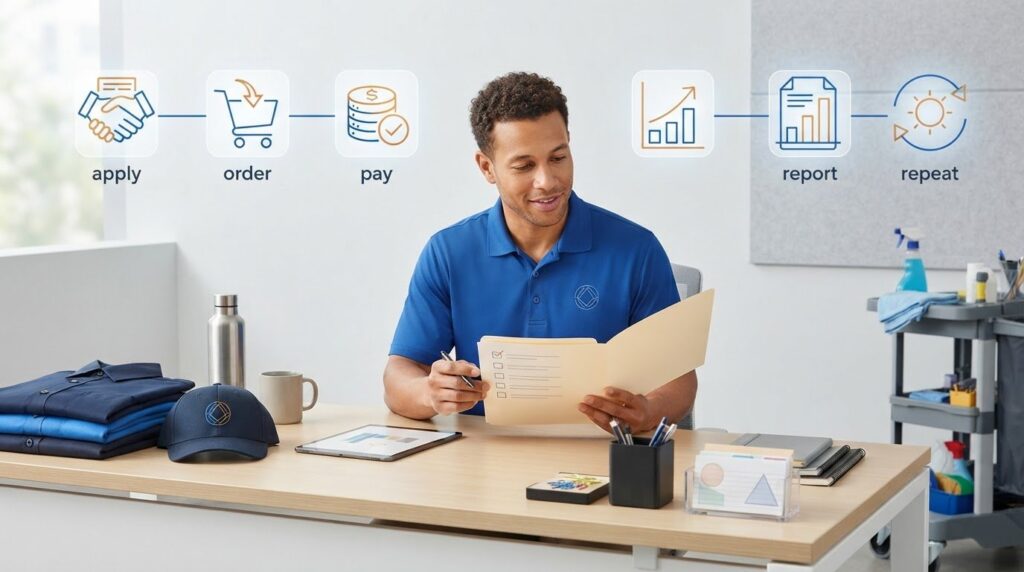
To build a profile effectively, you must follow a consistent workflow. You apply for the account, place an order of at least $60, and pay the invoice within the 30-day term. The vendor then reports this payment monthly to business bureaus like Equifax Business, Creditsafe, and FairFigure. This process demonstrates your ability to manage short-term debt. Establishing business credit as a freelancer depends on these recurring, reported transactions.
Requirements for Establishing Freelance Business Credit
Establishing business credit as a freelancer starts with legal separation. You cannot build a business credit score as a sole proprietor using your Social Security Number. You must register your business as an LLC or a corporation. This process creates a distinct legal entity that can hold its own debt. This content is not financial or legal advice.
Consistency is the most important factor in this stage. Every registry and application must show the exact same business name, address, and phone number. Small errors in your data can cause reporting delays. Lenders use automated systems to verify your company’s existence. If your information does not match state records, your application may be flagged for manual review or rejected. Professionalism in your documentation builds the foundation for future credit limit increases.
Legal Formation and EIN Setup
Your first step is obtaining an Employer Identification Number (EIN) from the IRS. This number acts as a tax identification for your company. It is free to obtain through the IRS website and takes only a few minutes to request. Using an EIN allows you to apply for credit without providing a personal guarantee. This is a core component of how to build business credit effectively. Always use your EIN on applications to ensure the activity is tied to your business profile rather than your personal record.
Once you have your EIN, you should register your business with the Secretary of State. This step confirms your business is in good standing. Many vendors will check your state’s registry before approving a credit line. Having a formal legal structure protects your personal assets. It also signals to credit bureaus that your freelance operation is a serious commercial enterprise. If you need professional support setting up your entity structure and organizing your accounting, consulting with Wright CPAs, LLC can help ensure your business finances and tax obligations remain compliant.
Professional Identity Standards
Lenders and bureaus look for signs of a legitimate operation. You need a dedicated business bank account to keep funds separate. Do not pay business invoices from a personal checking account. This practice, known as commingling, can jeopardize your corporate veil. You also need a professional business address and a dedicated phone number. Avoid using a personal cell phone number for official business listings if possible.
Establishing a professional brand identity helps verify your business status. A high-quality logo design establishes legitimacy when vendors review your profile. It shows that you have invested in your company’s public image. Once these basics are in place, you can apply for an EIN only net 30 account to begin your credit journey. This setup ensures that your business appears established to reporting agencies from day one. Proper preparation simplifies the approval process for higher credit limits later.
The Process of Using Net 30 Vendor Accounts
Many freelancers struggle to find financing because traditional lenders require high revenue or years of history. Vendor credit is a more accessible starting point. You don’t need a high personal FICO score to begin. Instead, you use your company’s identity to secure payment terms. This method is the primary way of establishing business credit as a freelancer. It relies on a simple cycle of purchasing and repayment.
Step-by-Step Credit Building Workflow
First, you must obtain a federal tax ID number (EIN) to identify your business entity. Once you have this number, apply for an EIN only net 30 account. Most applications are given a decision within one business day. There is no personal credit check and no personal guarantee required. This setup allows you to keep your personal and professional finances completely separate.
Next, you must place an order that meets the reporting threshold. You need to spend at least $60 on products like custom notebooks or office supplies. After you receive your invoice, pay the balance in full before the 30-day deadline. Paying early is often better than paying on the due date. Once the payment is processed, the vendor includes your data in their monthly reporting file. Repeat this process every month to maintain an active tradeline on your profile.
Bureau Reporting and Credit Limits
Reporting occurs on a monthly basis. This data is sent to three specific business credit bureaus: Equifax Business, Creditsafe, and FairFigure. These agencies compile your payment history into a business credit report. Other lenders can then view this report to see if you’re a reliable partner. Consistent activity shows that your freelance business can manage its obligations without relying on personal funds. This builds a history that is independent of your personal spending habits.
As you build a history of on-time payments, your credit line may increase. You can reach a limit of up to $5,500 for business supplies and apparel. This higher limit allows you to handle larger projects without cash flow strain. This content is not financial or legal advice. Establishing business credit as a freelancer takes time and consistent purchasing behavior. You should monitor your profile regularly to ensure all data is accurate and up to date.
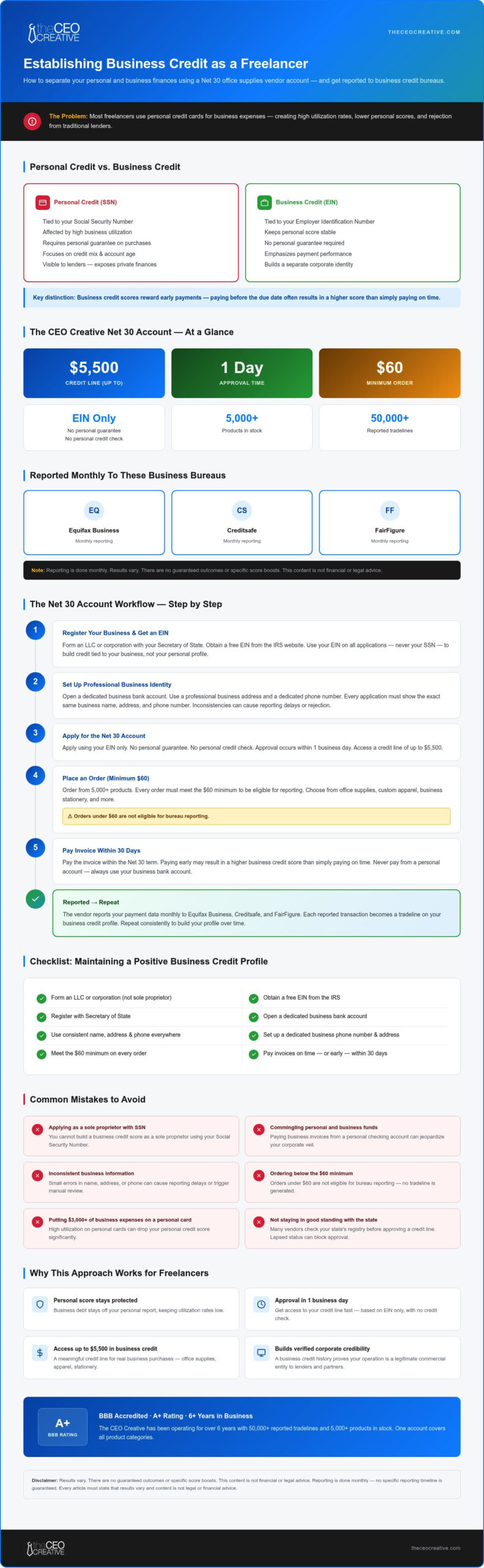
Checklist for Maintaining a Positive Credit Profile
Managing your accounts correctly is just as important as the initial application when establishing business credit as a freelancer. Opening an account does not automatically result in a high credit score. You must use the account according to specific vendor terms to ensure data is sent to the business bureaus. Regular activity demonstrates to lenders that your business is operational and solvent. This content is not financial or legal advice.
Establishing business credit as a freelancer requires avoiding common administrative errors that could stall your progress. Many freelancers focus only on the credit limit and forget the reporting requirements. Maintaining a positive profile depends on your ability to follow a predictable payment schedule. This discipline builds trust with reporting agencies over time.
Monthly Compliance Checklist
- Verify reporting bureaus: Confirm your vendor reports to Equifax Business, Creditsafe, and FairFigure. Tradelines only assist your profile if they are visible to these specific agencies.
- Meet the minimum order: Ensure every invoice is for at least $60. Orders below this amount do not qualify for monthly reporting.
- Schedule early payments: Aim to pay your invoice 5 to 10 days before the Net 30 due date. Early payment history is a primary factor in business credit scoring models.
- Review your business data: Check that your business name and EIN are correct on every purchase order. Inconsistent data can prevent a tradeline from appearing on your business credit report.
Common Mistakes to Avoid
- Falling below the $60 threshold: Some freelancers buy small items and wonder why their credit profile remains empty. You must reach the minimum order requirement for the activity to be reported.
- Late invoice payments: A single late payment can significantly damage a new business credit profile. Business bureaus track the number of days past due with high precision.
- Rapidly applying for multiple accounts: Applying for too many accounts at once can look like financial distress. Build a history with one or two reliable vendors first.
- Assuming universal reporting: Not all vendors report to all bureaus. Many large retailers do not report small business activity at all. Competitor terms are drawn from publicly published reviews and are accurate to the best of our knowledge at time of writing. Confirm current terms directly with any vendor.
- Using personal funds for business debt: Always pay your business invoices from your business bank account. This maintains the legal separation of your entities and protects your corporate veil.
Applying for a Net 30 Business Account
Establishing business credit as a freelancer is often hindered by high-barrier financial products. Many lenders require $100,000 in annual revenue or a minimum 650 FICO score. These requirements ignore the needs of new LLCs and independent contractors. You can bypass these hurdles by using a product-based credit solution. This method allows you to build a profile based on your company’s actual purchasing behavior.
Benefits of The CEO Creative Account
The CEO Creative functions as a net 30 apparel vendor and office supply provider. This model offers a single account for all your operational needs. You can access over 5,000 products including tech, electronics, and drinkware. We provide in-house decoration for apparel and promotional items. This variety allows you to consolidate your business spending into one reported tradeline.
Our account requires no personal guarantee and no personal credit check. This protects your personal financial standing while you grow your business identity. We report your account activity monthly to Equifax Business, Creditsafe, and FairFigure. This consistent reporting helps other lenders verify your company’s reliability. This content is not financial or legal advice.
Getting Started Today
The approval process is streamlined for busy professionals. You can complete the online application using only your business EIN. We provide an approval decision within one business day. This speed is essential for freelancers who need to start establishing business credit as a freelancer without waiting weeks for a bank’s response.
Once you are approved, you can access a credit limit of up to $5,500. This limit is available for established members who maintain a history of on-time payments. To trigger the first reporting cycle, place an order of at least $60. You might choose a net 30 office supplies vendor order to stock your workspace. After your payment is processed, your data is included in the next monthly report to the business bureaus.
By following this process, you create a foundation for future growth. You don’t need expensive coaching or high-fee credit building programs. You simply use the supplies your business already needs to build its reputation. Apply for a CEO Creative membership today to begin your first reporting cycle.
Take Control of Your Business Financial Identity
Separating your personal and professional finances is a strategic move for sustainability. By using your EIN to open a Net 30 office supplies vendor account, you protect your personal credit utilization. You also build a profile that lenders can verify. Establishing business credit as a freelancer requires consistent purchasing and on-time payments. Meeting the $60 minimum order ensures your activity is reported monthly to Equifax Business, Creditsafe, and FairFigure.
We have been in business for over 6 years. Our company maintains an A+ rating with the BBB and has reported over 50,000 tradelines. Approval takes only one business day with no personal guarantee or credit check. This content is not financial or legal advice.
Frequently Asked Questions
Does a freelancer need an LLC to build business credit?
You must register your business as a legal entity like an LLC or corporation to build business credit. Business credit is tied to an Employer Identification Number (EIN) rather than a Social Security Number. Sole proprietorships don’t have a separate legal identity, so they often rely on personal credit scores. Establishing business credit as a freelancer requires this formal structure to ensure all reported tradelines are linked to your company profile.
Which credit bureaus do Net 30 vendors report to?
Reporting practices vary by supplier, but The CEO Creative reports monthly to Equifax Business, Creditsafe, and FairFigure. These bureaus track your payment performance to create a commercial credit report. Other bureaus are not included in our monthly reporting cycle. Always verify which agencies a vendor uses before you place an order. This content is not financial advice.
Is there a minimum order amount for credit reporting?
Yes, there is a minimum order requirement of $60 for reporting eligibility. Orders that fall below this amount are not included in the monthly data file sent to business credit bureaus. This threshold ensures that the reported activity represents significant commercial transactions. You must meet this $60 requirement on every invoice if you want that specific purchase to help build your business credit history and profile.
Can I build business credit with just an EIN?
You can build a business credit profile using only your EIN. Our Net 30 accounts don’t require a personal credit check or a personal guarantee during the application process. This allows your freelance business to establish its own financial reputation independently. You provide your business details and EIN, and we verify the entity’s status. Approval typically occurs within one business day for eligible LLCs and corporations looking to grow.
What is the difference between Net 30 and Net 60 terms?
The difference is the amount of time you have to pay your invoice. Net 30 terms mean payment is due 30 days after the invoice date. Net 60 terms extend that period to 60 days. Establishing business credit as a freelancer usually begins with Net 30 terms. These shorter windows prove to reporting agencies that your business can manage its short-term debt obligations and maintain a healthy cash flow.
How long does it take for a Net 30 account to show on a credit report?
Reporting is done on a monthly basis. Once you pay your invoice in full, the data is included in the next scheduled reporting batch. We don’t promise a specific date for when the tradeline will appear on your business credit report. The bureaus have their own processing times once they receive our monthly file. Consistent monthly purchasing is the most effective way to ensure your profile remains active and updated.
Do Net 30 vendors require a personal guarantee?
Many traditional suppliers require a personal guarantee, but The CEO Creative does not. Our credit line of up to $5,500 is issued directly to the business entity using the EIN. This means you aren’t personally liable for the business debt. This structure is a major advantage for new LLCs. It allows you to build corporate credit without putting your personal assets or personal credit score at risk for every purchase.
What happens if I pay a Net 30 invoice late?
Paying an invoice late will likely damage your business credit score. Business bureaus track payment performance with high precision, noting exactly how many days past due an account becomes. This negative data can lead to lower credit limits or rejection from future lenders. To maintain a positive profile, pay your invoices at least five days before the due date. This content is not legal or financial advice.