

What if a routine business purchase could also help build your food truck’s credit history? Net 30 accounts for food trucks can support that goal when the purchases fit your operation and the vendor reports payment activity. It’s natural to wonder what you can buy on terms, whether payments reach business credit bureaus, and how to manage invoices without straining cash flow.
This guide explains the process from order to reporting, with practical steps for choosing purchases, scheduling payments, and keeping records. It also distinguishes vendor tradelines from equipment financing and loans. The CEO Creative’s EIN-only Net 30 account has no personal guarantee or personal credit check, and reports monthly to Equifax Business, Creditsafe, and FairFigure. Its catalog includes branded apparel, drinkware, stationery, office supplies, and promotional products. Consistent, on-time payments can help establish positive business payment history, though credit results vary.
Key Takeaways
- Net 30 accounts for food trucks are vendor tradelines, not loans or credit cards. Responsible use can support business-credit building.
- Understand the process from application and ordering to invoice payment and monthly reporting.
- Choose useful purchases that fit your operation, such as apparel, drinkware, stationery, office supplies, or promotional products.
- Before ordering, check that the purchase fits your budget and assign someone to track the invoice and due date.
- The CEO Creative account is EIN-only, has a $60 minimum order, and offers a credit line of up to $5,500. Credit outcomes vary.
What Net 30 Accounts for Food Trucks Actually Do
A reporting vendor account can support business-credit building when you use it responsibly and pay invoices according to their terms. For food truck owners, Net 30 describes an invoice payment arrangement: you buy eligible items from a vendor and pay the invoice within the stated 30-day period. The period’s starting point can depend on the invoice terms. This general explanation of Net 30 payment terms provides background, but the vendor’s terms determine how your account works.
Vendor trade credit applies to eligible purchases from that vendor. It is not a business credit card or a loan. Unlike an ordinary retail purchase paid immediately, a vendor account creates an invoice and may record payment activity as a business tradeline. Whether that activity is reported depends on the account’s reporting practices. Reporting can help establish payment history, but it doesn’t guarantee a credit-score increase or a particular financing outcome.
Vendor credit versus food truck equipment financing
A Net 30 vendor account covers eligible purchases available through that vendor, with payment due under the invoice terms. Equipment financing serves a different purpose, funding larger equipment purchases under separate terms. Don’t treat a vendor tradeline as a way to pay for a food truck, machinery, or other major equipment unless those purchases are explicitly included in the account’s eligible offerings. Keeping the distinction clear helps you choose the right financial tool for each business need.
Why reporting matters to a food truck business
A tradeline is a record associated with a business account that can reflect payment activity. When a vendor reports your account, timely payments can contribute to a business credit history tied to your business identity. That history comes from consistent account use, not simply opening an account or placing one order.
For example, a food truck might plan a branded apparel purchase for staff through a vendor account, pay the invoice by its due date, and keep the order confirmation and payment record. The practical routine is straightforward: buy something the business can use, track the invoice, and pay on time. Avoid spending just to create account activity. A vendor’s payment report is only one part of a credit history; bureaus and other decision-makers determine how they reflect and use the information.
The CEO Creative’s vendor account is EIN-only, has no personal guarantee or personal credit check, and reports monthly to Equifax Business, Creditsafe, and FairFigure. Monthly reporting doesn’t mean the information will appear on a bureau file immediately, and credit results vary. For a broader look at how vendor accounts compare, see the Net 30 vendor comparison guide.
How a Food Truck Net 30 Account Works From Application to Reporting
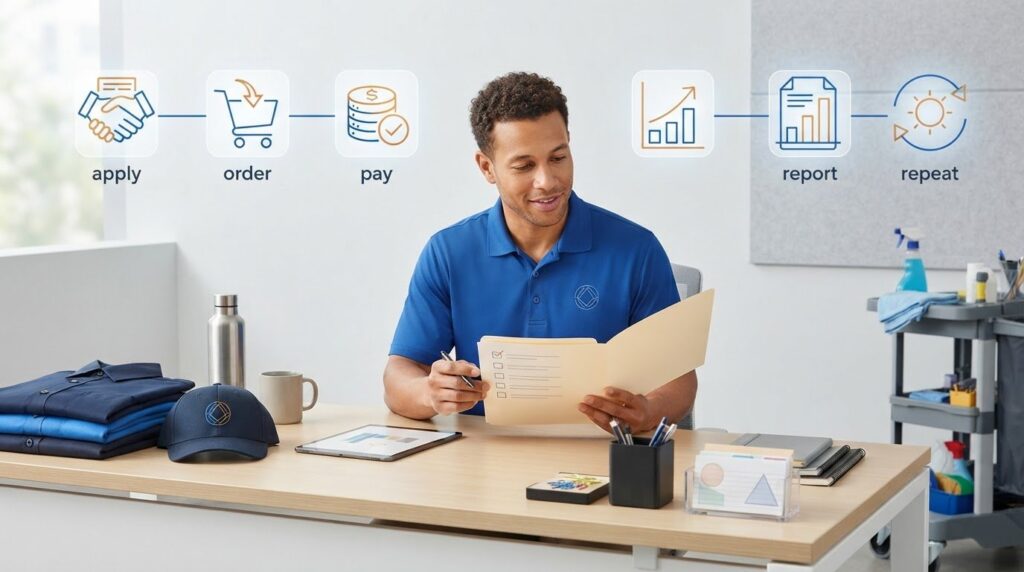
For a food truck owner, the process follows a clear sequence: apply, place an eligible order, pay the invoice on time, allow the vendor to report account activity, then order again only when another useful purchase fits the budget. This routine turns ordinary business buying into an organized account history. Net 30 accounts for food trucks can also suit newer businesses: eligible U.S. businesses, including newly formed LLCs, can apply with no minimum time in business.
Application and ordering basics
The CEO Creative account is based on your business EIN. It has no personal guarantee and no personal credit check. The stated approval timeframe is within 1 business day, although applying doesn’t guarantee approval. The minimum order is $60, and the credit line is up to $5,500.
After approval, choose an item from a relevant catalog category, such as apparel, drinkware, stationery, office supplies, or promotional products. You can use one account across available product categories, so select items your business genuinely needs rather than ordering just to create account activity. Review the order and invoice details, including the due date, before you commit.
Payment, reporting, and repeat use
When the invoice arrives, follow its stated payment terms. Set a reminder before the due date and save the invoice, order confirmation, and payment record together. A dedicated folder or bookkeeping entry makes it easier to reconcile the purchase and check that your records match the account.
The CEO Creative reports account activity monthly to Equifax Business, Creditsafe, and FairFigure. Monthly reporting describes the vendor’s reporting cadence, not a guaranteed date when a bureau will process or display a tradeline. Bureau timing can vary, and reporting doesn’t guarantee a credit-score increase or a particular result.
Plan each order around expected cash flow, not just the available credit line. The U.S. Small Business Administration explains how invoice terms may help businesses manage cash flow in its SBA guidance on Net 30 for cash flow. For a mobile business whose sales can vary from week to week, keeping the invoice amount manageable can help you pay on time without depending on future sales to cover the purchase.
- Apply: Submit the business application using the EIN.
- Order: Choose an eligible item that meets a real business need and the account minimum.
- Pay: Track the due date and settle the invoice according to its terms.
- Review: Keep records and allow time for monthly reporting and bureau processing.
- Repeat: Place another order only when it’s useful and fits your cash plan.
If this account structure fits your purchasing and payment routine, review the Net 30 account details as you consider your next step.
Which Net 30 Purchases Make Sense for a Food Truck?
Choose an order based on what your business can use, not simply on what might create account activity. With net 30 accounts for food trucks, a suitable purchase should fit the vendor’s eligible categories, support a real business need, and remain affordable when the invoice comes due.
Use this guide to distinguish relevant catalog purchases from items that belong in a separate purchasing or financing plan:
| Purchase category | Potential food truck use | How to assess it |
|---|---|---|
| Apparel | Branded shirts or other staff apparel | Consider whether the items support staff presentation or a consistent brand identity. |
| Drinkware | Branded drinkware for business or promotional use | Order only if it serves a clear business purpose. |
| Promotional products | Items that help present the truck’s brand at events | Keep the order aligned with your marketing plans and budget. |
| Stationery and office supplies | Business paperwork and administrative tasks | Choose useful items your operation regularly needs. |
| Trucks, cooking equipment, food inventory, packaging, tools, and hardware | Not the focus of these vendor categories | Don’t assume the vendor account covers these purchases. |
Branded items and promotional purchases
Branded apparel can help staff present a consistent look at service windows, markets, and catered events. A Net 30 apparel vendor category may suit a planned business purchase. Drinkware and promotional products can also support brand presentation. Treat these items as practical business expenses, not as a promise of more customers or sales.
Separate vendor purchases from operating equipment
A vendor account applies to eligible purchases in its catalog. It shouldn’t be confused with a way to pay for a truck, cooking equipment, industrial tools, or hardware. Don’t assume it covers food inventory or packaging supplies, either. Plan those needs separately and keep vendor orders within the categories and terms that apply.
Before placing an order, consider its purpose, total invoice, and due date alongside your business budget. Ask yourself:
- Will this item serve a specific business or branding need?
- Does it fall within an eligible category, such as apparel, drinkware, stationery, office supplies, or promotional products?
- Can the business pay the invoice on time without relying on uncertain future revenue?
If the purchase has no clear purpose or would make the invoice difficult to pay, wait. A smaller, relevant order that fits your cash plan is a more responsible starting point than buying extras just to use the account. Pair useful purchases with consistent payment behavior, and keep food truck equipment and other separate needs out of your vendor-account assumptions.

A Practical Checklist for Using Food Truck Net 30 Credit
A simple routine helps keep vendor purchases useful, invoices organized, and payment dates visible during a busy service schedule. Use this checklist before applying, before placing an order, and whenever an invoice arrives. These steps support responsible account management, but they don’t guarantee a credit-score increase or any particular credit outcome.
Before applying and placing an order
Prepare your business details, then check whether a purchase meets a genuine need and fits your cash plan. Net 30 accounts for food trucks work best as part of a steady purchasing and payment routine, not as a reason to spend more.
- 1. Gather accurate business information. Have your EIN and current business details ready. Use consistent information across your application and business records so you can track the account clearly.
- 2. Name the purpose of the purchase. Identify how the item will support your operation, such as staff apparel, drinkware, stationery, office supplies, or promotional products. If you can’t explain its business use, pause before ordering.
- 3. Check the eligible category. Make sure the item falls within the vendor’s available catalog. Don’t treat the account as a way to buy a truck, cooking equipment, food inventory, or other items outside its eligible categories.
- 4. Test the order against your budget. The minimum order is $60, and the credit line is up to $5,500. Check that the order meets the minimum, stays within the available credit line, and can be paid from expected business cash flow without relying on uncertain sales.
After ordering: manage invoices and records
Add invoice tracking to your bookkeeping process as soon as you place an order. Don’t wait for a credit bureau update to remind you that a bill is due. Reporting and bureau display timing are not payment reminders.
- 5. Log the invoice details. Record the invoice date, due date, order description, and amount in your accounting system or a dedicated tracking sheet.
- 6. Assign one person to monitor due dates. Choose an owner or team member to review the account and follow up on upcoming invoices. Set a calendar reminder early enough to arrange payment before the due date.
- 7. Pay according to the invoice terms. Schedule payment based on the stated due date, and save the confirmation with the invoice. If payment processing takes time, plan for it rather than leaving payment until the last moment.
- 8. Keep records distinct. Store business account activity with business records, separate from personal purchases and personal financial documents. This makes the account easier to reconcile and review.
- 9. Review before repeating. After payment, check that your records show the invoice as settled. Place another order only when it meets a real need and fits your current cash flow.
This routine gives you a clear record of what you ordered, when payment was due, and how you handled the invoice. Consistency matters more than order frequency. Keep each purchase purposeful and every due date on your calendar.
Choosing a Reporting Net 30 Vendor Account for Your Food Truck
Compare vendor accounts using four practical criteria: whether the catalog includes items your business can use, what the invoice terms require, which business credit bureaus receive payment information, and whether you can pay each invoice on time. A reporting account can support credit-history building, but its value depends on relevant purchases and responsible payment management.
Start with the purchase categories. Apparel, drinkware, stationery, office supplies, and promotional products may fit business or brand needs. An account for these categories serves a different purpose from financing for a truck or commercial cooking equipment. Next, read the account terms carefully. Note the order minimum, available credit line, payment due date, and other stated conditions. Before ordering, make sure the invoice fits your cash-flow plan.
Reporting details matter, too. Identify the bureaus that receive monthly account information, but don’t assume monthly reporting means a tradeline will appear on a specific date. Bureau processing and display timing can vary. Finally, assess your payment capacity realistically. A credit limit is not a spending target; choose an order you can pay for without depending on uncertain future sales.
The CEO Creative account facts to compare
The CEO Creative account uses an EIN-only application basis, with no personal guarantee and no personal credit check. Its stated minimum order is $60, and the credit line is up to $5,500. Approval is within 1 business day, but that timeframe isn’t a guarantee of approval.
The account reports monthly to Equifax Business, Creditsafe, and FairFigure. Consider those details alongside the available purchase categories and your ability to manage invoices. Reporting doesn’t guarantee a particular credit-score change or result, and the bureaus determine when reported information is processed or displayed.
Next steps for a food truck owner
Before applying, decide which business purchase you would make and how you’ll track its invoice. Note the due date, set a reminder, and assign one person to monitor payment. Then consider whether the terms and reporting align with your goals. If your business also operates in restaurant or food service settings, apply the same criteria to those purchasing needs: distinguish vendor tradelines from equipment financing, and focus on relevant purchases, reporting practices, and manageable payments.
Business credit outcomes vary, and no account can guarantee a score increase or a specific bureau display date. This article is for general informational purposes only and isn’t financial or legal advice.
Make Your Next Credit-Building Step Count
Make your next step part of a repeatable business routine. Decide which upcoming purchase genuinely supports your food truck, how it fits your cash flow, and who will track the invoice through payment. That planning keeps account use connected to real operations instead of spending for the sake of building credit.
When assessing net 30 accounts for food trucks, focus on transparency and fit. The CEO Creative account is EIN-only, with no personal guarantee or personal credit check, and reports monthly to Equifax Business, Creditsafe, and FairFigure. The CEO Creative is BBB Accredited with an A+ rating and has been in business for 6+ years. Reporting and responsible payment habits can contribute to business credit history, but results vary and no particular score outcome is promised.
Choose an account only when its terms and eligible purchases make sense for your business. A thoughtful order and a dependable payment process are practical steps toward building a stronger foundation for future growth.
Keep your plan realistic, stay consistent, and give your food truck’s business foundation room to grow.
Frequently Asked Questions
Can a food truck get a Net 30 account with an EIN?
Yes, eligible U.S. food truck businesses, including newly formed LLCs, can apply for The CEO Creative’s EIN-only Net 30 account. It has no personal guarantee and no personal credit check. The business EIN helps identify the account for business-credit reporting. Before applying, have your business information ready and decide who will manage invoices so account administration stays organized from the first purchase.
What can a food truck order with a Net 30 vendor account?
Eligible categories include apparel, drinkware, stationery, office supplies, and promotional products. For example, a truck might purchase branded staff apparel or promotional items for a planned event. Match each order to a specific business purpose and your budget. Don’t assume the account covers food inventory, packaging, trucks, or cooking equipment. The vendor account applies to eligible catalog purchases, not every operating expense a food truck may have.
Which credit bureaus does The CEO Creative report to?
The CEO Creative reports monthly to Equifax Business, Creditsafe, and FairFigure. When reviewing your business credit information, look at the bureau files associated with those reporting destinations and keep account statements and payment confirmations available for reference. Reporting cadence doesn’t determine when a bureau processes or displays a tradeline, so don’t use a report update as a signal that an invoice has been paid or is no longer due.
How much is the minimum order for a Net 30 account?
The minimum order is $60. Plan the purchase around a genuine business need, then compare the invoice amount with the cash available before placing it. A minimum is a threshold, not a reason to add unnecessary items. For instance, if you need office supplies for business records, choose an order that meets the account requirement while leaving enough cash for other upcoming expenses.
How soon can a food truck business get approved?
The stated approval timeframe is within 1 business day, but that isn’t a promise of approval. Eligibility and application review still apply. To keep the application process organized, prepare accurate business information and your EIN before submitting, then monitor the email or account channel you use for updates. Avoid scheduling a purchase or relying on the account until you know the application outcome.
Does a Net 30 account guarantee a higher business credit score?
No. A Net 30 account doesn’t guarantee a higher score or a particular credit outcome. Reporting can contribute payment history, but how that information affects a business credit file depends on the bureau’s records and scoring methods. Pay invoices according to their terms, keep transaction records, and manage spending carefully. Treat credit building as a longer-term business practice, not a guaranteed result of opening an account.