

See also: Open a Net 30 Account — EIN only, no personal guarantee, decision within one business day.
Key Takeaways
- Understand how vendor credit acts as a foundational building block for your corporate financial identity.
- Discover the specific steps to establish business credit reporting tradelines that report directly to Equifax, Creditsafe, and FairFigure.
- Learn to navigate the “thin file” trap by choosing Tier 1 vendors that approve new EINs without requiring a personal guarantee.
- Identify common reporting mistakes, such as mismatched business data or late payments, that can stall your score progress.
- Leverage strategic business purchases, like custom branding and office supplies, to simultaneously grow your brand and your credit profile.
Understanding Business Credit Reporting Tradelines: Definitions and Mechanics
Starting a business often leads to a frustrating paradox: you need credit to get credit. If your company doesn’t have an established history, traditional lenders will likely turn you away. You can avoid this “no credit” trap by establishing vendor accounts early in your journey. At its core, a business tradeline is a record of credit extended by a creditor to a business. While consumer credit is tied to your Social Security Number, business credit is uniquely linked to your Employer Identification Number (EIN). This separation is vital for protecting your personal assets and building a standalone corporate identity.
A tradeline only helps your brand if it’s visible to others. If a vendor doesn’t report your activity to the bureaus, that credit relationship effectively doesn’t exist to future lenders. These reported interactions are the primary building blocks for Business credit reports. Without active reporting, your business remains a “thin file” entity, regardless of how much revenue you generate or how long you’ve been in operation.
Key Terms: Vendor Tradelines vs. Payment Reporting
Understanding the terminology helps you build a stronger profile. “Net 30” terms mean you have 30 days to pay an invoice after the purchase date. When you use these terms, you’re essentially using a short-term credit line that creates a tradeline. The company reporting this data is known as a “Data Furnisher.” For new startups, seeking “EIN only” approval is the gold-standard. It allows you to build business credit reporting tradelines without a personal guarantee. This structural choice ensures your business stands on its own financial feet from day one. You can find a list of tier 1 net 30 vendors to start this process immediately.
The Impact on Business Credit Scores
Your tradelines are the lifeblood of your scores. To generate a Dun & Bradstreet PAYDEX score, your business generally needs at least three active tradelines reporting. These accounts also influence your Equifax Business and Creditsafe ratings. A tradeline is a verified credit relationship reported to a bureau. Over time, these accounts become “seasoned.” Lenders view seasoned tradelines as proof of long-term reliability, making it easier to secure larger bank loans or corporate leases later. Strategic use of net 30 vendors ensures your score keeps climbing as your brand grows. Consistent, on-time payments are the most effective way to demonstrate your company’s fiscal responsibility to the professional world.
The Strategic Role of Net 30 Vendors in Bureau Reporting
Many startups struggle because they have a “thin” credit file. This means there isn’t enough data for a bureau to generate a score. It’s like having a blank resume. Lenders see zero history and assume high risk. To fix this, you need business credit reporting tradelines that report to multiple bureaus. While Dun & Bradstreet is a common starting point, relying on a single bureau is a mistake. Lenders use different sources to verify your reliability. Understanding What’s in a business credit report helps you see why data diversity is essential for a robust profile. Diversifying your reporting sources ensures that no matter which bureau a bank pulls from, they see a history of on-time payments.
Why Equifax and Creditsafe Matter in 2026
Equifax is a major player in small business lending. Many banks and credit card issuers check Equifax before approving a line of credit or a commercial loan. If your file there is empty, your chances of approval drop significantly. Creditsafe is a global powerhouse. They track over 430 million businesses worldwide. If you want to work with international suppliers or secure trade credit with global partners, a Creditsafe profile is essential. FairFigure is also gaining traction in 2026. It offers real-time monitoring and credit scoring. You don’t have to wait months to see if your business credit reporting tradelines are showing up. This immediate feedback allows you to adjust your strategy quickly if a payment isn’t showing up correctly.
Establishing Your First Tier 1 Tradelines
Tier 1 vendors are your first step toward financial independence. They’re accessible to new LLCs and report consistently without requiring a long time in business. In the past, entrepreneurs only looked at giant office supply stores. Now, specialized branding vendors like The CEO Creative are the better choice for modern brands. We are a reporting NET 30 vendor that helps build business credit through real business purchases like custom apparel and office supplies. You can Explore Tier 1 Net 30 Vendors for 2026 to find the best fit for your growth strategy. These accounts allow you to get the tools you need for daily operations while building a score that unlocks future capital.
Professionalism counts. When a lender looks at your business, they don’t just see numbers. They see your brand’s visual identity. Using tradelines to buy custom gear or engraved merchandise makes you look established. It signals that you’re investing in your brand’s long-term future rather than just surviving day-to-day. This perceived stability often leads to better terms and higher credit limits. If you’re ready to start, you can apply for a net 30 account to begin building your profile today. Establishing these relationships now prevents the frustration of being denied when you eventually need a major loan for expansion.
How to Establish and Manage Tradelines: A Step-by-Step Checklist
Building business credit is a marathon, not a sprint. You can’t simply open a single account and expect a perfect profile overnight. It’s a disciplined process that requires you to strategically select and manage business credit reporting tradelines. If you follow a structured approach, you’ll transform your EIN from a tax ID into a powerful financial asset. Here’s your step-by-step checklist to get started:
- Step 1: Proper Business Alignment. Before you apply for credit, your business must look “fundable” to automated verification systems. This means having a registered legal entity (like an LLC), a federal EIN, a professional website, and a business email address. Consistency is vital; your address and phone number must match across all public records.
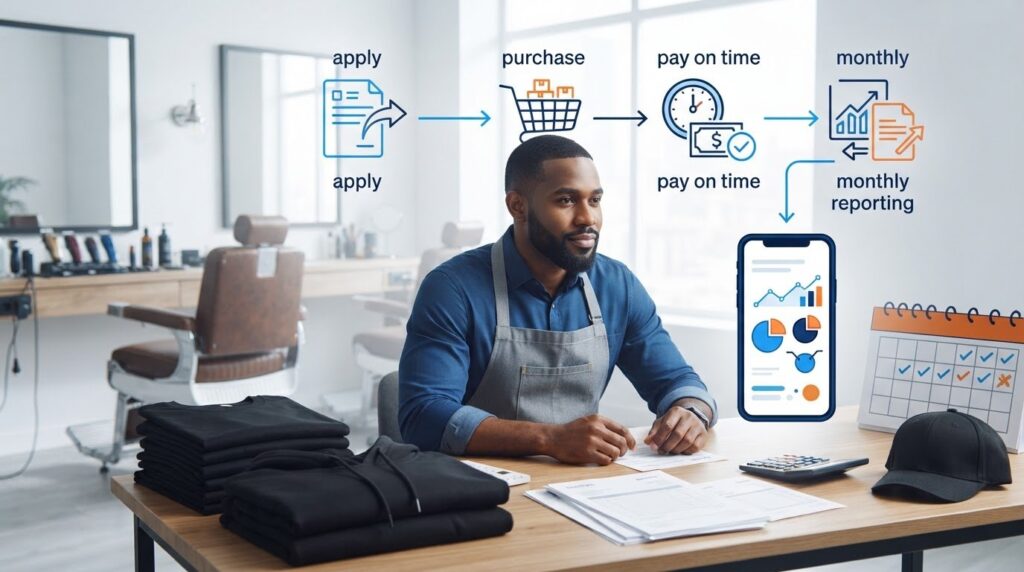
- Step 2: Account Application. Apply for Net 30 accounts with vendors that offer “EIN only” approval. This allows you to build credit without a personal guarantee. The CEO Creative, for example, returns a decision within 1 business day for businesses looking to establish their first lines of credit.
- Step 3: The Qualifying Purchase. Make a purchase that adds value to your brand. Instead of buying items you don’t need, invest in custom apparel, office supplies, or promotional gear. This ensures your credit-building efforts also support your daily operations.
- Step 4: Prompt Payment. Paying on time is the bare minimum. To truly optimize your score, follow the “early payment” rule. Research shows that paying invoices 10 to 15 days before the due date can help you achieve a PAYDEX score above 80, which lenders view as a superior rating.
Step 5: Tracking and Verification
Once you’ve paid your invoice, your work isn’t done. It can take 30 to 90 days for a vendor to report payment data to the bureaus. Monitor your profile regularly to ensure your business credit reporting tradelines appear correctly. If an account isn’t showing up after 60 days, double-check your application data. A simple typo in your business name or a mismatched zip code can prevent the bureau from linking the payment to your file. If everything matches and it’s still missing, reach out to the vendor’s credit department for a manual review.
The ‘Repeat and Scale’ Cycle
To generate a Dun & Bradstreet PAYDEX score, your business generally needs at least three active tradelines reporting. One account isn’t enough to prove reliability to a bank. Aim to establish 3-5 Tier 1 accounts during your first six months. As these accounts become “seasoned” and your score climbs, you’ll gain access to Tier 2 vendors with higher credit limits and more flexible terms. For a deeper dive into which companies to target next, check out The Ultimate Guide to Net 30 Vendors. This repeatable cycle is the most reliable way to scale your corporate purchasing power.
Common Pitfalls: 8 Mistakes to Avoid with Credit Reporting Tradelines
Even with a clear strategy, small administrative oversights can stall your progress. Building a corporate profile is a precise task. Lenders and bureaus rely on automated systems that flag inconsistencies. If you want your business credit reporting tradelines to work effectively, you must avoid these common traps that often catch new entrepreneurs off guard.
- Mistake 1: Late payments. This is the most significant factor in your business credit score. Unlike personal credit, which has a grace period, business credit bureaus often reward early payments and penalize even a single day of delinquency.
- Mistake 2: Using a personal address. Automated verification systems cross-reference your application with public records. If you use a residential address instead of a registered business address or a commercial CMRA, your application may be flagged as high risk.
- Mistake 3: Buying from non-reporting vendors. Not every company that offers credit terms reports to the bureaus. If your vendor doesn’t share data with Equifax, Creditsafe, or FairFigure, your on-time payments won’t help your score.
- Mistake 4: Small “non-qualifying” purchases. Some vendors require a minimum order amount to trigger a report to the credit bureaus. Buying a single $5 item might not be enough to generate a tradeline entry.
- Mistake 5: Mismatched business information. Your EIN, business name, and address must match your Secretary of State filing exactly. Even a missing “LLC” or a misspelled street name can prevent a payment from being linked to your file.
Administrative Errors That Halt Progress
Your digital footprint matters as much as your payment history. Lenders expect to see a professional website and a dedicated business phone line. If these are missing, your business may appear “unverifiable.” Mistake 6 is ignoring your D-U-N-S number status; without an active Dun & Bradstreet file, many vendor reports have nowhere to land. Mistake 7 is relying on a single tradeline for too long. You need a mix of 3 to 5 accounts to demonstrate a pattern of reliability across different industries.
The Danger of ‘Tradeline Scams’
Mistake 8 is the most dangerous: buying “seasoned” tradelines from unauthorized third parties. These services claim to add years of history to your EIN for a fee. However, bureaus have become sophisticated at detecting these artificial boosts. They often result in your file being flagged for fraud or permanently closed. Organic credit building through real purchases is the only sustainable long-term path. You can start building your profile the right way by choosing to apply for a net 30 account with a verified reporting vendor.
Trust Note: This content is for educational purposes and is not financial or legal advice.
Building Your Brand and Credit with The CEO Creative
The CEO Creative isn’t just another supplier; it’s a foundational partner for your company’s long-term success. We understand that new LLCs and startups face unique hurdles when trying to establish business credit reporting tradelines. Traditional retailers often ignore the developmental stage of your brand, but we prioritize it. By offering high-quality customizable apparel and stationery, we provide the tools you need to build a professional image while simultaneously building your credit score. We’re a reporting NET 30 vendor that helps you grow through real business purchases that serve your daily operations.
Why Product-Based Tradelines Are a Strategic Move
Most entrepreneurs view office supplies as a routine expense. We encourage you to view them as a strategic executive move. When you purchase from our catalog, you aren’t just buying a mug or a shirt; you’re investing in your brand’s visibility and your corporate creditworthiness. This “creative utility” model allows you to get double the value from every dollar spent. You can Apply for a Business Net 30 Account to see how our membership structure differentiates itself from traditional retail. Our program acts as a visionary mentor, guiding you through the logistical hurdles of management while providing the underlying systems that make your business sustainable.
What Happens After You Apply?
The process is designed to be efficient and purposeful, mirroring the fast-paced nature of your professional world. We give businesses a decision within 1 business day, so you don’t waste time waiting. Once your account is active, you’ll gain immediate access to our extensive catalog of customizable products, including apparel, engraved merchandise, and office supplies. It’s an intuitive way to source what you need while strengthening your financial profile.
After you make a purchase and pay your invoice, we handle the technical side of the credit ecosystem. We report your on-time payment history to Equifax, Creditsafe, and FairFigure. This consistent monthly reporting strengthens your profile and builds the trust necessary to access higher credit limits in the future. You’ll see your efforts reflected in your scores, moving you closer to a robust corporate identity that stands on its own. Our goal is to simplify the logistical hurdles of credit management so you can focus on what you do best: growing your brand.
Scale Your Business Credit with Strategic Tradelines
Establishing a standalone corporate profile is the most effective way to protect your personal assets while securing the capital your brand needs to thrive. By leveraging business credit reporting tradelines, you turn necessary purchases into a documented history of financial reliability. This disciplined approach ensures your business is ready for larger opportunities and higher credit limits as you scale.
Apply for a The CEO Creative Net 30 Account and Start Building Credit Today
What happens next?
- Decision Within 1 Business Day: Receive the decision on your Net 30 account application by email; once approved, you can start shopping.
- Strategic Purchasing: Order custom branding products or office essentials that add immediate value to your daily operations.
- Automatic Reporting: Your on-time payments are sent monthly to Equifax, Creditsafe, and FairFigure to build your scores.
Consistent reporting and on-time payments are the foundations of a powerful corporate identity. Start building your legacy today with a partner that understands the needs of growing organizations. Apply for your The CEO Creative account today to establish the robust credit profile your brand deserves.
Frequently Asked Questions
Do I need a personal guarantee for a business tradeline?
No, you don’t always need a personal guarantee to establish a business tradeline. Many Tier 1 vendors allow you to open accounts using only your Employer Identification Number (EIN). This structure protects your personal credit and assets while allowing your company to build its own financial identity. The CEO Creative specifically offers Net 30 accounts that don’t require a personal guarantee for most qualified businesses.
Which business credit bureaus does The CEO Creative report to?
The CEO Creative reports your payment activity to Equifax, Creditsafe, and FairFigure. By reporting to multiple agencies, we ensure your business credit reporting tradelines are visible to a broad spectrum of lenders and suppliers. This multi-bureau approach is superior to single-bureau reporting because it builds a more comprehensive and reliable corporate profile that stands up to professional scrutiny.
How long does it take for a new tradeline to show up on my credit report?
It typically takes between 30 and 90 days for a vendor to report your payment data and for it to appear on your business credit reports. This timeline depends on the vendor’s specific monthly reporting cycle and the processing speed of each individual bureau. Maintaining consistent monthly activity is the most effective way to ensure your file stays updated and accurately reflects your brand’s purchasing power.
Can I build business credit with a brand new LLC and an EIN?
Yes, you can begin building business credit as soon as your LLC is legally registered and you have obtained your federal EIN. Start by opening Tier 1 vendor accounts that approve new organizations with no prior credit history. By making small, necessary purchases and paying every invoice early, you establish the documented payment history required to eventually qualify for higher credit limits and traditional bank financing.
What is the difference between a vendor tradeline and a credit card?
A vendor tradeline is a line of credit extended by a supplier for specific goods, usually with Net 30 terms. A business credit card is a revolving line of credit used for various expenses. While both build credit, vendor tradelines are often easier for new startups to obtain. They frequently don’t require a personal guarantee or a high personal credit score, making them ideal for early growth.
What happens if my business information doesn’t match the credit bureau’s records?
Mismatched information can prevent your payments from being reported correctly or linked to your business file. If your address, phone number, or business name differs between your application and the bureau’s data, the business credit reporting tradelines may not appear at all. Always ensure your application matches your Secretary of State filing and Dun & Bradstreet records exactly to avoid these common administrative errors.
Is there a minimum purchase amount required for a tradeline to be reported?
Some vendors require a minimum purchase to trigger a report to the business credit bureaus. While this varies by supplier, buying a single low-cost item often isn’t enough to generate a new entry on your report. It’s best to make a qualifying purchase of products your business actually needs, such as custom apparel or office supplies, to ensure your activity is documented and reported.
Will a late payment on a Net 30 account hurt my personal credit score?
Generally, a late payment on a business Net 30 account won’t affect your personal credit score if the account was opened without a personal guarantee. However, business credit bureaus will penalize your corporate score heavily for even a single day of delinquency. To protect your professional reputation and maintain a high rating, always pay your invoices on time or 10 days early for the best results.
Building business credit? Open a Net 30 Account — EIN only, no personal guarantee, $60 minimum order, credit lines up to $5,500, a decision in one business day, and every on-time payment reported monthly to Equifax Business, Creditsafe and FairFigure.