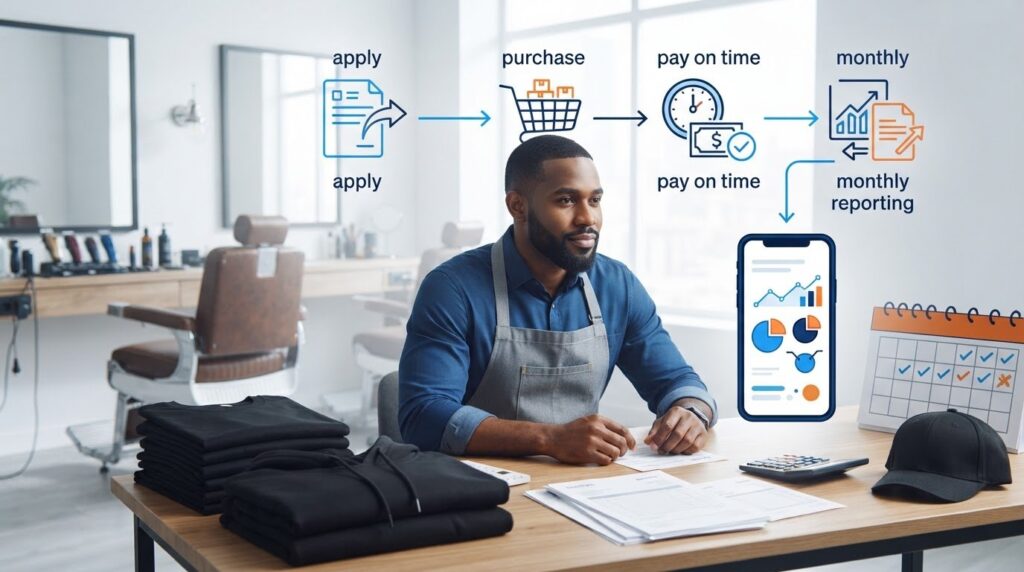


Need the account, not the theory? The CEO Creative offers net 30 accounts — a $60 minimum order, no personal guarantee, and monthly reporting to three business bureaus.
Related: Net 30 Accounts With No Personal Guarantee — why a starter account should not put your personal assets behind it.
Did you know that 76% of small businesses are now bypassing traditional banks to secure capital? If you’ve felt the sting of a loan denial due to a lack of history, you understand the frustration of being stuck in financial limbo. It’s stressful to watch your personal credit score fluctuate because of company expenses. Establishing net 30 accounts for llc is the strategic move that finally separates your personal life from your professional growth.
You deserve a financial foundation that empowers your vision without requiring a personal guarantee. We’ll show you how to use your EIN to secure net 30 credit terms for business through vendors that actually report your payments. This guide covers everything from selecting the right office supplies net 30 account to building a high Paydex score quickly. You will learn how to turn routine purchases into powerful tradelines that unlock higher credit limits for your future expansion. Let’s build the credit profile your LLC needs to thrive in 2026.
Key Takeaways
- Master the mechanics of trade credit to extend your cash flow while building a standalone business profile.
- Use a structured five-step workflow to ensure your net 30 accounts for llc report accurately to major credit bureaus.
- Transform routine operational costs into credit-building assets by purchasing custom branding materials and professional essentials.
- Avoid common pitfalls by maintaining strict data consistency across all vendor applications and business registrations.
- Elevate your brand’s perceived creditworthiness by integrating professional logo design with strategic credit tradelines.
Understanding Net 30 Mechanics for Your LLC
A net 30 account is a fundamental form of trade credit agreement between your business and a supplier. Essentially, you buy the goods or services today and pay the full invoice amount within 30 days. For a growing entrepreneur, this is a powerful cash flow tool. It allows you to use the products to generate revenue before the bill is even due, providing a short-term, interest-free window to manage your capital.
When you open these accounts, you’re establishing a vendor tradeline. This is a credit account listed on your corporate credit report. Unlike personal credit cards, these accounts are tied specifically to your business identity. Every on-time payment acts as a positive data point. These points are essential for new LLCs that currently have a “no credit file” status. Without these initial entries, your business remains invisible to major lenders and financial institutions.
Building Credit Without a Personal Guarantee
Most traditional bank loans require a personal guarantee, which puts your house or personal savings at risk if the business struggles. You can bypass this hurdle by focusing on net 30 accounts for llc that only require your Employer Identification Number (EIN). By following this strategic approach, you’ll establish a reporting history with major bureaus without risking your personal assets. Educational Note: This content is for informational purposes and does not constitute financial or legal advice; specific credit score increases are not guaranteed.
The Role of Payment Reporting
Reporting is the engine behind business credit growth. If a vendor doesn’t report your activity, the account won’t help you build a score. The CEO Creative is a reporting net 30 vendor that helps LLCs build credit through professional branding products like custom apparel and office supplies. We share your payment data with Equifax Business, Creditsafe, and FairFigure. Consistent reporting to these bureaus transforms your routine business spending into a verifiable track record of reliability, which is the key to unlocking larger credit lines in the future.
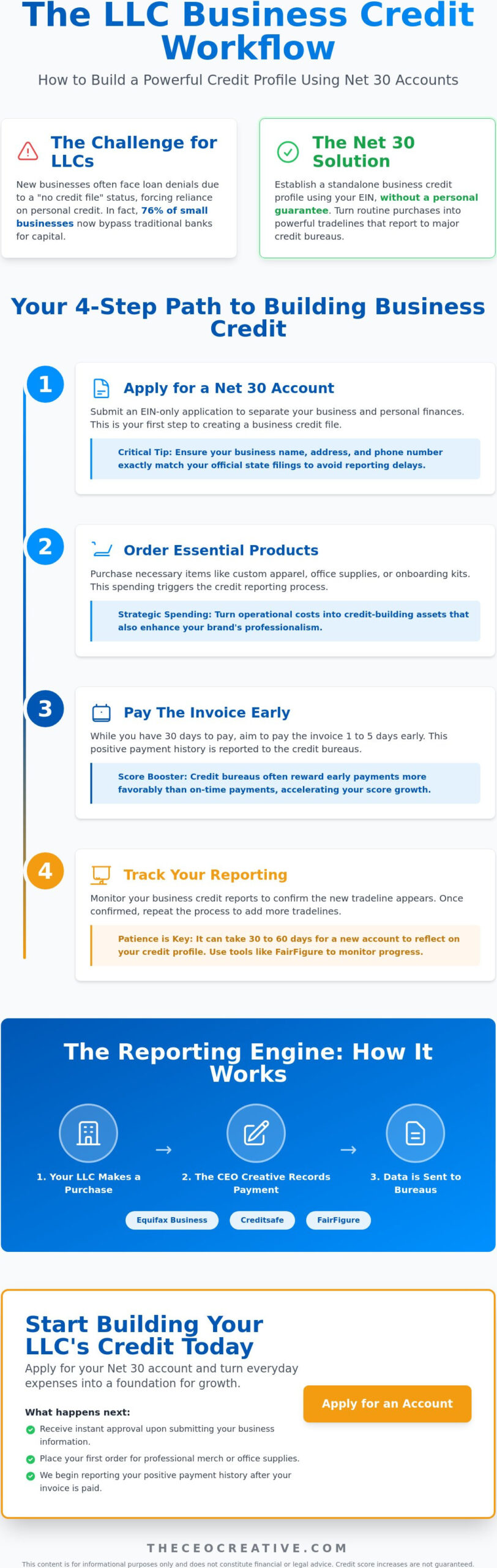
The LLC Credit Building Workflow: Apply, Order, Pay, Track, Repeat
Managing net 30 accounts for llc requires more than just making purchases; it requires a rigorous, repeatable workflow. To build business credit quickly, you must prioritize data consistency. Your business name, physical address, and phone number must match your Secretary of State filings exactly on every application. Discrepancies are a leading cause of reporting delays, so audit your records before you begin the cycle.
Step-by-Step Implementation
- 1. Apply: Submit an EIN-only application for a business Net 30 account. This keeps your personal credit history isolated from your business activities.
- 2. Order: Purchase essential items that add value to your daily operations. Choosing office supplies or customizable apparel ensures you’re spending on necessities while triggering the credit reporting process.
- 3. Pay: Timing is everything. While you have 30 days, paying your invoice 1 to 5 days early can strengthen your business payment history. Many credit bureaus reward early repayment behavior more than simply meeting the deadline.
- 4. Track: Monitor your reports to ensure the tradeline appears correctly.
Bureau Reporting Mechanics
Understanding reporting timelines prevents unnecessary anxiety. It typically takes 30 to 60 days for a new tradeline to reflect on your Equifax or Creditsafe profile. During this window, use tools like FairFigure to monitor your emerging business credit score in real-time. This visibility allows you to verify that your net 30 accounts for llc are effectively building the foundation you need. Once the first tradeline is confirmed, repeat the process to diversify your credit mix. If you are ready to secure your first tradeline, you can apply for a net 30 vendor account to start the cycle today.
Strategic Spending and Avoiding Common LLC Credit Pitfalls
Strategic spending isn’t just about managing overhead; it’s a tactical investment in your company’s future. When you use net 30 accounts for llc to purchase employee uniforms or professional onboarding kits, you’re accomplishing two goals at once. You are acquiring the physical assets needed to scale while simultaneously building the credit history required for larger financing. This interest-free 30-day window allows you to keep cash in your bank account longer. You can reinvest that capital into immediate growth areas like digital marketing or inventory replenishment.
Professional branding also plays a vital role in your financial journey. A cohesive logo design and high-quality customized gear signal to future lenders that your LLC is an established, serious entity. This perceived stability often translates into higher creditworthiness when you move beyond starter accounts. Learning how to get and build business credit involves recognizing that every detail, from your visual identity to your payment habits, contributes to your corporate risk profile.
5 Common Mistakes to Avoid
- Using a personal home address or cell phone number on applications instead of a professional business address and VOIP line.
- Failing to verify that a vendor actually reports to the specific bureaus, like Equifax or Creditsafe, that you are targeting.
- Waiting until day 30 to submit payment. Paying 5 days early demonstrates superior reliability to credit algorithms.
- Overextending your cash flow by opening too many accounts before you have the revenue to support the invoices.
- Allowing inconsistent business information to persist across different vendor profiles, which triggers red flags for fraud.
What Happens Next: Your Path to Higher Credit
Once you have successfully managed 3 to 5 Tier 1 net 30 accounts for llc, you’re ready to graduate. This foundation allows you to transition toward Tier 2 vendors and eventually unsecured corporate credit cards. As your limits increase, maintain a low credit utilization ratio. Using only a small portion of your available credit signals that your LLC is financially healthy and not dependent on debt to survive. This disciplined approach ensures you stay on the path toward high-limit funding without ever needing a personal guarantee.
Secure Your LLC’s Financial Future Today
You now have the blueprint to decouple your personal finances from your business growth. By mastering the workflow of net 30 accounts for llc, you’ve moved beyond the “no credit file” trap. You understand that every piece of custom apparel or office essential is more than just a purchase. It’s a strategic building block for your corporate credit profile. Consistency and early payments are your most effective tools for climbing the credit tiers and accessing higher limits.
Take the first step toward financial independence. Apply for a The CEO Creative Business Net 30 Account Today. What happens next? You’ll complete your application in under 5 minutes. Then, you can browse our catalog of high-quality branding products. Finally, watch your on-time payments report to major business bureaus as you build your profile. This is the foundation your brand needs to thrive.
Your vision deserves a foundation of professional reliability and standalone credit power. We’re ready to help you build it.
Frequently Asked Questions
Do I need a personal guarantee (PG) for an LLC Net 30 account?
You don’t always need a personal guarantee to open these accounts. Many vendors allow you to apply using only your business credentials and EIN. This structure keeps your personal assets safe and protected from business liabilities. It’s a foundational step for entrepreneurs who want to separate their personal life from their company’s financial obligations.
How long does it take for Net 30 accounts to report to Equifax?
It typically takes 30 to 60 days for your activity to appear on your Equifax Business report. Vendors usually report in monthly batches, so the exact timing depends on when your purchase falls in their specific cycle. Consistently monitoring your file through tools like FairFigure helps you track these updates as they happen in real time.
Can I build business credit if my LLC is brand new?
You can absolutely build credit with a brand new LLC. Tier 1 vendors are designed to approve startups that have been in operation for as little as 30 days. By using net 30 accounts for llc early on, you create a credit history from scratch. This allows you to qualify for larger loans and corporate cards much sooner than businesses that wait to apply.
Does paying a Net 30 invoice early help my credit score?
Paying early is one of the most effective ways to strengthen your business payment history. While “Net 30” means you have 30 days to pay, bureaus like Dun & Bradstreet reward businesses that pay 1 to 10 days before the deadline. This behavior signals high financial reliability. It can lead to a higher Paydex score and more favorable terms from future lenders.
What happens if I miss a payment on a Net 30 account?
Missing a payment will likely result in a negative mark on your business credit report. Late payments can stay on your profile for years and may cause other vendors to lower your existing credit limits. If you anticipate a delay, contact the vendor immediately to discuss your options. Maintaining your reputation for reliability is vital for your long term growth strategy.
Do Net 30 vendors report to Dun & Bradstreet?
Many top tier vendors report to Dun & Bradstreet, but it’s not a universal rule. A Paydex score is built from tradelines reported to Dun & Bradstreet, so it depends on using suppliers that report there. Ask a supplier directly which bureaus it submits to. Always confirm reporting practices with a vendor before you place an order to ensure your spending contributes to your credit profile.
Can I get a Net 30 account with just an EIN?
You can secure a net 30 account with just an EIN. This is a primary advantage of net 30 accounts for llc, as it allows you to build credit without a hard pull on your personal credit report. Ensure your business is properly registered and has a professional presence, such as a business phone line, to increase your chances of a decision within one business day.
What is the difference between a tradeline and a Net 30 account?
A net 30 account is a specific type of credit arrangement, while a tradeline is the broader term for any account on your credit report. When a vendor reports your net 30 activity, it becomes a tradeline on your business credit file. Diversifying your tradelines with different types of vendors helps create a more robust and healthy credit profile that appeals to major banks.
How do you build business credit for a new LLC?
An LLC builds business credit by opening trade lines with suppliers or lenders that report payment activity to a business credit bureau, then paying those accounts on the agreed terms so there is activity for the bureau to record. Applications should use the LLC’s EIN and business information rather than the owner’s Social Security number, since that is what keeps the credit history tied to the company. Payment history reported across more than one account over time is what gradually builds out a business credit file separate from the owner’s personal credit.
How does an LLC open a net 30 account?
An LLC opens a net 30 account by applying directly with a supplier that offers trade credit, usually submitting the business name, EIN, and basic contact and billing details. The supplier decides whether to extend the account, and once approved, the business can order and pay the invoice within 30 days instead of paying at checkout. The CEO Creative assesses net 30 applications on the business EIN, with no personal guarantee and no personal credit check, and returns a decision within one business day.
What does an LLC need before applying for business credit?
An LLC generally needs an EIN, a registered business name and address, and basic contact or banking information before applying for business credit. Suppliers use these details to identify and evaluate the business on its own, apart from the owner’s personal finances. Having the entity properly formed and in good standing with the state also matters, since most credit applications ask for that information up front.
How long before an LLC has a business credit file?
A business credit file opens as soon as at least one supplier or lender reports the LLC’s account activity to a business credit bureau, so there is no fixed waiting period tied to the age of the company itself. Some bureaus will open a file off a single reporting account, while building an actual score usually takes more history across accounts. In practice, the sooner an LLC opens trade lines with vendors that report, the sooner a file exists to build on.
Ready to open an account? Open a Net 30 business account — EIN only, no personal guarantee, a decision in one business day, and monthly reporting to Equifax Business, Creditsafe and FairFigure.