
Want the account itself? The CEO Creative offers open a net 30 account — assessed on your EIN, decided within one business day, with a $60 minimum order.
See also: The CEO Creative vs Summa Office Supplies — a direct comparison of the two accounts.
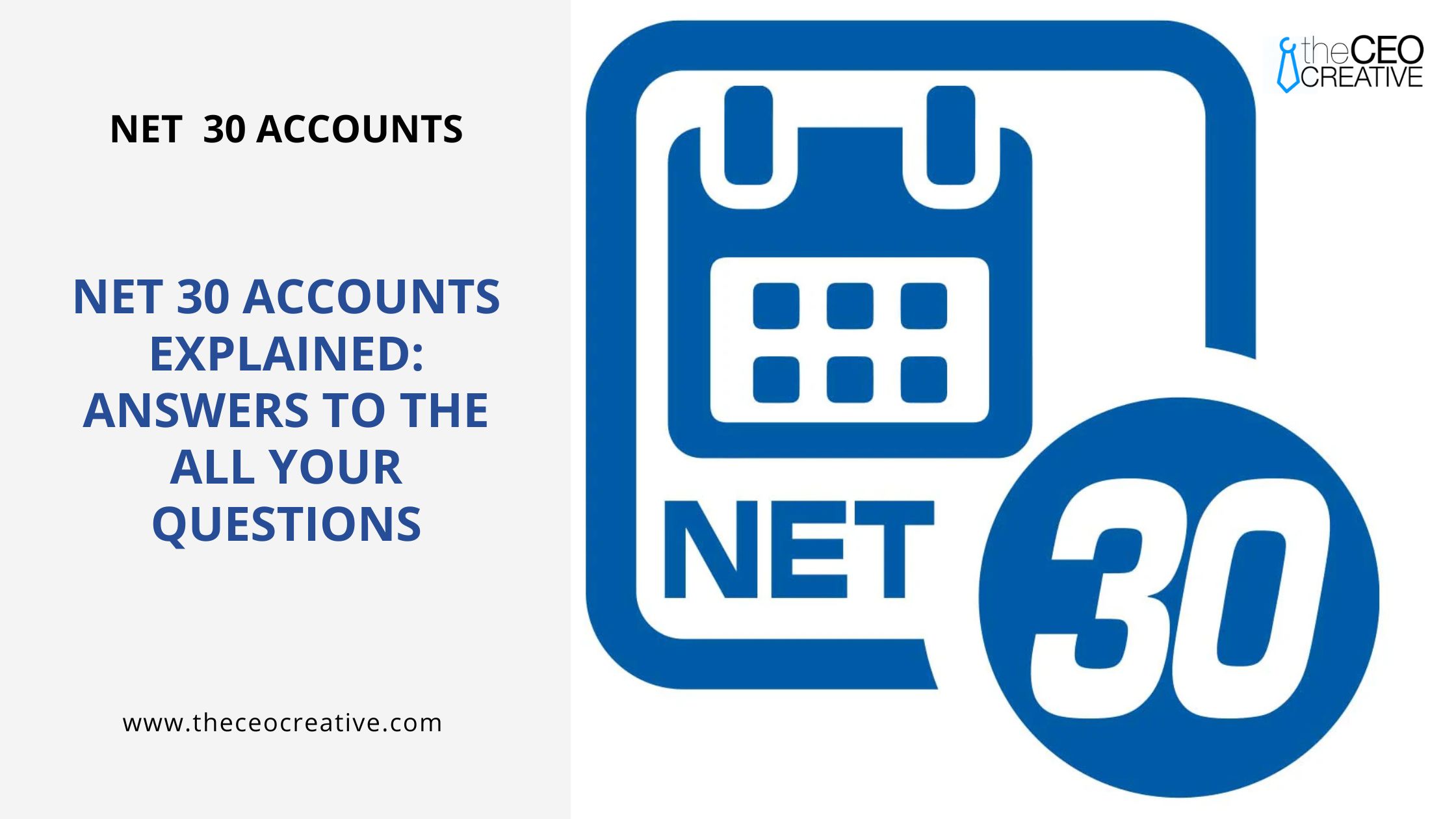
Hello, fellow small business owners! If you’ve been in the small business journey or just getting started, you’ve likely heard the term “Net 30 accounts.” But what does that actually mean? A Net 30 account is simply a credit arrangement you set up with a vendor or supplier to allow your to business to buy product or service today, and pay for it in 30 days. This is a great way to improve your cash flow while keeping your business fully operational. In this blog, we will cover everything you need to know about these handy accounts to help you make the best decision for your business. Are you ready? Let’s go!
What is a Net 30 Account?
If you’re scratching your head with the question, what is a Net 30 account? don’t worry, you are in the right spot! Simply put, a Net 30 account is a type of trade credit by which a business can purchase goods or services on credit and then pay for them in 30 days or less. It’s kind of like your favorite “buy now, pay later” scheme but designed specifically for businesses. This invoice term is popular with vendors and customers alike, as it provides flexible payment terms while also facilitating seamless transactions.
When you establish a Net 30 account with a vendor; they are providing your business the ability to purchase on credit, on the expectation that you will remit payment within 30 days. This is particularly helpful for small businesses that need a little bit of wiggle room to facilitate cash flow, or who may not have on-hand funds available immediately.
Benefits of Using Net 30 Accounts
Now that you have a grasp on what a Net 30 account is, let’s look at how it could transform your business.
– Improves your cash flow: Net 30 accounts allow you take possession of items now and have one month to pay for them. This can be incredibly valuable if your cash flow fluctuates and you encounter several ups and downs.
– Builds business credit: By consistently paying On Time, you build and improve your business credit score. A good credit score is key when your company is ready to expand, and you will be looking for financing options.
– Builds trust with vendors: A Net 30 account will make it clear to vendors and suppliers, you are indicating to vendors “I trust you and want to work together” long-term.
– Encourages growth of the business: By offering flexible payment arrangements you can broaden your supplier base, load up on inventory, take advantage of bulk purchasing opportunities, etc. All of this will provide necessary purchases needed to grow your business.
In summary, Net 30 accounts are not just a simple purchasing and payment options, they are a viable and powerful tool for growth and sustainability for any business large or small.
Setting Up a Net 30 Account
If you’ve never established business credit before, setting up a Net 30 account might seem a little scary. It is very easy, though, once you have the steps down. First, your business needs to be registered and have a legal entity, such as an LLC or corporation. Most vendors are only interested in working with official businesses.
After your business is registered, you will need to gather the necessary documentation, such as your Employer Identification Number (EIN), business registration paperwork, and your financials. A few companies may want personal or business credit information, so be prepared.
Next, select the vendors that you want Net 30 accounts with, that will fit your business model. You will want to do your due diligence and choose companies that are reputable and in your industry. When you start to approach those vendors, make sure to ask about their application process, as each vendor may have a different process. Usually, the process will include completing an application and sometimes checking your credit; don’t be concerned, as many vendors will still work with businesses that have minimal or no credit established.
Payments & Terms of Net 30
Being aware of the payment terms on a Net 30 account is an essential part of managing the payment terms appropriately. In Net 30, the 30 refers to 30 days from the invoice date to pay the account balance. The 30 days allows cash flow to stabilize, which is great when you have multiple bill due dates.
Here is a short overview of the details you should be aware of:
– Invoice Date: The date your vendor sent out your invoice. Make sure you note this date in some way.
– Grace Period: Usually, there will not be a grace period so be sure to have bills sent before or on the due date.
– Interest & Penalties: If you miss the 30 days, you typically will pay interest or some sort of late fee, so you want to avoid guessing or waiting.
– Payment Type: Make sure to verify with your vendor what types of payments they will accept. Most vendors will accept a check or wire transfer, some will accept credit cards occasionally.
If you understand the payment terms and how to be organized, a Net 30 account can be a great resource to help maintain sound financial practices for your company.
Net 30 and Credit Reporting
Understanding the implications of Net 30 accounts should include an understanding of the impact they can have on your credit. Many suppliers and vendors report payment behavior to the credit bureau, which can impact your business credit score. A demonstrated history of paying an invoice on or before the due date can help improve your credit profile.
Here are the reasons why this is important:
– Increase creditworthiness: Paying your Net 30 accounts on-time can indicate to other vendors and banking facilities that your business is trustworthy – which can help improve your creditworthiness.
– Accessing more options of credit: A strong credit history can allow room for larger credit lines or better terms to other vendors.
– Stronger negotiating tactics: Good credit history can be an effective negotiating tool for better terms or discounts.
Lastly, consider the fact not all vendors report to credit agencies so it may be wise to confirm with one your suppliers if they do or do not. This can help you gauge how your payment behaviors with them will fit with your overall credit history.
Comparing Net 30 With Other Terms
Although Net 30 is a frequent invoicing phrase, it’s not the only one you will run into. Understanding how Net 30 compares to others can assist with strategic decision-making for you and your business.
– Net 15: Payment must be made with a 15-day window from the invoice date. This is a shortened term and is frequently used by businesses that need quicker cash flow.
– Net 60/90: These terms allow businesses to pay invoices with a longer horizon of 60 or 90 days. This may help businesses plan a cash flow strategy.
– 2/10 Net 30: This sounds like a sweet deal for someone that can pay quickly. This means they will allow you a 2% discount if you pay within 10 days vs. the invoice is due within 30 days.
The right terms depend on your cash flow schedule; how flexible your business can be in a financial sense. The right terms will help to create a smoother business operation with your vendors.
Complex Questions About Net 30
When discussing Net 30 accounts, you may inevitably have some questions which may be complicated. Let’s attempt to address some of these questions in order to clear up any misconceptions!
Is Net 30 right for every business?
Net 30 can work for many businesses, but it is not universal. It can accrue significant benefits for small businesses who are trying to build credit. However, if your cash flow is tight and you really need to get paid sooner to manage your expenses, Net 30 may be too liberal for you.
What if clients are late on payments?
Late payments can probably be one of the biggest concerns with Net 30 terms. It is imperative that late payments are clearly indicated in their agreements. Some companies charge an additional fee simply for late payments while others will renegotiate with the client. Always give the client an opportunity to explain if they missed a payment deadline. They may make some resolves with you provided if you are willing to listen.
Will Net 30 accounts affect my business credit?
Absolutely! Net 30 accounts will affect your business credit when paid appropriately and timely! This can create motivation for you to pay them accordingly and build your payment history! When looking for larger lines of credit or even partnerships, this will reflect a history for being reliable in managing credit.
Best Practices for Using Net 30 Accounts
To maximize your opportunity for Net 30 accounts, follow these best practices:
1. Clear Communication: Be sure there is mutual understanding of terms to follow. A clear and concise agreement must have all of the details of the payment plan, including due dates and possible penalties for late payment.
2. Assess Credit Worthiness: Assessing a client’s ability to pay for your services, before extending terms of Net 30 is critical as you may not want to have to spend your time chasing down payments and you want to keep your cash flow healthy.
3. Develop Tracking System: Using an accounting package for monitoring invoices and payments can also be helpful. A software system should allow you to know easily which accounts are “current” and which accounts need to be followed up on.
4. Develop Good Relationships: Good relationships with your clients can pay off. Once you have established trust, a client will likely pay you on time and continue to give you more business going forward.
By following the recommendations in this best practices, you will be well on your way to leveraging Net 30 accounts to improve your business and financial position!
Conclusion
Net 30 accounts can benefit small businesses that need to control their cash flow. Understanding this invoicing term and using it effectively can benefit your vendor relationships and even give you time to pay back your debts.
In conclusion, if you understand payment terms, have a good credit score, and pay invoices on time, you will be able to navigate your way to credit success. Try Net 30 accounts and see your business improve!
Frequently Asked Questions
What does net 30 mean?
Net 30, also written n/30 in invoicing and accounting, means the full balance on an invoice is due within 30 calendar days of a set start date, most often the invoice date. It’s one of the most common payment terms in business-to-business trade, letting a buyer receive goods or services now and pay for them later instead of upfront. The exact start date can vary by supplier: some count from the invoice date, others from the date the order ships, so it’s worth confirming which one applies before you assume a due date.
What is a net 30 account?
A net 30 account is a line of trade credit that lets a business receive an order and pay the invoice in full within 30 days, rather than paying at checkout. Suppliers that offer them typically evaluate the business itself rather than the owner personally, and many report on-time payment to business credit bureaus once the account is active. The CEO Creative’s net 30 account covers all nine of its categories, apparel, drinkware, office supplies, tech, accessories, paper and print, promotional products, home and workspace, and marketing and web services, with the balance due 30 days from shipping and applications assessed on the business EIN with no personal credit check.
What is the best way to manage net 30 accounts?
Managing net 30 accounts well generally comes down to tracking each due date, paying on time, and keeping your account details current with every supplier you carry a balance with. Many businesses set a calendar reminder or use accounting software tied to the invoice or ship date so a payment doesn’t slip past the deadline, since a late payment can affect both the supplier relationship and any credit reporting tied to the account. It also helps to keep a simple record of each supplier’s terms, because the start date for the 30-day clock can differ from one supplier to the next. Paying consistently and on time is generally what builds a stronger track record on the business’s credit file over time.
How do I track net 30 due dates?
Track net 30 due dates by noting the exact start date on each invoice, since some suppliers begin the 30 days from the invoice date and others from the ship date, then counting forward 30 calendar days from there. A shared calendar, invoicing software, or a simple spreadsheet listing supplier name, start date, and due date works for most businesses juggling several accounts at once. Setting a reminder a few days ahead of each due date gives you a buffer to pay on time even if an invoice arrives late by mail or email.