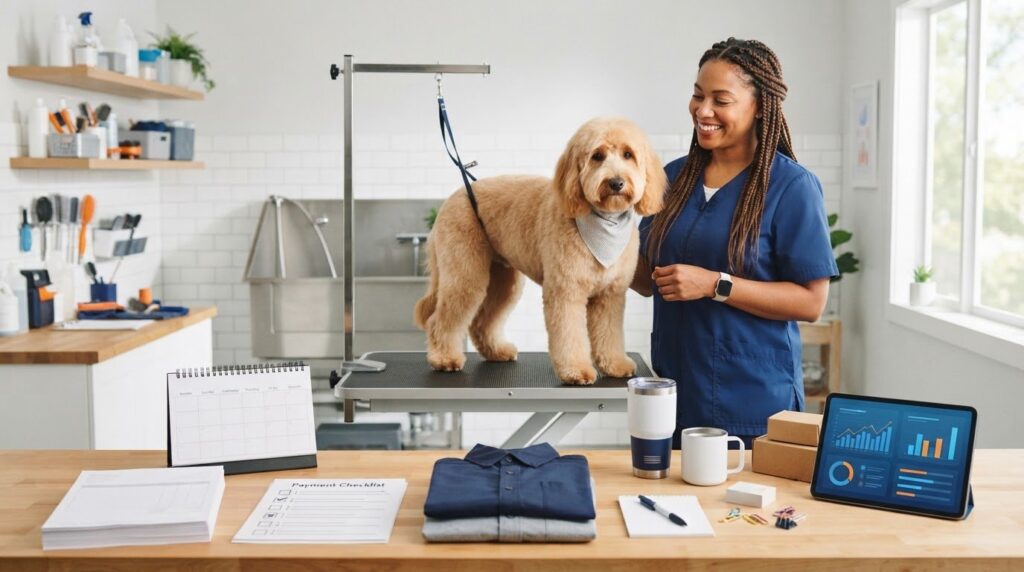


What if the secret to securing a high-limit revolving credit line isn’t your personal FICO score, but a series of strategic fifty dollar office supply orders? Most entrepreneurs face immediate rejection from big banks like Chase because they lack a multi-year history or fear the weight of a personal guarantee. It’s a common frustration to feel stuck in a cycle where you need credit to build credit, but nobody will give you a chance to start. Understanding how to get revolving business credit accounts requires shifting your focus from traditional loans to building a verifiable foundation through your EIN.
This guide provides the exact roadmap to securing revolving credit for your business, even as a new startup with no established history. You’ll learn how to bypass common reporting confusion and leverage vendor tradelines to prove your reliability to major bureaus like Equifax and Creditsafe. We’ll walk through a step-by-step checklist to move from your first net 30 purchase to flexible revolving accounts that grow with your brand. Please keep in mind that this content is for educational purposes and does not constitute financial or legal advice.
Key Takeaways
- Learn the foundational steps to move from simple vendor tradelines to high-limit revolving lines of credit.
- Discover the exact strategy for how to get revolving business credit accounts by establishing a solid reporting history with Tier 1 vendors first.
- Understand the specific compliance requirements, such as LLC status and professional addresses, that traditional banks require for approval.
- Identify critical application mistakes, including mismatched business data and late payments, that often lead to automatic denials.
- See how purchasing essential merchandise through The CEO Creative helps build your corporate credit profile with major reporting bureaus.
What is a Revolving Business Credit Account?
A revolving business credit account is a flexible financing tool that allows your company to borrow up to a specific limit, repay it, and borrow again. Unlike a standard loan where you receive a lump sum, this model lets you access capital on demand. You only pay interest on the portion of the funds you actually use. For a deeper look at the mechanics, you might ask What is a Revolving Business Credit Account? to understand how these accounts differ from fixed-term debt. This flexibility makes it the “Holy Grail” for LLC cash flow management, providing a safety net for seasonal dips or unexpected inventory needs. By using your Employer Identification Number (EIN) to secure these accounts, you effectively separate your personal finances from business liabilities.
Understanding how to get revolving business credit accounts often starts with distinguishing them from Net 30 vendor accounts. A Net 30 account requires full payment within 30 days of an invoice, whereas a revolving account allows you to carry a balance from month to month. Most traditional lenders view revolving credit as a higher tier of trust, granted only after you’ve proven your ability to handle short-term trade credit.
Revolving Credit vs. Installment Loans
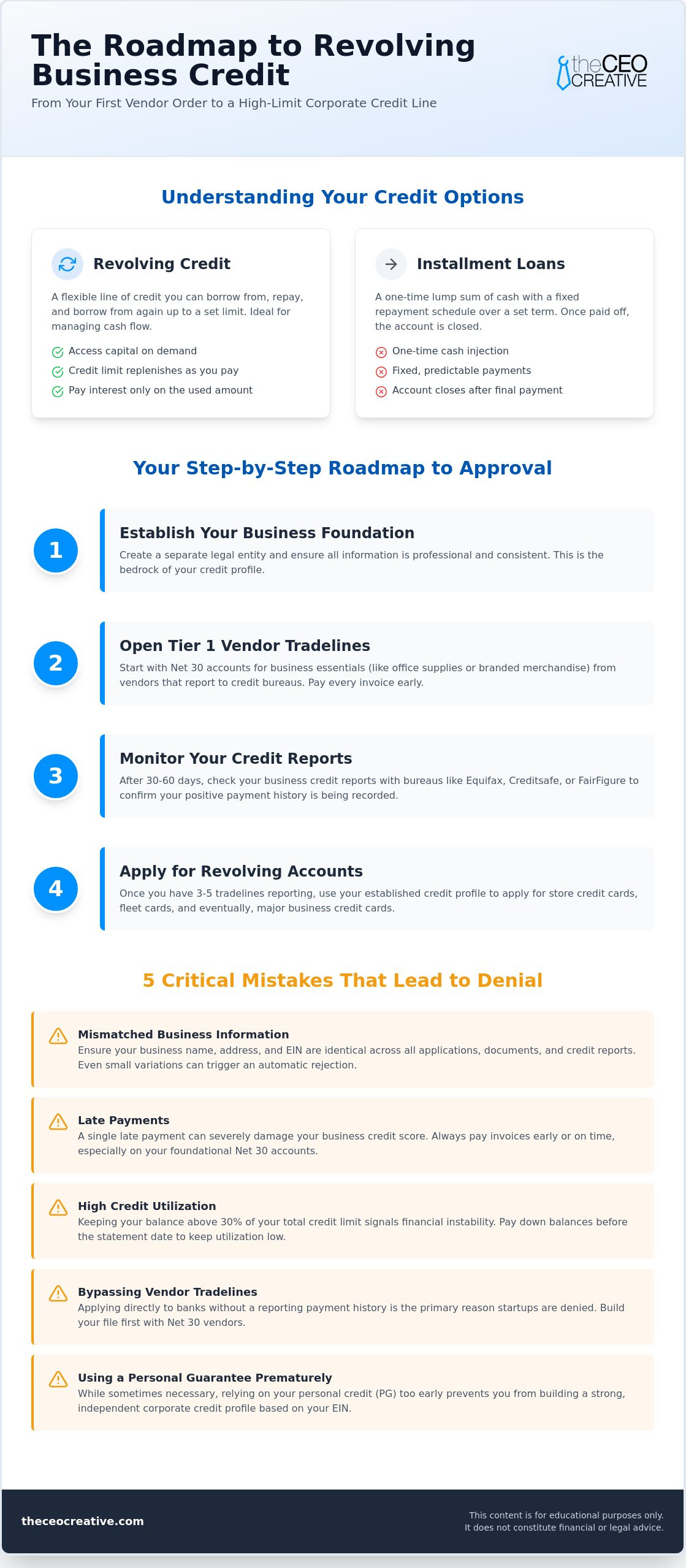
Installment loans provide a one-time cash injection with a fixed repayment schedule. Once you pay it off, the account closes. In contrast, revolving limits replenish as you pay them down. This makes them far superior for ongoing operational costs. You must manage your credit utilization carefully, though. Keeping your balance below 30% of the total limit signals to lenders that your business is stable and not over-leveraged. High utilization can temporarily lower your scores, even if you make every payment on time.
The Role of Vendor Tradelines in Approval
You can’t usually jump straight to a high-limit credit card without a track record. This is where vendor tradelines become essential. A vendor tradeline is a non-loan credit account that reports payment history. For many startups, these are the first building blocks of a credit profile. When you purchase items like office supplies or branding materials, these vendors report your prompt payments to bureaus like Equifax and Creditsafe. This reporting creates the data footprint necessary for banks to eventually approve your application. Establishing this foundation is the most reliable way to learn how to get revolving business credit accounts without a massive revenue history or years of operation.
The Roadmap to Approval: How to Get Revolving Business Credit Accounts
Securing a flexible line of credit isn’t a matter of luck; it’s a result of deliberate preparation. To understand how to get revolving business credit accounts, you first need to look like a legitimate entity on paper. Lenders use automated underwriting systems to verify your identity before a human ever sees your application. If your business name is “Creative Designs LLC” with the Secretary of State but appears as “Creative Design” on your utility bill, the system may flag you for a mismatch. This step-by-step guide to getting a business line of credit emphasizes that high-level preparation is the only way to bypass these digital gatekeepers.
Establishing Your Business Foundation
Before you seek out your first tradeline, ensure your entity is fully registered as an LLC or Corporation with a valid EIN. You need a dedicated business phone line listed in the 411 directory and a professional email address that uses your business domain. These small details create a “credit-ready” profile that signals stability. Learning how to build business credit without a loan involves verifying that your address matches exactly across the IRS, your business bank account, and your state registry. Consistency is the foundation of trust in commercial lending.
Strategic Tradeline Acquisition
Once your foundation is solid, you can begin the active credit-building phase. This process follows a specific cycle that moves you closer to revolving limits. Follow these five steps to build your profile:
- Step 1: Confirm your business is credit-ready with all professional contact details and registrations finalized.
- Step 2: Apply for Tier 1 Net 30 vendor accounts that offer approval based on your EIN rather than years of history.
- Step 3: Make consistent, early payments. Paying your invoices 10 days before the due date often results in a stronger score than paying on the deadline.
- Step 4: Monitor your reports through platforms like FairFigure or Creditsafe to confirm your vendors are reporting your activity.
- Step 5: Apply for revolving accounts once you have successfully established 3 to 5 reporting tradelines.
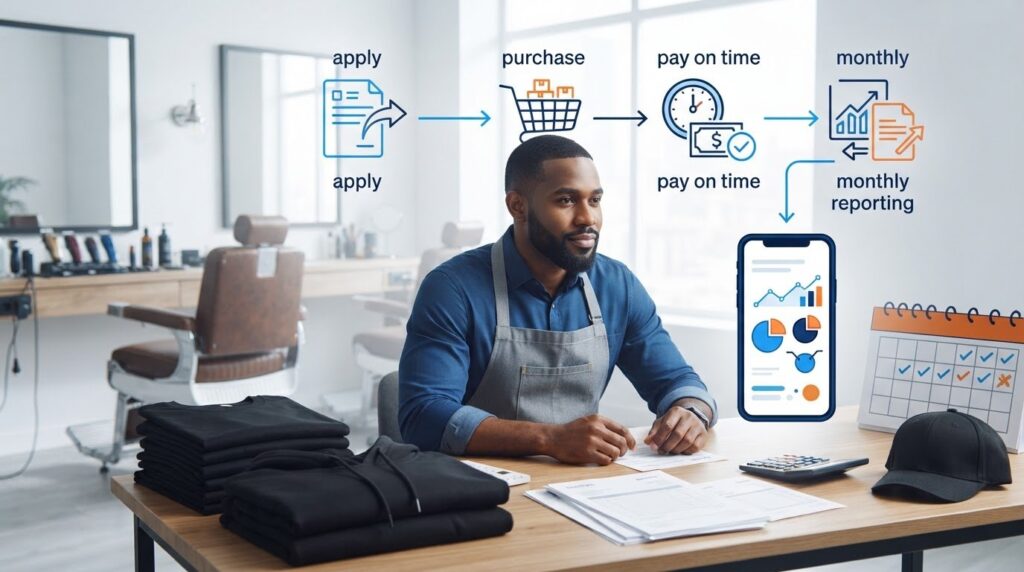
The cycle of “Apply, Order, Pay, Track, Repeat” serves as the engine of your financial growth. Many founders make the mistake of stopping after a single order. However, “Repeat” is the most critical step because it demonstrates ongoing cash flow and reliability to the bureaus. If you are ready to begin generating these data points, you can apply for a net 30 account to start building the history lenders require. Demonstrating this level of discipline over several months is the most effective way to learn how to get revolving business credit accounts that offer the high limits your business needs to scale.
Why Traditional Banks Reject Startups (and How to Bypass Them)
Most startups experience a frustrating “Catch-22” where banks require a credit history to approve an application, yet won’t provide the initial credit needed to build that history. Traditional institutions often demand at least two years of operational history and significant annual revenue before they’ll even consider a request. For an ecommerce brand or a new agency, these barriers feel insurmountable. If you’re trying to figure out how to get revolving business credit accounts, applying directly to a big bank usually leads to a hard pull on your personal credit. This can lower your personal score without any guarantee of a business approval. To bypass these hurdles, Legacy Funding Advisors offers fast and flexible funding solutions for small and medium-sized businesses across the U.S., Puerto Rico, and Canada.
Even government-backed options like an SBA revolving line of credit often require extensive documentation and personal guarantees. These programs are excellent for established entities, but they don’t solve the immediate need for a new LLC. Vendor accounts like The CEO Creative bridge this gap by offering trade credit based on your EIN. By purchasing real business essentials, you create the reporting data that banks eventually want to see.
Bypassing the Personal Guarantee (PG)
A personal guarantee is a legal promise that you’ll pay back the business debt using your personal assets if the company fails. It’s a significant risk that many entrepreneurs prefer to avoid. Building credit solely on your business’s merits allows you to protect your personal savings and home. Vendor accounts provide a unique, no-PG path to establishing credibility because they focus on your payment behavior rather than your personal wealth. This approach ensures your business stands on its own two feet from day one.
The Power of Alternative Reporting
Modern lenders are moving away from old-school metrics. Platforms like Creditsafe and FairFigure are becoming vital for modern lenders who want a clearer picture of a company’s health. They look beyond traditional bank data to see how you handle utility bills and vendor payments. Lenders look for payment depth rather than just a high score. Showing multiple small, consistent payments across various vendors proves you can manage recurring obligations. This is the most effective way to learn how to get revolving business credit accounts while your revenue is still growing toward those high bank thresholds.
5 Critical Mistakes to Avoid When Applying for Business Credit
Even a perfectly registered LLC can face rejection if simple administrative errors slip through the cracks. Understanding how to get revolving business credit accounts is only half the battle; the other half is maintaining a clean record that lenders can trust. Most algorithmic underwriting systems are programmed to look for specific red flags that signal risk. If you trigger these flags, your application might be declined before a human ever reviews your revenue or business plan. Avoiding these five common pitfalls will keep your path to high-limit credit clear.
The Impact of Late Payments
In the world of commercial credit, the “Days Beyond Terms” (DBT) metric is king. If you have a Net 30 arrangement and pay on day 31, your DBT is 1. This single day can significantly lower your business credit score. Unlike personal credit, where you often have a 30-day grace period before a late payment is reported, business bureaus track every day past the due date. Paying early is always better than paying on time. Aim to settle your invoices 10 to 15 days before they are due to demonstrate superior cash flow. You can practice this discipline by opening an office supplies net 30 account and ensuring every small purchase is paid well ahead of schedule.
Data Inconsistency and Identity
Algorithmic lenders don’t have feelings; they have data points. If your application lists your business address as “Suite 100” but your Secretary of State records say “Ste 100,” a computer may flag this as a mismatch. Your business name, address, and phone number must be identical across all registries, including the IRS and your D-U-N-S profile. The D-U-N-S number acts as a universal identifier for your company. Any discrepancy in this data leads to an automatic decline because the system cannot verify your identity. Check your reports regularly to ensure no errors have been introduced by third-party reporting agencies.
- Credit Shopping: Applying for too many revolving lines at once creates multiple hard inquiries. This makes your business look desperate for capital, which is a major red flag for banks.
- Neglecting Reports: Many founders never look at their Creditsafe or Equifax Business reports. You can’t fix an error you don’t know exists.
- Co-mingling Funds: Using personal funds for business purchases prevents you from building a credit history. Every dollar spent on your business should move through a business account or a credit line to create a paper trail of reliability.
Establishing a clean history starts with the right partners. You can apply for a net 30 account today to begin reporting positive data points that will eventually help you learn how to get revolving business credit accounts with higher limits and better terms.
Leverage The CEO Creative to Establish Your Corporate Credit Profile
Establishing a corporate credit profile requires more than just filling out forms; it requires consistent activity. The CEO Creative acts as a reporting Net 30 vendor that translates your everyday operational needs into positive data points. By purchasing essentials like office supplies or branding materials, you create a verifiable track record of fiscal responsibility. A CEO Creative Membership streamlines this process, offering a foundational support system that helps you move away from personal guarantees. This membership provides the structured reporting that major bureaus like Equifax and Creditsafe look for when evaluating your business’s reliability.
Branding and Credit: A Dual Strategy
Professional branding does more than just attract customers; it increases your perceived creditworthiness to future lenders. When you invest in customizable products, you achieve two goals at once. First, you build your brand identity through high quality merchandise that signals stability. Second, you generate a reporting tradeline that proves your business can handle trade credit terms. Lenders are significantly more likely to approve applications for companies that appear established and organized. By using your Net 30 account to purchase branding items, you demonstrate that your business is an active, revenue generating entity rather than a shell company. This dual strategy is a sophisticated way to learn how to get revolving business credit accounts while simultaneously growing your market presence.
Transitioning from Net 30 terms to a stronger corporate credit profile is a natural progression. Once you have established several months of early payments with vendors like The CEO Creative, your business credit score will reflect that consistency. This historical data is the key to understanding how to get revolving business credit accounts with high limits. It proves to banks and alternative lenders that you have the cash flow management skills necessary to handle flexible credit lines. Instead of relying on your personal credit, you use your business’s own performance to unlock the capital needed for scaling. For merchants and contractors, integrating consumer financing solutions through ZipLoan is another effective way to boost revenue while maintaining healthy cash flow.
Recap and Your Next Steps
Success in business credit follows a clear path: ensure your entity is credit ready, apply for Tier 1 vendor accounts, and maintain a cycle of early payments. Start with Net 30 accounts to build your initial footprint, monitor your reports for accuracy, and then transition to the revolving accounts discussed throughout this guide. This structured approach removes the guesswork and protects your personal assets from unnecessary risk. Please remember that this content is for educational purposes and does not constitute financial or legal advice. Every business situation is unique, so consult with a professional for specific guidance.
Are you ready to stop being rejected by traditional banks and start building a profile that speaks for itself? Take the first step toward financial independence today. Apply for a CEO Creative Business Account Today and begin reporting the real business purchases that lead to long term success.
Secure Your Business Capital Today
Building a robust corporate credit profile is the most effective way to protect your personal assets while fueling company growth. By establishing a solid foundation with professional registrations and consistent vendor tradelines, you move closer to high-limit opportunities. Learning how to get revolving business credit accounts isn’t about finding a shortcut; it’s about creating a verifiable history of reliability that major lenders can’t ignore. Focus on early payments and accurate data reporting to ensure your brand stands out in automated underwriting systems.
The CEO Creative is ready to act as your foundational partner in this process. You can access essential branding and office supplies while building the history required for future revolving lines. Our accounts provide a decision within one business day for qualified business entities with no personal guarantee required for Net 30 terms. We report your payment activity directly to Equifax, Creditsafe, and FairFigure to help you establish the credit depth lenders demand.
Take the first step toward financial independence and scale your brand with confidence. Apply for a Net 30 Business Account with The CEO Creative and start building the corporate future your hard work deserves.
Frequently Asked Questions
Do I need a personal guarantee to get a revolving business credit account?
No, you don’t necessarily need a personal guarantee if you focus on building credit through your EIN. While traditional banks often demand a guarantee to secure their risk, establishing 3 to 5 solid vendor tradelines allows your business to prove its own creditworthiness. This path protects your personal assets while giving your company the financial independence it needs to grow.
What is the difference between a Net 30 account and a revolving line of credit?
A Net 30 account is trade credit where the full invoice balance must be paid within 30 days of purchase. In contrast, a revolving line of credit offers a replenishable limit that allows you to carry a balance from month to month. You only pay interest on the amount you actually use, making it a more flexible tool for managing ongoing operational costs.
How many tradelines do I need before I can get revolving credit?
Lenders generally look for a minimum of 3 to 5 reporting tradelines on your business credit reports before approving a revolving account. These data points demonstrate that your company can manage multiple financial obligations simultaneously. Having a diverse mix of vendors also signals to creditors that your business is stable and actively engaged in real commercial activity.
Does The CEO Creative report to all major business credit bureaus?
The CEO Creative reports your activity to Equifax Business, Creditsafe, and FairFigure. This wide reporting ensures that your positive payment behavior is visible to many potential lenders. Because different banks use different bureaus to assess risk, having your data on multiple reports is essential for building a comprehensive and reliable corporate credit profile.
Can a brand-new LLC get approved for a revolving credit account?
Yes, a brand-new LLC can get approved for a revolving account, though the most effective strategy for how to get revolving business credit accounts involves building a foundation of trade credit first. Startups that jump straight to bank applications often face rejection or high interest rates. Using Net 30 vendors to establish a history first leads to better terms and higher limits.
What should I do if my tradeline isn’t appearing on my credit report?
First, verify that your business information matches your credit file exactly, as even small mismatches can prevent reporting. You should also wait at least 60 days, as most vendors report on a monthly cycle and bureaus require time to process the data. If the tradeline still doesn’t appear, contact the vendor to ensure they have your correct EIN on file.
Is there a minimum revenue requirement for vendor revolving accounts?
Unlike traditional banks that often require six figures in annual sales, many vendor accounts prioritize payment history over specific revenue targets. This flexibility makes vendor credit an ideal entry point for ecommerce brands and service agencies that are still scaling. Lenders are often more interested in your ‘Days Beyond Terms’ metric than your total gross income during the initial building phase.
How often do Net 30 vendors report to the credit bureaus?
Most Net 30 vendors report to the bureaus on a monthly basis. This regular reporting is a key component of how to get revolving business credit accounts because it provides the consistent data banks need to see. Consistent monthly reporting over a period of six months creates a solid paper trail that proves your company is a reliable borrower.
Building business credit? Open a Net 30 Account — EIN only, no personal guarantee, $60 minimum order, credit lines up to $5,500, a decision in one business day, and every on-time payment reported monthly to Equifax Business, Creditsafe and FairFigure.