

Related: Net 30 Vendors Compared — the four things worth comparing, and a direct comparison against every major vendor.
Over 90% of business credit card applications for new LLCs are denied because the owner skipped the foundational building blocks of corporate credit. You likely know the sting of being denied for a high-limit card simply because your company has no credit history. It’s a common hurdle that leaves many entrepreneurs feeling stuck using their personal assets to fund business growth. This guide will help you master the business credit ladder and learn how to progress from Tier 1 vendor accounts to high-limit corporate financing. We’ll show you exactly how to navigate the system so you can scale with confidence.
Before we explore the ladder, it’s vital to define a few core concepts. A vendor tradeline is a credit account between your business and a supplier that reports your payment history to credit bureaus. Payment reporting is the mechanism these vendors use to share your data with agencies like Equifax, Creditsafe, and FairFigure to establish your score. The CEO Creative is a reporting NET 30 vendor that helps build business credit through real business purchases like office supplies and custom apparel. By understanding what are the different tiers of business credit, you can avoid the mistake of applying for advanced funding before your foundation is ready.
Key Takeaways
- Establish a solid financial foundation by opening Tier 1 Net 30 vendor accounts that report consistently to major business credit bureaus.
- Understand what are the different tiers of business credit so you can strategically progress from simple vendor accounts to high-limit corporate cards.
- Ensure your business is lender-ready by setting up a compliant LLC or corporation with a dedicated EIN and professional business address.
- Avoid automatic denials for advanced financing by successfully managing at least three to five reported tradelines before applying for Tier 2 store credit.
- Utilize strategic partnerships with reporting vendors like The CEO Creative to build your brand identity and credit history simultaneously.
Understanding the Business Credit Tier System: The Credit Ladder
Business credit tiers are structured levels of creditworthiness that determine which types of financing a company qualifies for as it matures. Think of it as a ladder. You can’t reach the top without stepping on the first rung. Many entrepreneurs experience frustration when they apply for high-limit corporate cards immediately after forming their LLC, only to face automatic denials. This happens because they haven’t established the necessary foundation. To truly grasp what are the different tiers of business credit, you must understand that each level proves your reliability to future lenders.
The promise of this system is total financial independence for your brand. By following a logical progression, you’ll eventually qualify for financing based solely on your Employer Identification Number (EIN). This allows you to scale without relying on a personal guarantee or putting your family’s assets at risk. Note that this content is for educational purposes and does not constitute financial or legal advice.
Why Tiers Matter for New LLCs and Startups
Establishing a business identity separate from your personal credit score is the first step toward professional sustainability. When you apply for credit, lenders look at Business credit reports to assess how well you manage debt. For a new LLC, these reports start as a blank slate. Lenders use tiers to mitigate risk; they won’t give a $50,000 loan to a company with no history. Your EIN acts as the anchor for this profile. It allows you to build a reputation that belongs to the company rather than the individual owner.
The Four Tiers of Business Credit Overview
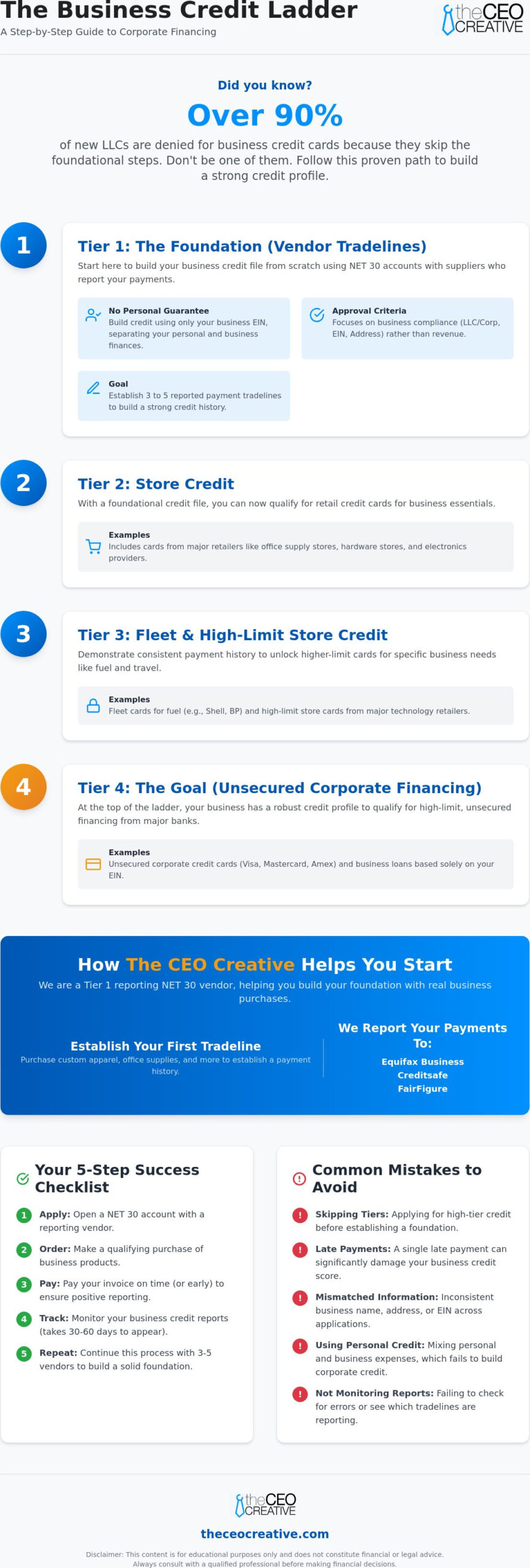
Moving through the stages of corporate funding requires a clear roadmap. While every lender has internal criteria, the market generally recognizes four distinct stages. Knowing what are the different tiers of business credit helps you avoid wasted applications and keeps your momentum high.
- Tier 1: Vendor Tradelines. These are Net 30 accounts where you buy supplies and pay the invoice in full within 30 days. These vendors report your payments to bureaus to start your file.
- Tier 2: Store Credit. Once you have 3 to 5 Tier 1 accounts reporting, you can apply for retail-specific cards like Amazon or Staples. These often do not require a personal guarantee if your Tier 1 foundation is strong.
- Tier 3: Fleet and High-Limit Store Credit. This stage includes gas cards for company vehicles and higher credit limits from major retailers. It requires a more robust credit history and consistent reporting.
- Tier 4: Unsecured Corporate Financing. This is the goal. At this level, you qualify for high-limit Visa or Mastercard accounts and traditional bank loans based purely on your business’s credit strength.
Once you reach these advanced stages, your business can leverage its credit for significant growth opportunities. For property investors, you can learn more about JGL Capital LLC to discover fast, asset-backed commercial loans that help scale your portfolio without the constraints of traditional banking.
Tier 1: The Foundation of Vendor Tradelines
A vendor tradeline is a credit relationship between your company and a supplier. When you purchase goods or services on credit, the vendor records this transaction. If they report to bureaus, it becomes a tradeline on your business credit report. For those just starting to explore Understanding The Basics, Tier 1 represents the first step of the journey. Most Tier 1 accounts offer Net 30 terms. This means you can buy what you need today and pay the invoice in full within 30 calendar days. It’s a simple way to establish trust without needing a complex history or a personal guarantee.
Tier 1 is vital because it populates your file with actual data. When you ask what are the different tiers of business credit, you’ll find that Tier 1 is the only level designed specifically for businesses with zero history. The CEO Creative serves as a premier Tier 1 vendor by offering real business products that help build your brand identity. Whether you need custom branding or office supplies, these purchases report your on-time payments to major bureaus to prove your reliability.
Essential Tier 1 Vendors for 2026
To build a robust profile, you should aim for a mix of vendors. The CEO Creative provides an excellent starting point for new LLCs because they offer apparel, engraved merchandise, and office essentials that every startup needs. Other traditional options include Uline for shipping supplies and Grainger for industrial tools. By opening Net 30 accounts with these companies, you begin generating the payment data required to trigger your first credit scores. Consistency is key here. You should place regular orders and pay them off immediately to show lenders you’re a reliable partner as you climb the credit ladder.
Reporting Mechanics: Equifax, Creditsafe, and FairFigure
Understanding how your data moves is crucial for progression. While many people focus only on Dun & Bradstreet, modern lenders frequently check Equifax, Creditsafe, and FairFigure. Vendors typically report your payment behavior on a monthly or quarterly cycle. Paying your invoices early, rather than just on time, can have a positive impact on your internal risk scores. For instance, paying a Net 30 invoice in 10 or 15 days signals exceptional liquidity. You can track these tradelines through monitoring services to ensure your information is accurate across all platforms. If you’re ready to start your journey, you can apply for a Net 30 account to begin building your foundation today.
When researching what are the different tiers of business credit, remember that your performance in Tier 1 dictates your success in the following stages. Lenders in Tier 2 and Tier 3 will look back at these initial vendor accounts to see if you have a history of handled debt before they approve you for higher limits.
Advancing to Tier 2 and Tier 3: Store and Fleet Credit
Once you’ve established a handful of Tier 1 tradelines, you’re ready to climb higher. Most experts suggest waiting until you have three to five reported accounts before moving up. This progression is a core part of understanding what are the different tiers of business credit and how they interact. Tier 2 introduces store credit. These are retail accounts that allow you to purchase items specifically from that merchant. Unlike Net 30 terms, these often offer revolving credit. You can carry a balance; however, paying in full is always better for your score.
Tier 3 steps up the intensity with fleet credit and high-limit retail accounts. Fleet cards are designed for fuel and vehicle maintenance. They’re a powerful tool for service-based businesses with trucks or vans. As you move through these stages, you’re shifting from simple vendor relationships to more complex financial products. This transition proves to future lenders that your business can handle revolving debt responsibly. The shift from Net 30 to revolving credit is a significant milestone. In Tier 1, you’re simply paying for what you use. In Tier 2 and 3, you’re given a line of credit you can use repeatedly. This change requires more discipline. If you carry high balances, your credit utilization can negatively impact your scores. Aim to keep your utilization below 30% to maintain a healthy profile.
Qualifying for Tier 2 Store Credit
To secure store credit without a personal guarantee, your Tier 1 foundation must be rock solid. Lenders at this stage look for consistent payment history on your business credit reports. You should check out the Best websites to buy office supplies online to find vendors that help bridge this gap. Common examples of Tier 2 accounts include cards from major office supply retailers or technology giants. When you Establish business credit through these store-specific channels, you’re adding diversity to your profile. Lenders at this level are essentially testing your business. They give you a small limit to see if you’ll pay on time. If you handle a $500 limit well at a tech store, they’re much more likely to increase it to $5,000 later. This incremental growth is how you build a thin file into a robust financial asset.
Unlocking Tier 3 Fleet and Gas Cards
Fleet credit provides a strategic advantage for growing organizations. These cards often report to multiple bureaus, which accelerates your profile’s growth. They also offer detailed tracking for business expenses, making tax season much easier. To master what are the different tiers of business credit, you must realize that Tier 3 isn’t just about spending power. It’s about demonstrating consistent usage. Lenders care more about a business that uses its card for small, regular fuel purchases than one that maxes out its limit once and goes silent. High-limit retail accounts in Tier 3 often involve furniture stores or specialized equipment vendors. These accounts are vital for businesses that need to furnish an office or buy industrial machinery. By the time you reach this stage, your business should have at least six to ten total tradelines reporting. This volume of data creates a thick credit file that gives Tier 4 lenders the confidence they need to offer unsecured financing.
The Step-by-Step Checklist for Climbing Credit Tiers
Progressing through the corporate credit ladder requires more than just knowing what are the different tiers of business credit. It demands a disciplined, repeatable process. To move from a thin file to high-limit financing, you must treat your credit profile like a strategic asset. If you follow this structured checklist, you’ll build the credibility needed to unlock advanced funding stages without relying on your personal credit score.
- Step 1: Establish a Compliant Foundation. Before applying for credit, ensure your business is legally structured. You need a registered LLC or Corporation, a federal EIN, and a dedicated business address. Avoid using residential addresses or personal cell phone numbers, as these often trigger automatic denials in lender systems.
- Step 2: Apply for 3 to 5 Tier 1 Accounts. Start with vendors that offer Net 30 terms and report to major bureaus. Focus on companies like The CEO Creative that provide essential products for your daily operations.
- Step 3: Place Real Business Orders. Open accounts aren’t enough; you must generate activity. Purchase necessary office supplies or branded apparel to show lenders you have active trade relationships.
- Step 4: Pay Invoices Early. While the term is Net 30, the goal is to pay within 10 to 15 days of the invoice date. Early payments are a powerful signal of liquidity and can help boost your internal scores with bureaus like Creditsafe and FairFigure.
- Step 5: Monitor and Repeat. Check your reports monthly to ensure your tradelines are appearing correctly. Once you have five reported accounts, you’re ready to apply for Tier 2 store credit.
If you’re ready to begin this process with a reliable partner, you can apply for a Net 30 account today to start building your Tier 1 foundation.
5 Common Mistakes That Kill Your Credit Progress
Small errors can stall your progress for months. Late payments are the most frequent culprit. Even being one day late can result in a negative mark that stays on your business file for years. Mismatched business information is another silent killer. If your address on a vendor application doesn’t match the address on your LLC filing, bureaus might create a “split file,” which prevents your credit from building correctly. Additionally, don’t apply for Tier 4 corporate cards too early. Every denial results in a hard inquiry that can lower your score and make future approvals harder. Finally, always use a professional business email and a landline or professional VOIP service; personal Gmail accounts signal a lack of stability to modern underwriting algorithms.
What to Do if a Tradeline Doesn’t Appear
It’s frustrating when you’ve paid an invoice but don’t see it on your report. First, verify the vendor’s reporting schedule. Most report monthly, but some only send data to bureaus once per quarter. If 60 days have passed and the line is still missing, confirm that your EIN and business name on the invoice match your credit file exactly. Even a missing “LLC” at the end of a name can cause a mismatch. If everything is correct, contact the vendor’s credit department to verify they have your correct reporting information on file. Understanding what are the different tiers of business credit is helpful, but managing the data behind those tiers is how you actually succeed.
Scaling Your Brand and Credit with The CEO Creative
Scaling a modern brand requires more than just capital; it requires a professional image and a robust financial foundation. For entrepreneurs looking to build a distinct lifestyle identity, you can learn more about Flavor First Sports to see how urban culture and sports apparel can merge. The CEO Creative acts as a strategic partner by serving as a reporting NET 30 vendor that helps build business credit through real business purchases. Most entrepreneurs start their journey by asking what are the different tiers of business credit, but the most successful ones focus on maximizing their performance in Tier 1. By choosing vendors that provide essential business tools, you ensure that every dollar spent on operations also works toward your future borrowing power.
The CEO Creative Membership is designed to simplify this process. It provides a structured way to manage your business expenses while ensuring your on-time payments reach the bureaus that matter most. Instead of buying generic supplies from non-reporting retailers, you can invest in the long-term sustainability of your LLC. This membership model bridges the gap between routine operational needs and high-level corporate credit goals. It’s a foundational support system that allows you to focus on growth while your credit profile matures in the background.
Custom Branding Meets Corporate Credit
Establishing corporate credibility starts with how the world perceives your brand. Utilizing Net 30 apparel allows you to outfit your team in professional, branded gear without an immediate cash drain. These purchases do double duty. They build team unity and professional presence while simultaneously adding a positive tradeline to your credit file. Professional logo design and high-quality customizable products like engraved notebooks or stationery are also essential. These items signal to lenders and clients alike that your company is established and serious. Every branded item you use becomes a testament to your business’s legitimacy and its ability to handle trade credit responsibly.
Getting Started with Your First Tradeline
The path to high-limit financing is open to any business willing to follow the ladder. For new LLCs and startups, the application process at The CEO Creative, with a decision within one business day, removes the common hurdles of “no credit history” or “thin files.” Once you’ve secured your account, your strategy should be simple and consistent. First, order the merchandise your business needs to operate. Second, pay your invoices early. Third, track your reporting to ensure your profile is growing. Mastering what are the different tiers of business credit is about more than just knowledge; it’s about taking action at the Tier 1 level to unlock the full potential of your corporate finances. As you move toward Tier 4 and beyond, these early vendor relationships will remain the most important evidence of your reliability. Please note that this content is for educational purposes and does not constitute financial or legal advice.
Master Your Business Credit Ladder Today
Progressing through the credit stages requires a shift in mindset from consumer to corporate executive. By mastering what are the different tiers of business credit, you ensure your LLC is positioned for high-limit funding without personal risk. This structured approach transforms your routine operational spending into a strategic asset for long-term growth.
Apply for a Net 30 Account with The CEO Creative Today
What happens next
- Complete the simple online application with your EIN and business details for a decision within one business day.
- Shop our catalog of office essentials and custom apparel to place your first credit order.
- Pay your invoice early to trigger reporting to Equifax, Creditsafe, and FairFigure.
Secure your corporate future and apply for your Net 30 account today to start climbing the ladder.
Frequently Asked Questions
What are the different tiers of business credit?
Business credit is structured into four distinct levels that represent a company’s growing creditworthiness. Tier 1 involves vendor tradelines like Net 30 accounts. Tier 2 consists of store credit from major retailers. Tier 3 includes fleet credit and high-limit retail accounts. Finally, Tier 4 represents unsecured corporate credit cards and traditional bank loans. Understanding what are the different tiers of business credit allows you to strategically climb the ladder toward high-limit financing.
Do Tier 1 vendors require a personal guarantee?
Most Tier 1 vendors do not require a personal guarantee for approval. These accounts are specifically designed to help new LLCs and startups establish a credit profile using only their EIN. Vendors like The CEO Creative offer a decision within one business day for new entities, allowing you to build a professional credit history without risking your personal assets. This legal separation is a critical step for any entrepreneur focused on long-term corporate sustainability.
How many tradelines do I need to move to Tier 2?
You typically need at least three to five reported Tier 1 tradelines before you can successfully move to Tier 2. Lenders at the store credit level want to see a consistent history of on-time or early payments across multiple accounts. If you apply for store credit with a thin file, you’ll likely face automatic denials. Building a robust Tier 1 foundation ensures that your business appears reliable to future creditors.
What bureaus does The CEO Creative report to?
The CEO Creative reports your payment data to Equifax Business, Creditsafe, and FairFigure. These bureaus are essential for modern lenders who look beyond traditional Dun & Bradstreet scores. By reporting to multiple agencies, The CEO Creative helps you build a well-rounded credit profile. This visibility is vital when you are ready to progress through the tiers and seek higher credit limits or revolving store accounts.
Can I build business credit with a new LLC and no revenue?
Yes, you can build business credit with a new LLC even if you don’t have active revenue yet. Tier 1 vendors focus on your business’s legal compliance and structure rather than your current cash flow. As long as you have a registered entity, an EIN, and a professional business address, you can apply for Net 30 accounts. This allows you to establish your financial reputation before you need to seek traditional bank financing.
How long does it take for a Net 30 account to report to Equifax?
Most Net 30 vendors report to bureaus on a monthly or quarterly cycle. After you pay your invoice in full, it generally takes 30 to 60 days for the tradeline to appear on your Equifax Business report. It’s important to monitor your reports regularly to ensure your data is accurate. Consistent reporting is the engine that drives your progress as you learn what are the different tiers of business credit.
Is it possible to skip Tier 1 and go straight to Tier 4?
It is nearly impossible for a new business to skip Tier 1 and qualify for Tier 4 financing. Tier 4 lenders, such as traditional banks, require a thick credit file and proven revenue. Without the foundation of vendor tradelines, these lenders will almost always require a personal guarantee and a high personal credit score. Following the tier system is the most reliable way to secure unsecured corporate funding without personal risk.
What is the difference between a vendor tradeline and a credit card?
A vendor tradeline is typically a Net 30 account where the full balance is due within 30 days of the invoice. Business credit cards offer revolving credit, which allows you to carry a balance and make minimum monthly payments. Vendor tradelines are the primary tools used in Tier 1 to establish a history. Revolving credit products are introduced in Tiers 2 through 4 once you have proven your ability to manage debt.
Building business credit? Open a Net 30 Account — EIN only, no personal guarantee, $60 minimum order, credit lines up to $5,500, a decision in one business day, and every on-time payment reported monthly to Equifax Business, Creditsafe and FairFigure.