

Title: DIY vs. Paid Business Credit Services: Which Is Better?
Key Takeaways
- Understand the critical time-versus-money trade-off when deciding between DIY business credit building vs using a service to establish your EIN’s credit profile.
- Learn how to leverage Tier 1 Net 30 vendors to build a solid financial foundation without the risk of a personal guarantee.
- Discover why “practical spending” on business essentials like uniforms and onboarding kits ensures consistent, professional credit reporting.
- Master the five-step execution cycle—Apply, Order, Pay, Track, and Repeat—to guarantee your tradelines appear on your business credit reports.
- Identify the specific business milestones that signal when it’s time to transition from manual research to a professional membership for faster funding access.
Understanding the Business Credit Landscape in 2026
Establishing a corporate identity in 2026 requires a clear understanding of how financial data moves between companies and lenders. The CEO Creative serves as a foundational reporting Net 30 vendor for modern LLCs and startups. A Net 30 term is a credit arrangement where you have 30 days to pay your invoice in full after the purchase date. Central to this process is payment reporting, which is the systematic transmission of your transaction history and payment behavior to business credit bureaus. This data allows bureaus to calculate your risk level and creditworthiness.
Every account you open and pay on terms creates a vendor tradeline. This tradeline acts as the primary building block of your business credit profile, proving to future creditors that your EIN can manage debt independently. Please be aware that this content is for educational purposes and does not constitute financial or legal advice. We make no guarantees regarding specific credit score increases. However, learning how business credit reports function is essential for any founder deciding between DIY business credit building vs using a service.
Why Your EIN Needs Its Own Identity
Decoupling your personal finances from your business operations is the only way to protect your personal assets long-term. Most new businesses fall into the “No Credit File” trap, where a lack of history leads to automatic denials or heavy personal guarantee requirements. By establishing a separate EIN-only credit profile, you ensure that your business stands on its own. Consistent payment reporting to Equifax, Creditsafe, and FairFigure creates a verifiable track record that lenders can trust without looking at your personal social security number.
The Role of Business Credit Bureaus
The major players like Dun & Bradstreet, Equifax Business, and Experian Commercial still dominate the market, but the landscape has expanded. Modern startups must now focus on newer aggregators like Creditsafe and FairFigure, which often provide more real-time data to alternative lenders. Maintaining business info consistency is critical across all these bureaus. Your business name, address, and phone number must be identical on every application. Even a minor discrepancy can prevent your tradelines from merging into a single, strong file. When evaluating DIY business credit building vs using a service, consider that a service often automates this data synchronization for you.
DIY Business Credit Building vs Using a Service
Choosing the right path for your LLC often comes down to a simple trade-off between time and money. For many startups, every dollar counts, making the manual route seem attractive. However, the hidden costs of DIY business credit building vs using a service often manifest in hundreds of hours spent on research. You must verify if a vendor actually reports to the bureaus, as many claim to do so but fail to follow through. A strategic membership service, on the other hand, provides a curated environment where reporting is guaranteed and the administrative burden is removed from your shoulders.
The DIY approach requires you to act as your own credit manager. You have to hunt for Tier 1 vendors, apply for accounts, and then meticulously track whether those payments hit your Equifax or Creditsafe reports. If you’re looking for manual strategies, you can learn how to build business credit without a loan to get started. While this saves on upfront membership fees, it increases the risk of errors that can stall your progress for months.
The Realities of the DIY Route
Success in the DIY space demands precision. You need to maintain consistent business information across every application. The U.S. Small Business Administration provides a solid foundation on how to establish business credit, emphasizing the need for proper registration and entity setup. Even with this guidance, entrepreneurs often face “Ghost Vendors.” These are companies that promise to report your payment history but lack the actual data-sharing agreements with major bureaus. This leads to wasted spending on products you might not even need, with zero impact on your credit score.
Benefits of a Strategic Membership Service
A membership model simplifies the entire DIY business credit building vs using a service debate by offering a “hybrid” solution. Instead of just paying for a coach or a software tool, you partner with a reporting vendor that provides tangible value. With a Net 30 business account, you gain access to a decision within one business day tradelines without a personal guarantee. This approach combines your branding needs with financial growth. You can order custom apparel or office supplies that help your business look professional while simultaneously building a history of on-time payments. It’s a strategic move that turns necessary operational expenses into a powerful credit-building engine.
The Strategic Framework for Building Credit with Vendors
Building a robust EIN profile begins with Tier 1 vendors. These are entry-level accounts that report to bureaus without requiring years of history or a high personal credit score. When comparing DIY business credit building vs using a service, the service route often provides immediate access to these essential tradelines. Instead of buying things you don’t need, focus on “Practical Spending.” Invest in items your business actually uses, like onboarding kits or uniforms. This turns a routine expense into a strategic credit-building tool. For a deeper dive into which vendors to prioritize, check out our Net 30 Vendors 2026 Guide.
Consistency is the secret sauce for a healthy score. Many owners make the mistake of placing one massive order and then stopping. It’s much better to place smaller, recurring orders. This creates a steady stream of positive data points for your credit file. Lenders want to see a pattern of behavior, not a fluke. A step-by-step guide to building business credit will always emphasize the importance of maintaining active accounts over time. By ordering office supplies or promotional items every month, you keep your tradelines “warm” and active.
Leveraging Custom Branding for Credit
Professionalism and fundability go hand in hand. When you use Net 30 apparel vendors to outfit your team, you’re doing more than just branding. You’re creating a paper trail of legitimate business activity. Custom apparel and office supplies are deductible business expenses that demonstrate your company is operational and growing. This physical presence increases your “Fundability” because it shows you’ve invested in the infrastructure of your brand. It signals to future creditors that you aren’t a “fly-by-night” operation but a serious organization with long-term goals.
Reporting Schedules and Bureau Mechanics
Data doesn’t appear on your report instantly. Most vendors operate on a 30-to-60 day reporting cycle. This means a purchase you make in January might not show up until March. Patience is required; however, you can accelerate the process by paying your invoices early. Early payments are the gold standard for startups because they prove you have strong cash flow. Data aggregators like FairFigure and Creditsafe track these patterns closely. They look for “Days Beyond Terms” (DBT). If your DBT is zero or negative, your score reflects a lower risk profile. When you weigh DIY business credit building vs using a service, remember that services often have direct pipelines to these bureaus, ensuring your data is transmitted accurately.
Step-by-Step Checklist and Common Mistakes
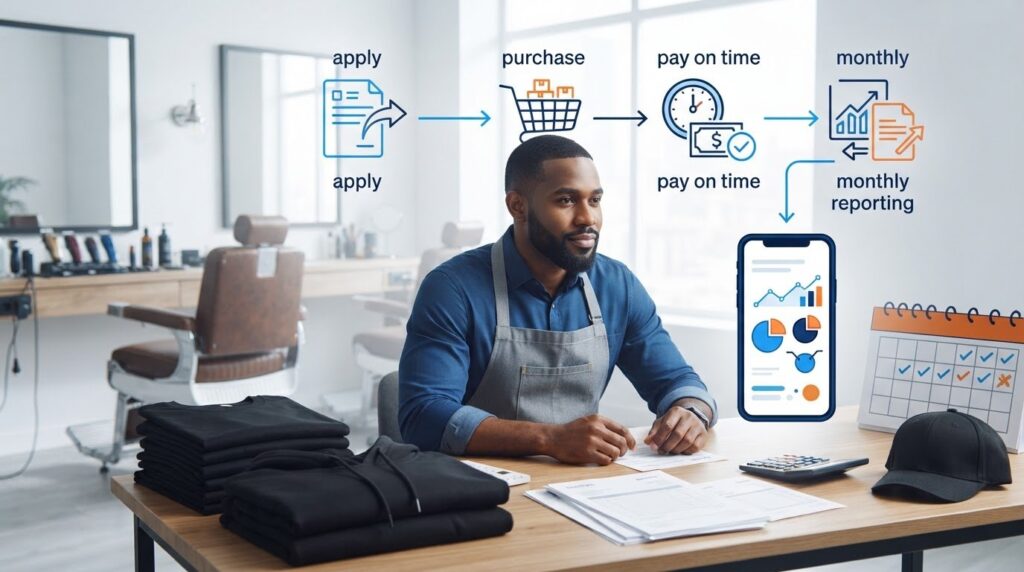
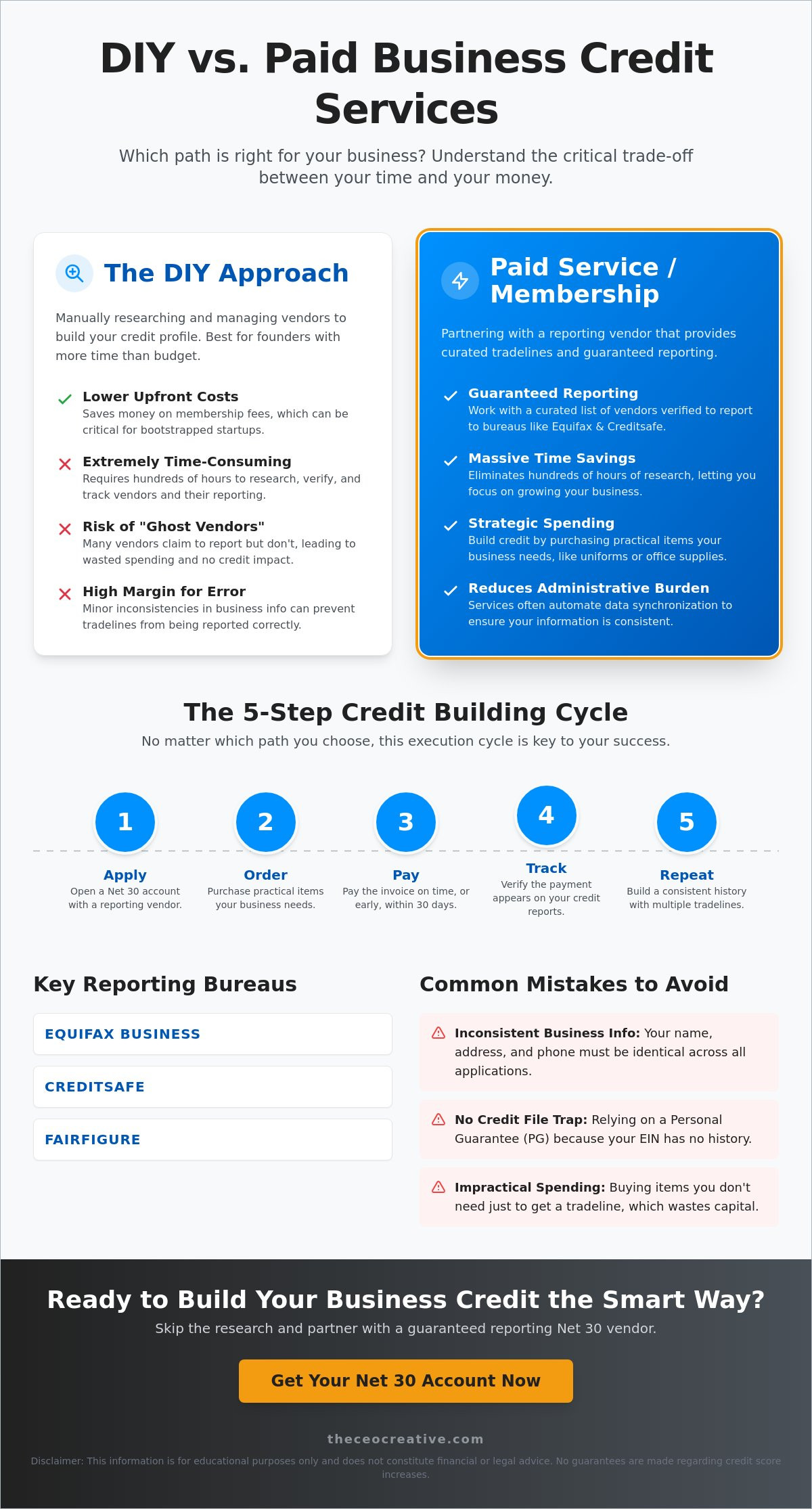
Execution is where many entrepreneurs stumble. Whether you choose DIY business credit building vs using a service, your success depends on a repeatable cycle. Building credit isn’t a one-time task; it’s a monthly administrative habit. The 5-Step Execution Cycle consists of: Apply, Order, Pay, Track, and Repeat. Most business owners fail at the final step. They secure one tradeline and assume the job is finished. To build a score that qualifies for high-tier funding, you must keep the data flowing every month with consistent activity.
For maximum impact on your credit score, aim to pay your invoices at least 10 days before the due date. This demonstrates exceptional liquidity and reliability to lenders. Once you’ve settled the balance, monitor your progress through platforms like FairFigure or Dun & Bradstreet. Seeing that first reporting event hit your file is a major milestone for any startup. It proves your EIN is officially recognized by the financial community.
The 5-Step Credit Building Checklist
- Secure an LLC Net 30 account with your EIN to establish your baseline tradeline.
- Purchase office supplies or branding gear your business needs for daily operations.
- Settle the invoice well before the 30-day deadline to maintain a clean payment history.
- Verify that the transaction appears on your business credit reports within 60 days.
- Repeat the process monthly to build a long-term history of financial responsibility.
8 Common Mistakes to Avoid
Avoid these frequent pitfalls to ensure your efforts lead to a stronger credit profile. If you’re ready to start building today without the guesswork, you can apply for an account here to begin your journey immediately.
- 1. Mismatched business information: Using different names or addresses on various applications triggers fraud alerts and prevents proper reporting.
- 2. Using personal email addresses: Using Gmail or Yahoo accounts looks unprofessional; stick to your registered business domain.
- 3. Neglecting early payments: Waiting until the due date is acceptable, but paying early adds early-payment records to your business payment history.
- 4. Applying for Tier 2 too soon: Rushing to high-limit credit cards before you have 3-5 solid tradelines often leads to denials.
- 5. Failing to verify reporting: Always confirm the vendor reports to Equifax or Creditsafe before spending your capital.
- 6. Using a residential address: Many bureaus prefer a commercial address or a professional virtual office over a home address for verification.
- 7. Forgetting membership renewals: If your tradeline is tied to a membership, letting it lapse can cause the account to stop reporting.
- 8. Ordering non-business items: Keep your spending focused on items for “business use” to maintain a professional profile for future audits.
Choosing the Right Path for Your Business
Deciding between DIY business credit building vs using a service depends on your current business phase. If you’re operating with a limited budget and have plenty of time, the manual route lets you learn the mechanics of reporting firsthand. However, most growth-oriented founders find that the time spent auditing vendors is better invested in sales and operations. A membership service is the ideal choice when you need speed, professional branding, and a strict focus on EIN-only credit. It removes the guesswork and ensures every dollar spent serves a dual purpose: operational utility and financial growth.
The CEO Creative serves as the foundation for new LLCs by simplifying the reporting process. We don’t just provide a score; we provide the tools you need to look and act like an established brand. This strategic partnership allows you to focus on your vision while we handle the logistical hurdles of credit reporting. By choosing a structured path, you avoid the common pitfalls that stall most startups in their first year. You aren’t just buying products; you’re investing in a system that validates your company’s legitimacy to future lenders and partners.
The CEO Creative Advantage
We provide more than just a reporting line. Our platform offers access to high-quality apparel, stationery, and customizable products that elevate your brand’s presence. By acting as a reporting Net 30 vendor, we ensure your efforts aren’t wasted on “ghost” tradelines that never show up on your file. Our membership benefits grow alongside your brand, providing the infrastructure you need to transition from a new startup to a fundable corporation. We handle the direct reporting to major bureaus so you can focus on leading your organization. This reporting consistency creates a “warm” credit file that is ready for higher-tier credit applications when you need them most.
What Happens Next?
Ready to take the next step toward financial independence? Follow these three simple actions to begin your journey:
- Apply for your The CEO Creative Net 30 account today to establish your foundational tradeline.
- Place your first order for branding essentials or office supplies to activate your credit-building process.
- Watch your business credit profile grow as we report your on-time payments to major bureaus like Equifax and Creditsafe.
Secure Your Company’s Financial Future Today
Building a fundable business requires more than just hard work; it requires a strategic approach to your financial identity. Deciding between DIY business credit building vs using a service involves weighing the immediate savings of manual research against the long-term benefits of a streamlined, professional system. By focusing on consistent, practical spending and avoiding common administrative pitfalls, you’ll position your LLC for higher tier funding and sustainable growth.
If you’re ready to bypass the confusion of ghost vendors and unverified tradelines, a structured membership provides the clarity you need. You can Apply for The CEO Creative Business Net 30 Account today to begin building your profile. Our platform offers a decision within one business day for new LLCs and requires no personal guarantee. We report directly to Equifax, Creditsafe, and FairFigure; this ensures your on-time payments contribute directly to your EIN’s creditworthiness. Your journey toward a robust corporate identity starts with a single, smart decision. Take that step today and watch your brand’s potential expand.
Frequently Asked Questions
Do Net 30 vendors require a personal guarantee?
Most Tier 1 Net 30 vendors do not require a personal guarantee, allowing you to build credit using only your EIN. This structure protects your personal assets and keeps business liabilities separate from your personal credit history. By avoiding a personal guarantee, you ensure that your personal credit remains unaffected by your company’s debt obligations and operational expenses.
How long does it take for a Net 30 account to show up on my credit report?
Most Net 30 accounts appear on your business credit report within 30 to 60 days. Vendors typically report data in monthly batches rather than immediately after a purchase. If you pay your invoice early, the information will still likely wait until the vendor’s next scheduled reporting cycle. Consistency in your monthly ordering helps ensure your reports reflect active payment behavior.
Can I build business credit with a brand new LLC?
Yes, you can build business credit immediately after forming a brand new LLC. Tier 1 vendors are specifically designed for businesses with no existing credit file. When deciding between DIY business credit building vs using a service, remember that these accounts establish your foundation. Using these accounts correctly leads to higher credit limits and more advanced funding options as your company matures.
Which bureaus does The CEO Creative report to?
The CEO Creative reports your account activity to major bureaus including Equifax Business, Creditsafe, and FairFigure. Reporting to multiple bureaus is strategic because it ensures a comprehensive and transparent credit profile. Lenders often check different bureaus to assess risk, so having your positive payment history visible across several platforms increases your overall fundability and demonstrates corporate reliability to potential creditors.
Does paying an invoice early help my business credit score?
Paying invoices early can strengthen your business payment history. Scoring models like the Dun & Bradstreet PAYDEX specifically reward businesses that settle debts before the 30-day deadline. Early payments demonstrate strong cash flow and financial reliability, which are key factors underwriters consider. Aiming to pay ten days early can provide the maximum positive impact on your business credit file.
What is the difference between a vendor tradeline and a credit card?
A vendor tradeline is a credit arrangement specifically for purchasing goods or services from that supplier. In contrast, a business credit card is a revolving line of credit used for general expenses. Tradelines are much easier for startups to obtain and serve as the necessary foundation before qualifying for bank cards. They allow you to build history without strict bank requirements.
Can I use my EIN only to get approved for Net 30 terms?
You can get approved for Net 30 terms using only your EIN if the vendor does not require a personal guarantee. This process relies on your business registration and identity rather than your personal social security number. It is the most effective way to keep your personal and business financial lives separate. Using your EIN only helps build the corporate veil.
Why is my business credit score not increasing despite on-time payments?
If your score isn’t rising, it may be because your vendor doesn’t report to the major bureaus or your business information is inconsistent across files. When evaluating DIY business credit building vs using a service, always verify reporting status. Please note that this is for educational purposes only and is not financial or legal advice. No specific score increases are guaranteed.
Building business credit? Net 30 Vendors Compared — EIN only, no personal guarantee, $60 minimum order, credit lines up to $5,500, a decision in one business day, and every on-time payment reported monthly to Equifax Business, Creditsafe and FairFigure.