

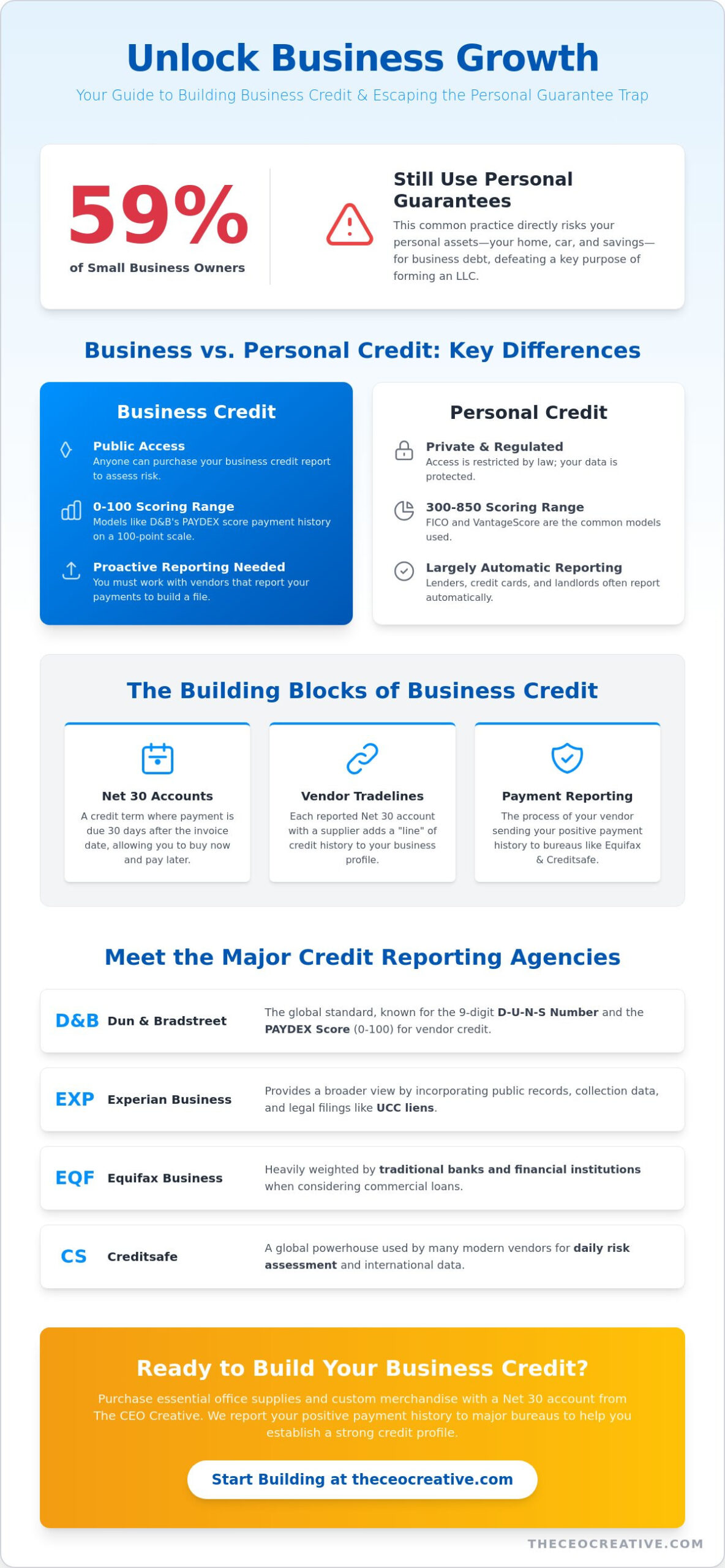
59% of small business owners still use personal guarantees to secure their debt according to the 2026 Report on Employer Firms. It’s a high-stakes risk that often contradicts why you started your LLC. You want to protect your personal assets, but without an established credit history for your EIN, lenders treat you like a ghost. Having business credit reporting agencies explained is the first step to breaking this cycle and claiming your financial independence.
We agree that the current landscape feels unnecessarily complex, especially with new AI-powered underwriting systems making data accuracy more critical than ever. This guide promises to simplify the bureau ecosystem and show you how to build a high-scoring profile using strategic Net 30 vendor tradelines from partners like The CEO Creative. We’ll preview the exact steps to get your data reported to agencies like Equifax and Creditsafe immediately. You’ll learn how to give your growing brand the foundational support it needs to thrive without risking your personal bank account.
Key Takeaways
- Understand the evolving landscape of business credit reporting agencies explained to ensure your new LLC starts with a high-scoring profile.
- Identify the unique scoring systems used by major bureaus like Dun & Bradstreet and Experian to understand what lenders see on your business profile.
- Learn how to establish a robust credit history for your EIN using Net 30 vendor accounts that report your positive payment data monthly.
- Discover the dual benefits of purchasing essential office supplies and custom merchandise to build credit while professionally equipping your brand.
- Follow a clear roadmap to separate your personal finances from your business, effectively reducing the need for risky personal guarantees.
Understanding the Landscape of Business Credit Bureaus
Building a business is hard, but building credit shouldn’t be. Having business credit reporting agencies explained helps you move past the “no credit file” hurdle and establish a robust EIN-based profile. These agencies are independent entities that track how your LLC manages debt and vendor obligations. Commercial credit reporting is a specialized field that differs significantly from the consumer side you’re used to. The CEO Creative acts as a reporting Net 30 vendor to bridge the gap between having no credit and possessing a visible, credible file. Trust Note: This content is for educational purposes only and does not constitute financial or legal advice; no specific score increases are guaranteed.
Why Business Credit Reports Differ from Personal Credit
Understanding the nuances between personal and commercial files is essential for any growing brand. While you might be used to the privacy of your consumer score, the business world operates with fewer filters and different metrics.
- Public Access: Unlike personal credit, anyone can purchase a business credit report on your company. Lenders, competitors, and potential partners use this data to assess your risk level.
- Scoring Ranges: While personal scores use a 300-850 range, many business scores operate on a 0-100 scale. A score of 80 or higher is generally considered excellent in models like the D&B Paydex.
- No Automatic Reporting: Most utility companies and landlords don’t report to business bureaus automatically. You must proactively seek out vendors that share data to build your file from scratch.
Key Definitions: Net 30, Tradelines, and Payment Reporting
To master your credit profile, you need to speak the language of the bureaus. These three terms form the foundation of your reporting strategy and financial growth.
- Net 30: This is a credit term where the full payment for products is due 30 days after the invoice date. It allows you to acquire essentials now and pay later.
- Vendor Tradeline: This is an account established with a supplier that is reported to a credit bureau. Each reporting vendor adds a “line” of data to your business profile.
- Payment Reporting: This is the process of a vendor sending your payment history to agencies like Equifax or Creditsafe. You can initiate this by applying for a business net 30 account to ensure your consistency is recognized by the bureaus.
The Major Players: From the Big Three to Modern Alternatives
Having the major business credit reporting agencies explained reveals why modern lenders look beyond just one score. Dun & Bradstreet remains the heavy hitter with the nine-digit D-U-N-S Number. It’s the global standard lenders use to identify your entity. Their Paydex score, which ranges from 0 to 100, is the primary metric for vendor credit. Experian Business takes a broader look, often incorporating legal filings like UCC liens and collection data into your profile. Equifax Business is the darling of traditional banks. If you’re eyeing a commercial loan from a small bank in 2026, Equifax is likely where they’ll pull your data. To establish business credit, you must first understand the specific data these entities prioritize. You can start building these essential data points by opening a business net 30 account that reports to multiple bureaus.
Equifax, Creditsafe, and FairFigure: Who Sees Your Data?
Don’t ignore the new guard. While the “Big Three” are famous, Creditsafe has become a global powerhouse that many modern vendors use to assess daily risk. FairFigure is another 2026 standout, offering a consolidated view that helps you see what lenders see in real-time. Equifax remains critical because it’s heavily weighted by financial institutions, but it requires consistent reporting from your vendors to maintain a healthy profile.
How Data is Collected and Verified
Bureaus pull information from various sources, including lenders, public records, and Secretary of State filings. Consistency is your best friend here. If your business name, address, or phone number doesn’t match your legal filings exactly, it can trigger a red flag or create a “split file” that hides your positive history. Some bureaus allow you to manually add trade references, but automated reporting from established vendors is the most reliable way to ensure your business credit reporting agencies explained strategy actually works. Check your records against your SOS filings every six months to ensure everything stays aligned.
How to Proactively Build Your Profile with Reporting Agencies
The most efficient path to a high-scoring profile involves utilizing Net 30 vendor accounts that report to multiple bureaus. This approach shifts your EIN from an empty file to a credible financial record. When you invest in office supplies or customizable products, you fulfill a dual objective. You get the tools your brand needs while documenting your fiscal responsibility. This strategy is a core pillar of How To Get And Build Business Credit in the modern market. With 31% of small businesses reporting no outstanding debt in 2026, establishing credit early gives your growing brand a significant competitive edge. With business credit reporting agencies explained, you’re ready to start the first mile of this financial marathon by securing your first reporting tradeline.
The Step-by-Step Checklist for Tradeline Success
Success in business credit requires a repeatable system. Follow these steps to ensure your spending actually impacts your scores across the major bureaus.
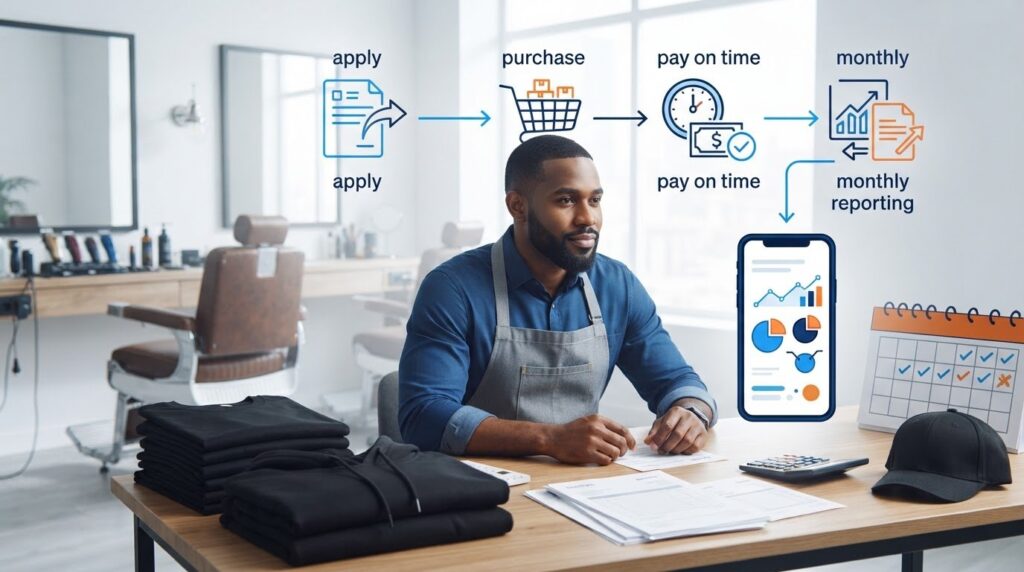
- Apply: Open a business net 30 account with a reporting vendor like The CEO Creative to establish your initial file.
- Order: Purchase professional essentials, such as net 30 apparel or onboarding kits, to keep your spending focused on business growth.
- Pay: Submit your payment before the 30-day deadline. Early payments are often viewed even more favorably by bureaus like Dun & Bradstreet.
- Track & Repeat: Monitor your reports on Equifax and Creditsafe quarterly. Repeat the process to increase your credit limits over time.
Common Mistakes to Avoid
Avoid these frequent pitfalls that can stall your progress or create confusion for reporting agencies.
- Using personal credit for business expenses. This keeps your EIN file empty and maintains your personal liability.
- Inconsistent business information (NAP). Ensure your name, address, and phone match your legal filings exactly across all applications.
- Applying for high-tier accounts too early. You generally need at least three to five Tier 1 vendor tradelines before moving to larger credit lines.
- Neglecting to check your business credit report for errors. Incorrect data can lower your score without you realizing it.
- Ignoring alternative bureaus like Creditsafe. Modern lenders often pull data from these sources more frequently in 2026.
- Failing to maintain a professional brand presence. This includes having a professional logo and a verifiable business address for your entity.
Secure Your Brand’s Financial Future
Mastering the nuances of the bureau landscape is the first step toward true financial independence for your LLC. Having business credit reporting agencies explained gives you the clarity to move from a ghost file to a high-scoring profile that lenders trust. You’ve learned that consistency in your business data and strategic partnerships with reporting vendors are the fastest ways to build your EIN-based history. By prioritizing early payments and professional spending, you establish a track record that satisfies both the “Big Three” and modern fintech evaluators.
Ready to get your data on the radar? Apply for a Net 30 Account with The CEO Creative Today to start reporting to Equifax, Creditsafe, and FairFigure. Most eligible applicants receive a decision within one business day with no personal guarantee required. It’s a foundational move that supports your long-term success while providing the premium tools your brand deserves. Your journey to a robust business credit profile starts with a single reporting tradeline. We’re here to help you build it.
Frequently Asked Questions
Do business credit bureaus require a personal guarantee?
No, the bureaus themselves are data collectors and don’t require personal guarantees to build a file. However, lenders use bureau data to decide if a guarantee is necessary for a loan. By working with Tier 1 vendors that offer Net 30 terms for your EIN, you can build a strong profile that eventually allows you to qualify for financing without putting your personal assets at risk.
How long does it take for a Net 30 vendor to report to Equifax?
Most reporting vendors transmit data in monthly batches to the bureaus. After you’ve paid your invoice, it usually takes 30 to 60 days for that activity to reflect on your Equifax Business report. This delay happens because bureaus verify transaction data before updating your file. Consistent monthly spending ensures your profile stays active and reflects your brand’s current financial reliability and growth.
Can I build business credit without a Social Security Number?
Yes, you can establish a commercial credit profile using only your Employer Identification Number (EIN). By working with vendors that offer EIN-only approval, you separate your business identity from your personal SSN. This is a foundational move for international founders or any entrepreneur looking to protect their personal credit capacity while building a scalable brand with its own independent financial history.
Does paying my Net 30 invoice early help my business credit score?
Yes, early payments are a major factor in scores like the Dun & Bradstreet Paydex. While paying exactly on time earns a score of 80, paying 10 to 20 days early can push your score toward the 90 or 100 range. Bureaus view early fulfillment as a sign of high liquidity and superior financial management, which makes your LLC much more attractive to future lenders.
Which business credit bureau is the most important for a new LLC?
Dun & Bradstreet is often the most critical starting point because the D-U-N-S Number is required for government contracts and corporate partnerships. However, having business credit reporting agencies explained means recognizing that modern lenders also prioritize Equifax and Creditsafe for day-to-day risk assessments. A truly robust profile should show positive data across all major bureaus to ensure you’re ready for any type of credit application.
What happens if a vendor does not report my payment history?
If a vendor doesn’t report, your positive payment history remains invisible to the credit bureaus. This is why you must verify that a vendor specifically reports to agencies like Equifax or Creditsafe before you open an account. Non-reporting accounts are helpful for managing your monthly cash flow, but they do nothing to help you build the commercial credit score needed for larger loans.
How do I fix an error on my business credit report?
You must file a formal dispute with the specific bureau showing the incorrect information. Include clear evidence like bank statements or invoice receipts to support your claim. Bureaus typically have 30 days to investigate and update your file. Maintaining a regular schedule for report reviews helps you catch these errors before they impact your ability to secure premium credit lines or new vendor terms.
Is there a difference between a business credit score and a business credit rating?
Yes, a credit score is a numerical value like the 0-100 Paydex, while a rating is a broader assessment of company size and stability. Having business credit reporting agencies explained helps you realize that while scores predict your immediate payment behavior, ratings assess the long-term strength of your entity. Both metrics are important for growing brands that want to move from small vendor accounts to major commercial financing.
Building business credit? EIN Only Net 30 Vendors — EIN only, no personal guarantee, $60 minimum order, credit lines up to $5,500, a decision in one business day, and every on-time payment reported monthly to Equifax Business, Creditsafe and FairFigure.
What are the business credit reporting agencies?
Dun & Bradstreet, Experian Business, and Equifax Business are generally considered the three major business credit bureaus, and newer bureaus such as Creditsafe and FairFigure have built business credit files alongside them. Each bureau compiles its own file on a company from supplier-reported payment history, public records, and other business data, working independently of the others. Because no single bureau receives data from every vendor a company works with, a business can have a full file at one bureau and a thin or nonexistent one at another.
Which bureaus report business credit?
A supplier chooses which bureau or bureaus it reports business credit to, and common choices include Dun & Bradstreet, Experian Business, Equifax Business, Creditsafe, and FairFigure. The CEO Creative, for example, reports payment activity monthly to Equifax Business, Creditsafe, and FairFigure, but not to Dun & Bradstreet or Experian, so a tradeline with us builds a file at those three rather than a Paydex or Intelliscore. That reporting choice is why the same payment history can show up on one business’s file at some bureaus and not at others.
How do business credit bureaus differ?
Business credit bureaus differ mainly in what data they collect and how they turn it into a score. Dun & Bradstreet’s Paydex measures how quickly a company pays relative to its stated terms, while other bureaus weigh factors like public records, company size, or industry risk differently in their own models. They also differ in which suppliers and lenders report to them, so the same business can look stronger on one bureau’s file than another simply because different vendors chose to report there.
Which bureau do lenders check?
There is no single bureau that every lender checks, because lenders and vendors extending credit often pull from more than one source and coverage varies by company. Dun & Bradstreet’s Paydex score is commonly referenced in vendor credit and lending decisions, and many lenders also look at Experian Business or Equifax Business reports as part of their underwriting. Which bureau ends up mattering most usually comes down to the individual lender’s own process rather than any one bureau being a universal standard.