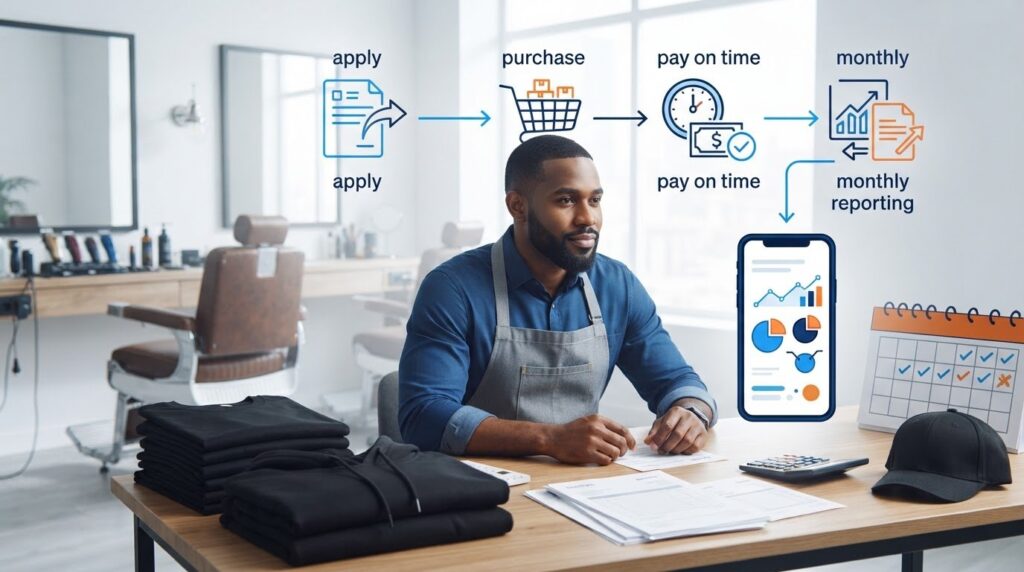


See also: Open a Net 30 Account — EIN only, no personal guarantee, decision within one business day.
Meta Title: PAYDEX Score Guide: Why It Matters for Your LLC in 2026
Table of Contents
- What is a PAYDEX Score? Definition and Calculation Mechanics
- Why Your PAYDEX Score Matters for Business Growth
- How to Establish and Improve Your PAYDEX Score
- Frequently Asked Questions
What if your personal credit score didn’t matter when applying for high-limit trade terms or premium office supplies? Many founders feel stuck because they don’t have an existing business credit file, which leads to high interest rates or flat rejections from traditional lenders. Understanding what is a PAYDEX score and why it matters is the most direct way to scale your brand using its own merit instead of your personal assets. We agree that separating your personal and business finances should be simple. The CEO Creative acts as a reporting NET 30 vendor to provide the foundational support your LLC needs to grow. This guide will help you master the Dun & Bradstreet system to reach an 80+ PAYDEX score by May 2026. We will walk through the mechanics of the score, the benefits of premium trade terms, and a step-by-step checklist to build a professional credit profile that stands on its own.
Key Takeaways
- Understand the mechanics of the Dun & Bradstreet 0-100 rating system and how dollar-weighted payment history directly impacts your brand’s financial health.
- Learn what is a PAYDEX score and why it matters for securing high-limit trade credit and favorable vendor terms without relying on your personal social security number.
- Discover why achieving an 80+ score is the essential benchmark for unlocking premium Net 30 accounts and scaling your business procurement.
- Master the strategy of paying invoices 10-15 days early to maximize your rating and demonstrate superior creditworthiness to future lenders.
- Identify how consistent reporting to major bureaus like Equifax, Creditsafe, and FairFigure builds a robust, multi-dimensional credit profile for your LLC.
What is a PAYDEX Score? Definition and Calculation Mechanics
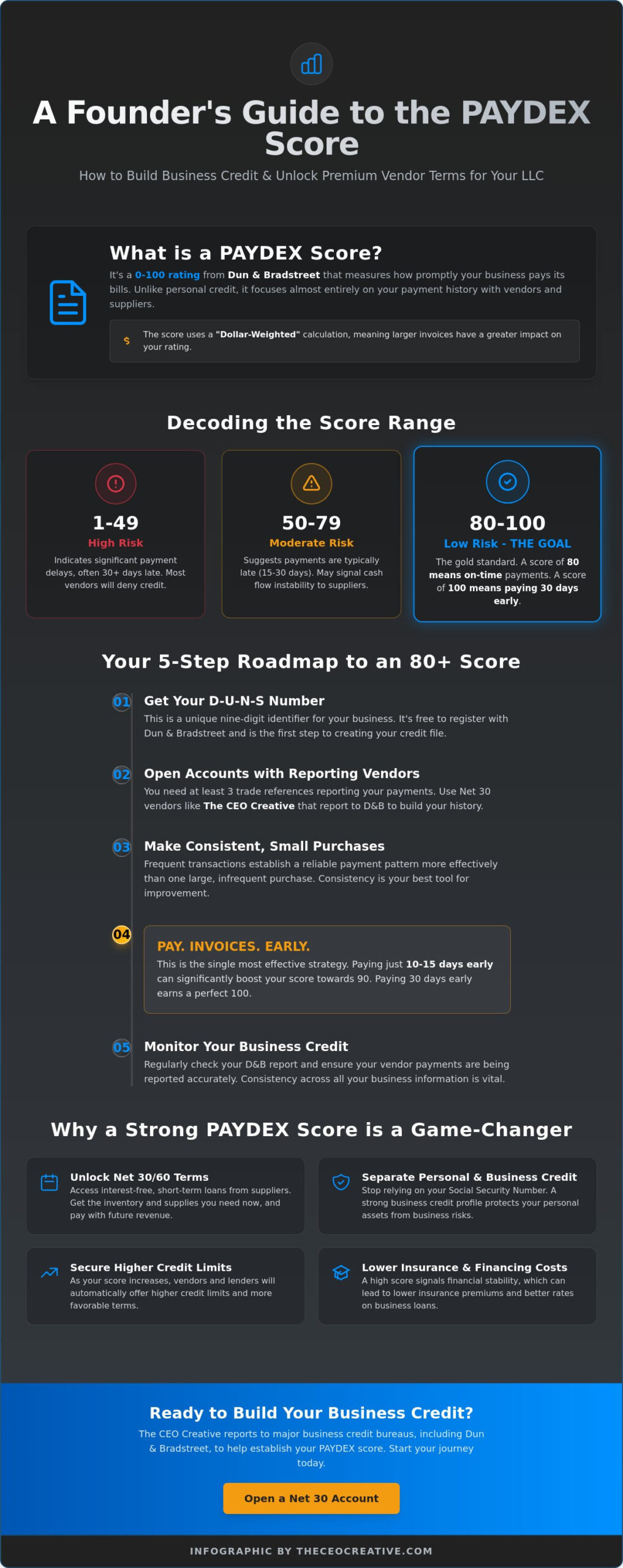
A PAYDEX score is a proprietary 0-100 rating developed by Dun & Bradstreet to measure how promptly your business pays its bills. It serves as the industry standard for assessing how reliably an LLC pays its vendors and creditors. Understanding what is a PAYDEX score and why it matters for your brand’s growth is essential because the calculation is unique. Unlike personal FICO scores that use complex algorithms involving credit utilization and account age, PAYDEX is almost entirely based on your “Dollar-Weighted” payment history. This means larger invoices have a bigger impact on your score than smaller ones.
Trust Note: This content is for educational purposes and does not constitute financial or legal advice.
The PAYDEX Score Range: What the Numbers Mean
Your score provides a snapshot of your risk level to potential partners. Most growing brands should aim for the top tier to unlock premium trade terms and better pricing. The tiers are broken down as follows:
- 80-100 (Low Risk): This is the gold standard for any LLC. A score of 80 means you pay exactly on time. Scores reaching 100 indicate you consistently pay 30 days early.
- 50-79 (Moderate Risk): This range suggests payments are typically 15 to 30 days late. It signals potential cash flow instability to suppliers.
- 1-49 (High Risk): These numbers reflect significant payment delays. Most traditional lenders and vendors will block your approvals if you fall into this bracket.
How Dun & Bradstreet Calculates Your Score
To generate a score, you must first obtain a valid D-U-N-S number for your business. Dun & Bradstreet then requires at least 3 trade references from vendors who report your payment data. This is where The CEO Creative supports your journey. We report your payment history as a vendor tradeline to help build your file. Consistency is your best tool for improvement. Frequent, small transactions often carry more weight in establishing a reliable pattern than a single large purchase. Keep your business information consistent and pay your invoices early to see the best results.
Why Your PAYDEX Score Matters for Business Growth
Scaling an LLC requires leverage. Understanding what is a PAYDEX score and why it matters is the first step toward gaining that leverage. Most founders rely on their personal social security number to buy equipment or inventory. This habit exposes your personal assets to business risks and limits your growth potential. A strong PAYDEX score shifts the focus to your company’s performance. It allows you to negotiate Net 30 or Net 60 terms with suppliers. These terms act as interest-free short-term loans. You get the tools you need today and pay later using your actual revenue.
Professionalizing your brand adds a layer of psychological trust for both customers and creditors. When you invest in office supplies or customizable products, you create a documented history of reliability. This paper trail proves to future lenders that your brand is a stable entity. It officially separates your personal identity from your corporate entity. This separation is vital for protecting your family’s finances while your business grows. You can start this journey today by opening a business net 30 account to begin reporting your consistency.
Unlocking Premium Vendor Terms
Vendors typically look for a score of 80 or higher before granting significant credit lines. In the early stages, you should focus on Tier 1 vendors. These are suppliers that approve businesses with little to no existing credit history. Ordering Net 30 apparel for your team serves as a foundational tradeline. It builds the momentum needed to access larger institutional credit later. As your score climbs, you’ll find that vendors offer higher limits and more flexible payment windows automatically.
The Impact on Insurance and Financing
Your score affects more than just your supply chain. Insurance companies often use these reports to set premiums for liability or property coverage. A high score suggests financial stability. This can lead to lower monthly costs for your brand. Traditional banks also scrutinize D&B reports during the application process for SBA loans or equipment financing. They want to see that you manage trade debt responsibly before they hand over a large capital loan. A clean PAYDEX score makes your brand a much safer bet for any financial institution.
How to Establish and Improve Your PAYDEX Score
Building a business credit profile is a marathon, but you can see results quickly with a structured procurement plan. By following the right steps, you can establish a score in as little as 60-90 days. Understanding what is a PAYDEX score and why it matters allows you to move from guessing to growing. The most effective strategy isn’t just paying on time; it’s paying 10-15 days before the due date. This early action signals to Dun & Bradstreet that your LLC is a low-risk partner, which is the fastest route to an 80+ rating.
Reporting frequency is the fuel for your credit file. You must ensure your vendors report your payment data to major bureaus like Equifax, Creditsafe, and FairFigure. Focus your spending on practical business needs to keep your cash flow predictable. Items like onboarding kits for new hires or professional uniforms serve a dual purpose. They provide your team with essential tools while creating the consistent tradelines necessary for a robust profile.
Step-by-Step Credit Building Checklist
- Apply: Open a Business Net 30 Account using your EIN to keep your personal credit separate.
- Order: Purchase essential office supplies or branded gear that your business actually uses.
- Pay: Settle your invoice at least 10 days early to maximize your score potential.
- Track: Monitor your D&B report regularly to ensure each tradeline appears correctly.
- Repeat: Maintain a consistent monthly order to build a “thick” credit file that lenders trust.
Common Mistakes to Avoid
- Ignoring inconsistent business info: Your name, address, and phone must match exactly on every application you submit.
- Paying exactly on the due date: You won’t reach a score above 80 without paying your invoices early.
- Only having one tradeline: D&B requires diversity and multiple reporting sources to calculate a reliable PAYDEX.
- Not having a D-U-N-S number: Your payment history won’t count toward a score if your profile isn’t officially active.
- Using personal funds: Always pay your business invoices from a business bank account to maintain your corporate veil and legal protections.
Scale Your Brand With a Strong Financial Foundation
Building business credit is a strategic move that transforms your LLC from a startup into a credible market player. You now have the roadmap to master what is a PAYDEX score and why it matters for your brand’s long-term sustainability. By focusing on early payments and consistent reporting, you’ll secure the trade credit needed to scale without personal risk. It’s time to stop waiting for traditional bank approvals and start building your own financial reputation.
Apply for a Business Net 30 Account with The CEO Creative today
What happens next:
- Complete your digital application using your EIN for a fast approval decision.
- Select your first set of business tools or branded merchandise to establish a fresh tradeline.
- Settle your net 30 terms early to trigger positive reporting to Equifax, Creditsafe, and FairFigure.
Mastering your business credit file is about more than just numbers; it’s about equipping your brand with the tools it needs to thrive. You can maintain your reporting schedule by exploring our high-quality custom apparel or professional custom mugs. These practical investments keep your credit profile active while building a cohesive look for your growing team.
Frequently Asked Questions
Do I need a personal guarantee for a PAYDEX score?
No, you don’t need a personal guarantee to establish a PAYDEX score. This rating is tied exclusively to your business’s EIN and D-U-N-S number. This structure allows you to build a corporate credit profile that stands on its own merit without putting your personal assets or social security number at risk.
How long does it take to reach an 80 PAYDEX score?
Most businesses can reach an 80 score within 60 to 90 days. This timeline begins once three reporting vendors successfully post your payment history to Dun & Bradstreet. Understanding what is a PAYDEX score and why it matters for your brand’s timeline helps you plan your procurement strategy around these specific reporting cycles.
Does paying early increase my score more than paying on time?
Yes, paying early is the primary way to achieve a perfect rating. A score of 80 represents on-time payments, while scores of 90 or 100 are reserved for businesses that consistently pay invoices 10 to 20 days before the deadline. Early payments signal to creditors that your LLC has superior cash flow and reliability.
Which bureaus do Net 30 vendors report to?
Reputable Net 30 vendors typically report to Equifax Business, Creditsafe, and FairFigure. These bureaus aggregate your payment data to create a comprehensive view of your company’s creditworthiness. Having your history visible across multiple platforms ensures that your score reflects a consistent pattern of professional behavior.
What happens if I miss a payment?
A single late payment can cause your PAYDEX score to drop significantly. The calculation is heavily weighted toward your most recent payment experiences. If you miss a deadline, it’s vital to settle the balance immediately and maintain a perfect record for the following six months to begin rebuilding your standing.
Can I get a PAYDEX score without a D-U-N-S number?
No, you cannot generate a score without an active D-U-N-S number. This nine digit identifier is the unique code Dun & Bradstreet uses to track your business entity. Without it, your vendor payments have nowhere to be recorded, meaning your credit building efforts won’t result in a formal score.
Does The CEO Creative report to credit bureaus?
Yes, The CEO Creative is a reporting vendor that helps businesses establish essential tradelines. When you use your membership to order office supplies or custom gear, we report that activity to help populate your file. This consistent reporting is a foundational step in mastering what is a PAYDEX score and why it matters for your growth.
Is there a monthly fee to maintain a PAYDEX score?
Dun & Bradstreet doesn’t charge a fee just to have a PAYDEX score. It’s a free part of your business profile once you have enough reporting data. You may, however, choose to pay for monitoring services. For example, D&B Credit Insights plans can cost $49 per month for detailed monitoring and full score access.
Building business credit? Net 30 Promotional Products Vendor — EIN only, no personal guarantee, $60 minimum order, credit lines up to $5,500, a decision in one business day, and every on-time payment reported monthly to Equifax Business, Creditsafe and FairFigure.