


What if you could fund your brand’s growth without ever risking your personal credit score or signing a personal guarantee? For many growing brands, the fear of mixing personal and professional finances is a constant weight. You’ve likely felt the sting of rejection from traditional banks or felt confused by the difference between a free EIN and a $229 expedited DUNS number. With the average business credit card interest rate hitting 22.12% in May 2026, the stakes for your cash flow have never been higher.
We understand that you want a business that stands on its own financially. This article outlines the exact sequence to build a powerful corporate credit profile using your EIN, even if you have zero initial history today. You’ll learn the essential steps to establishing business credit from scratch to secure high Paydex scores and flexible Net 30 accounts. We’re going to move from basic legal compliance to securing the premium tools and vendor tradelines your company needs to thrive independently.
Key Takeaways
- Formalize your entity structure and secure your EIN to create the essential legal separation required for a professional credit profile.
- Understand how high-quality branding and professional tools signal stability to lenders during the manual review process.
- Follow the proven steps to establishing business credit from scratch by leveraging Tier 1 Net 30 accounts to build initial history.
- Learn to navigate the transition from starter vendor accounts to Tier 2 credit lines while keeping a close eye on your D&B and Experian reports.
- Leverage flexible membership benefits to access the premium office essentials and custom products that help your brand look established and creditworthy.
What Does It Mean to Establish Business Credit From Scratch?
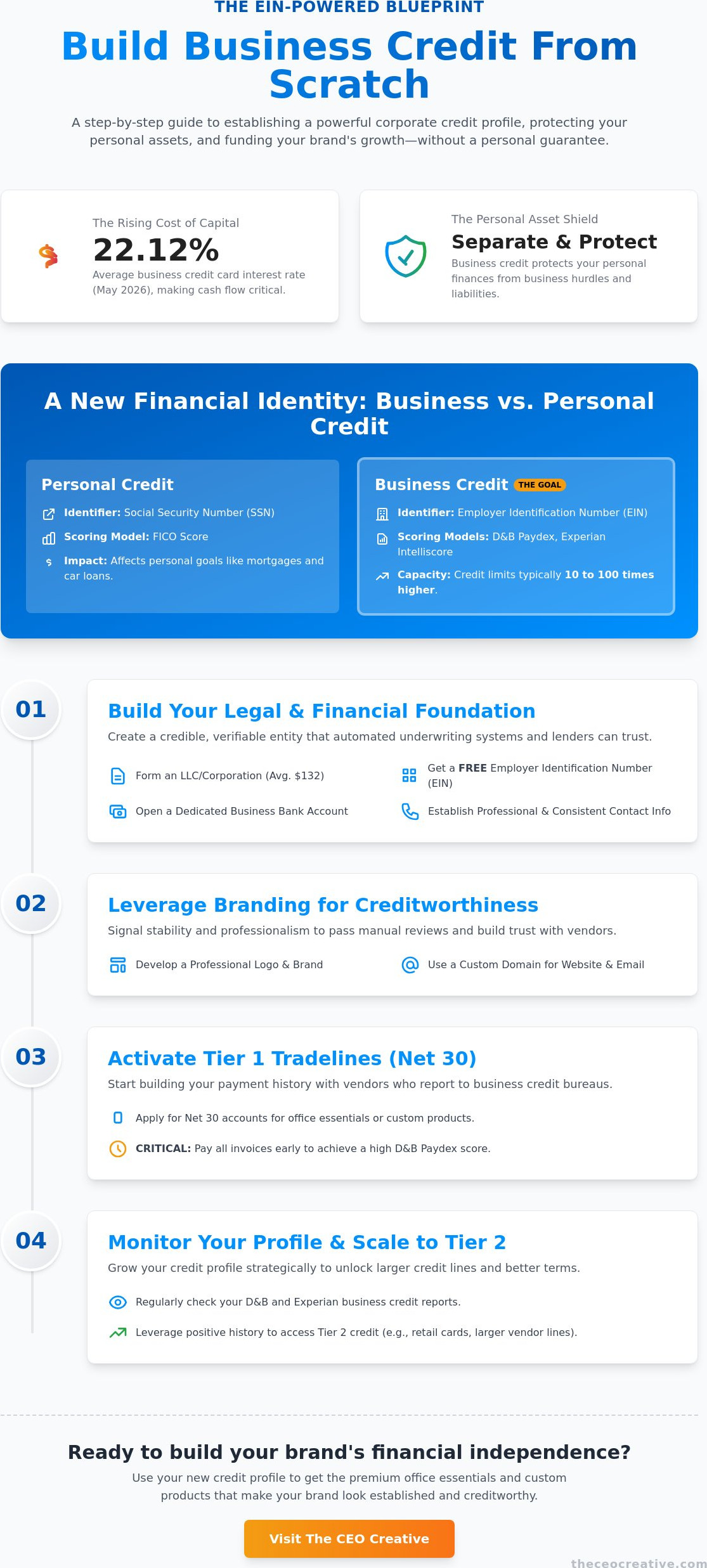
Establishing business credit means creating a financial identity for your company that is entirely separate from your personal life. While your personal credit relies on your Social Security Number, your business credit is a track record of financial responsibility tied specifically to your Employer Identification Number (EIN). Every new LLC or Corporation starts with a blank slate. This isn’t a disadvantage; it’s a strategic opportunity to build a pristine profile without the baggage of personal debt or high utilization ratios. Proactive activation is the only way to turn this blank slate into a powerful tool for growth.
In 2026, the shift away from personal guarantees has become a defining trend for growing brands. Lenders are increasingly relying on digital and automated underwriting systems to evaluate creditworthiness. By following the steps to establishing business credit from scratch, you position your company to meet these modern standards. Building this profile offers incredible benefits, including lower commercial insurance rates and access to credit limits that are significantly higher than personal accounts. Most importantly, it protects your personal assets, ensuring your family’s finances aren’t at risk if the business faces a hurdle.
Business Credit vs. Personal Credit
Privacy and protection are the primary drivers for separating these two worlds. Business credit allows you to keep your personal debt-to-income ratio clean, which is vital for your individual financial goals. The capacity for growth is also much larger; business credit limits are typically 10 to 100 times higher than personal ones. Understanding Business credit reports is essential for mastering different scoring models. While personal credit uses FICO, business credit focuses on the Dun & Bradstreet Paydex score, which rewards early payments, and the Experian Intelliscore, which predicts delinquency risk.
The Power of the EIN (Employer Identification Number)
Your EIN acts as the Social Security Number for your company’s financial life. In 2026, you can still obtain an EIN for free directly through the IRS website. This nine digit number is the primary identifier you’ll use for Tier 1 vendor applications and opening a business bank account. It’s the foundation of your professional identity. Using your EIN to secure Net 30 terms for premium tools and office essentials allows you to build a history of on time payments. This process proves to the bureaus that your brand is a reliable partner, opening the door to flexible terms and larger credit lines without needing a personal loan.
Step 1: Building Your Legal and Financial Foundation
Before you can report a single payment, your business must exist as a credible legal entity in the eyes of lenders. This starts with choosing a structure like an LLC or a Corporation. In 2026, the average cost to form an LLC in the U.S. is approximately $132, though state filing fees can range from $35 to $500. Registering with your Secretary of State and obtaining local licenses isn’t just a legal requirement; it’s the first proof of your brand’s stability. Lenders search these public records to verify you’re in good standing before extending any credit. Following these initial steps to establishing business credit from scratch ensures you don’t get flagged for basic filing errors later on.
Financial separation is the next critical pillar. You must open a dedicated business checking account to house your company’s capital. Commingling personal and business funds is a fast way to lose your “corporate veil” and get rejected by automated underwriting systems. To further prove your physical presence, secure a dedicated business phone line and list it in the 411 directory. This signals to credit bureaus that you’re an established entity with a verifiable location. If you’re still refining your brand’s image during this setup phase, you can explore Logo Design services to ensure your identity looks as professional as your filings.
The Consistency Rule for Credit Approval
Your business name, address, and phone number must match exactly on every single document you file. Even a small discrepancy, like using “St.” on one form and “Street” on another, can trigger a manual review or an automatic denial. A professional business email address using your company’s domain name is also a non-negotiable trust signal. Avoid using generic Gmail or Yahoo accounts. While a physical business address is preferred, many modern brands use virtual offices. However, ensure your chosen address is recognized by the U.S. Small Business Administration guide standards to avoid being flagged as a “high risk” shell company.
Obtaining Your D-U-N-S Number
The D-U-N-S number from Dun & Bradstreet is the primary gatekeeper to the world of corporate credit. This nine digit identifier allows lenders to track your payment history and generate your Paydex score. You can apply for this number for free, though the standard process can take up to 30 business days. For brands in a hurry, an expedited option is available for a fee of $229. Once your number is issued, it becomes the backbone of your profile, allowing you to move forward with the next steps to establishing business credit from scratch by applying for vendor accounts.
Step 2: Leveraging Branding to Increase Creditworthiness
Many entrepreneurs focus solely on the paperwork, but looking established is 50% of the battle for new LLCs. Creditors don’t just look at your financial data; they look for signs of stability and longevity. In an era where the Dun & Bradstreet database includes more than 300 million business records worldwide, standing out as a legitimate entity is vital. If a lender searches for your business and finds a blank web presence or a generic logo, they may view you as a high risk “shell” company. Establishing a professional brand identity is one of the most overlooked steps to establishing business credit from scratch.
Your web presence acts as a digital storefront that creditors visit before approving terms. A professional logo and a dedicated domain name signal that you’re invested in your brand’s future. This perception is especially critical during manual reviews, where an underwriter evaluates your company’s “character.” When you follow a proven guide on how to build business credit, you’ll find that lenders prioritize businesses that appear operational and organized. Professional stationery and custom business tools further reinforce this image, proving that your company has the administrative infrastructure to handle credit responsibly.
Corporate Identity as a Risk Mitigator
A cohesive brand identity signals a long-term commitment that reassures financial partners. When you invest in custom apparel, such as branded polos or hoodies, you create external proof of active operations. This physical evidence can be a powerful differentiator when seeking larger credit lines. Cohesive branding across your website and physical assets reduces fraud flags in automated credit systems by providing a consistent digital and physical footprint. It tells the system that your brand is a real, functioning entity rather than a temporary setup.
Procuring Essentials While Building Credit
You can use your very first credit lines to acquire the assets that build your brand’s image. The strategy is simple: buy what you need to run your office and generate your first tradelines simultaneously. Purchasing custom notebooks, pens, or water bottles through a vendor account creates a record of on time payments. This approach allows you to secure the premium tools you need while systematically improving your credit score. You can build your brand identity and your credit simultaneously with The CEO Creative by selecting high quality essentials that report to the major bureaus. This dual focus ensures your company looks like a leader while building the financial foundation to act like one.
Step 3: Activating Tier 1 Tradelines with Net 30 Vendors
Tier 1 vendors are the essential starting point for any growing brand with a blank credit profile. While traditional banks often reject new LLCs due to a lack of history, Tier 1 vendors specialize in approving businesses based on their legal foundation and EIN. These “starter” accounts provide the bridge you need to prove your reliability to major bureaus. By securing Net 30 terms, you gain the ability to purchase products today and pay the invoice in full within 30 days. This cycle of borrowing and repaying is one of the most effective steps to establishing business credit from scratch because it creates the data points lenders look for during future reviews.
The true value of a vendor account lies in its reporting habits. You must prioritize vendors that report your payment history to major bureaus like Dun & Bradstreet, Equifax, or Experian Business. Many entrepreneurs make the mistake of buying from “ghost vendors” who offer credit but never share that data with the bureaus. Without reporting, your on time payments won’t help your Paydex score. You can typically secure a decision within one business day for office supplies and branding gear using just your EIN, provided your business is properly registered and has a professional presence.
Strategic Purchasing for Credit Growth
You don’t need to spend thousands to build a powerful profile. A “Small Purchase” strategy is often more effective. Aim to buy between $50 and $100 worth of supplies every month to keep your accounts active and reporting. Consistency matters more than the dollar amount. To boost your score even faster, try paying your invoices early. Settling your bill on Day 20 instead of Day 30 signals exceptional financial health to credit underwriters. This proactive approach helps you avoid the trap of stagnant scores and moves you closer to Tier 2 credit lines.
The CEO Creative: A Strategic Tier 1 Partner
The CEO Creative is designed to be a foundational partner for growing brands. We report your payment history to major business credit bureaus, helping you build a professional profile while you equip your office. Our membership model provides access to premium custom products like custom notebooks, pens, and apparel on flexible Net 30 terms. This means you can invest in the tools that make your brand look established while simultaneously completing the steps to establishing business credit from scratch. Growing brands benefit from our application process, which gives a decision within one business day and removes the intimidation factor from the credit building journey. You can get started with a Net 30 account today to begin reporting your first successful tradelines.
Step 4: Monitoring Your Profile and Scaling to Tier 2
Establishing your foundation is just the beginning. To truly master the steps to establishing business credit from scratch, you must move into the monitoring and scaling phase. Checking your business credit reports regularly won’t lower your score, so make it a monthly habit. You need to be vigilant because errors are common in the business credit world. Look for any discrepancies on your D&B or Experian Business files. If you find an error, dispute it immediately. Accuracy is your best asset when you’re ready to scale toward larger financial opportunities.
The 90-day milestone is your signal to advance. After three months of consistent reporting from your Tier 1 vendors, your profile should be robust enough for Tier 2 applications. This is where you transition from EIN-only starter accounts to fleet cards and unsecured lines of credit. These tools provide the liquidity needed for larger operations without risking your personal assets. By following these steps to establishing business credit from scratch, you move from buying basic supplies to securing the capital required for major expansions.
Maintaining a High Paydex Score
The Paydex score is the gold standard for your company’s reputation. Lenders view 80 as the magic number because it proves you pay exactly on time. Late payments impact business credit more severely than personal credit; a single missed deadline can cause a sharp drop in your score overnight. Set up automated reminders for your Net 30 invoices to ensure you never miss a due date. Paying even a few days early can push your score above 80, signaling elite financial health to potential creditors and automated underwriting systems.
Scaling to Tier 2 and Beyond
Tier 2 vendors include industry giants like Shell, Exxon, Amazon, and Best Buy. These accounts offer higher limits and more flexible utility for your daily operations. Once you’ve successfully managed these for six months, you can leverage your established history for a business line of credit or a term loan. This is the ultimate goal: a business that stands on its own financially. You can join The CEO Creative Membership to unlock advanced credit-building tools today and continue your journey toward total financial independence.
Empower Your Brand’s Financial Future
Building a self sustaining company requires more than just a great product; it demands a solid financial foundation. You’ve learned that the steps to establishing business credit from scratch begin with legal separation and a consistent professional identity. By securing your EIN and D-U-N-S number, you move away from the high 22.12% interest rates of personal credit cards and toward the massive limits of corporate financing. Remember that consistent reporting from Tier 1 vendors is the engine that drives your Paydex score toward that target of 80.
Success in 2026 belongs to the brands that treat their credit profile as a strategic asset. You can now move forward with confidence, knowing that every on time payment on your Net 30 invoices strengthens your standing in a database of 300 million global businesses. It’s time to stop risking your personal assets and start scaling with a profile that stands on its own. Start building your business credit with a Net 30 account from The CEO Creative to access a decision within one business day and premium custom branding products that report directly to major credit bureaus. Your journey to financial independence starts with one smart purchase today.
Frequently Asked Questions
Can I build business credit with just an EIN and no social security number?
Yes, you can build a robust credit profile using only your EIN by applying for Tier 1 vendor accounts that don’t require a personal guarantee. These specific vendors approve your brand based on its legal formation and professional presence rather than your personal history. This is one of the most effective steps to establishing business credit from scratch because it ensures your personal and professional liabilities remain completely separate.
How long does it take to establish a business credit score from scratch?
It typically takes 90 to 120 days for a business credit score to appear on your reports. This timeline depends on your vendors’ reporting cycles to bureaus like Dun & Bradstreet or Experian. Since most bureaus require data from at least three different tradelines to generate a score, you’ll need to complete three to four successful payment cycles before your profile is fully visible to lenders.
What are the best Net 30 vendors for new LLCs in 2026?
The best vendors for new LLCs are those that offer a decision within one business day and report directly to the major business credit bureaus. The CEO Creative is a primary choice for growing brands, providing premium custom products and office essentials that help establish your identity. Other reliable options include industrial supply companies and shipping material providers that specifically cater to new businesses with zero initial credit history.
Does my personal credit score matter when building business credit?
Your personal credit score doesn’t matter for Tier 1 vendor accounts, but it remains a factor for traditional bank loans. While you can complete the initial steps to establishing business credit from scratch using only your EIN, most major lenders still look at personal scores for unsecured lines of credit. Building a strong business profile eventually reduces your reliance on personal credit for company expenses.
What is a good business credit score for a small business?
A Paydex score of 80 is the standard benchmark for a healthy small business. This specific number tells lenders that your company pays its invoices exactly on time. Scores above 80 indicate that you settle your debts early, which can lead to more flexible terms and higher credit limits. Most automated underwriting systems use the 80 mark as a threshold for Tier 2 retail credit approvals.
How many tradelines do I need to get a business credit card?
You generally need at least five reported tradelines to qualify for a revolving business credit card without a personal guarantee. These accounts must show a consistent history of on time payments over a period of at least six months. Lenders want to see that multiple vendors have already trusted your brand with credit before they extend a larger, unsecured line of credit.
What happens if I miss a payment on a Net 30 account?
Missing a payment will cause an immediate and significant drop in your business credit score. Unlike personal credit, which often has a 30 day grace period, business bureaus track the exact number of days an invoice is past due. A single late payment can disqualify you from achieving a high Paydex score and may lead to a reduction in your credit limits across other vendor accounts.
Is it possible to build business credit without a business bank account?
It’s not possible to build a professional credit profile without a dedicated business bank account. Lenders use your banking history to verify your brand’s cash flow and physical existence during the manual review process. Without a separate account, you can’t prove the financial separation required to move beyond basic vendor credit into more advanced financing tiers like term loans or fleet cards.
Building business credit? Open a Net 30 Account — EIN only, no personal guarantee, $60 minimum order, credit lines up to $5,500, a decision in one business day, and every on-time payment reported monthly to Equifax Business, Creditsafe and FairFigure.
How do I establish business credit?
You establish business credit by separating the business from your personal finances and then building a payment history that belongs to the business itself. Register the company as its own legal entity, get an EIN from the IRS, and open a bank account in the business’s name. From there, work with suppliers or lenders that report payment activity to business credit bureaus, since each on-time payment becomes a tradeline on the business’s file rather than yours personally.
How do I establish business credit for the first time?
If the business has never had any credit, start with the paperwork that makes it its own entity: business registration, an EIN, and a dedicated business bank account. A bureau can’t open a file for a business that isn’t yet set up as separate from its owner, so this step comes first. Once that’s done, trade credit from suppliers who report to the bureaus is typically easier to qualify for than a business credit card or a loan, since a brand-new file has no track record yet.
How do you build business credit step by step?
The usual order is: form a legal business entity, get an EIN, open a business bank account, then apply for trade credit with suppliers that report payment activity to the bureaus. The CEO Creative, for example, evaluates applications on the business EIN rather than a personal credit check, and reports payment activity monthly to Equifax Business, Creditsafe and FairFigure. Pay every invoice on time or early and check the business credit file periodically so you can catch errors and see the tradelines as they post.
What does a business need before it can start building credit?
A business needs to exist as its own legal and financial entity before any bureau will track it separately from the owner. That means business registration (an LLC, corporation, or similar), an EIN from the IRS, a business bank account, and often a business address and phone number listed under the company’s name rather than the owner’s. Without those basics, a supplier or lender has nothing to attach a payment history to.