
Buying for your own workspace? Shop customizable products at TheCEO.Store, our retail store, where you can order directly without opening a trade account.
Introduction
Ready to take your promotional efforts to the next level? Personalizing items such as shirts, clothing, and drinkware can significantly boost your brand’s visibility and strengthen your relationship with customers. Whether you’re preparing for a trade show or rewarding your team, selecting the right printing technique is crucial! With numerous options out there, how do you decide which one is best? This guide will explore some of the top printing methods for promotional items to help you make the right decision.
Best Printing Methods for Apparel
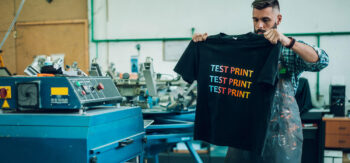
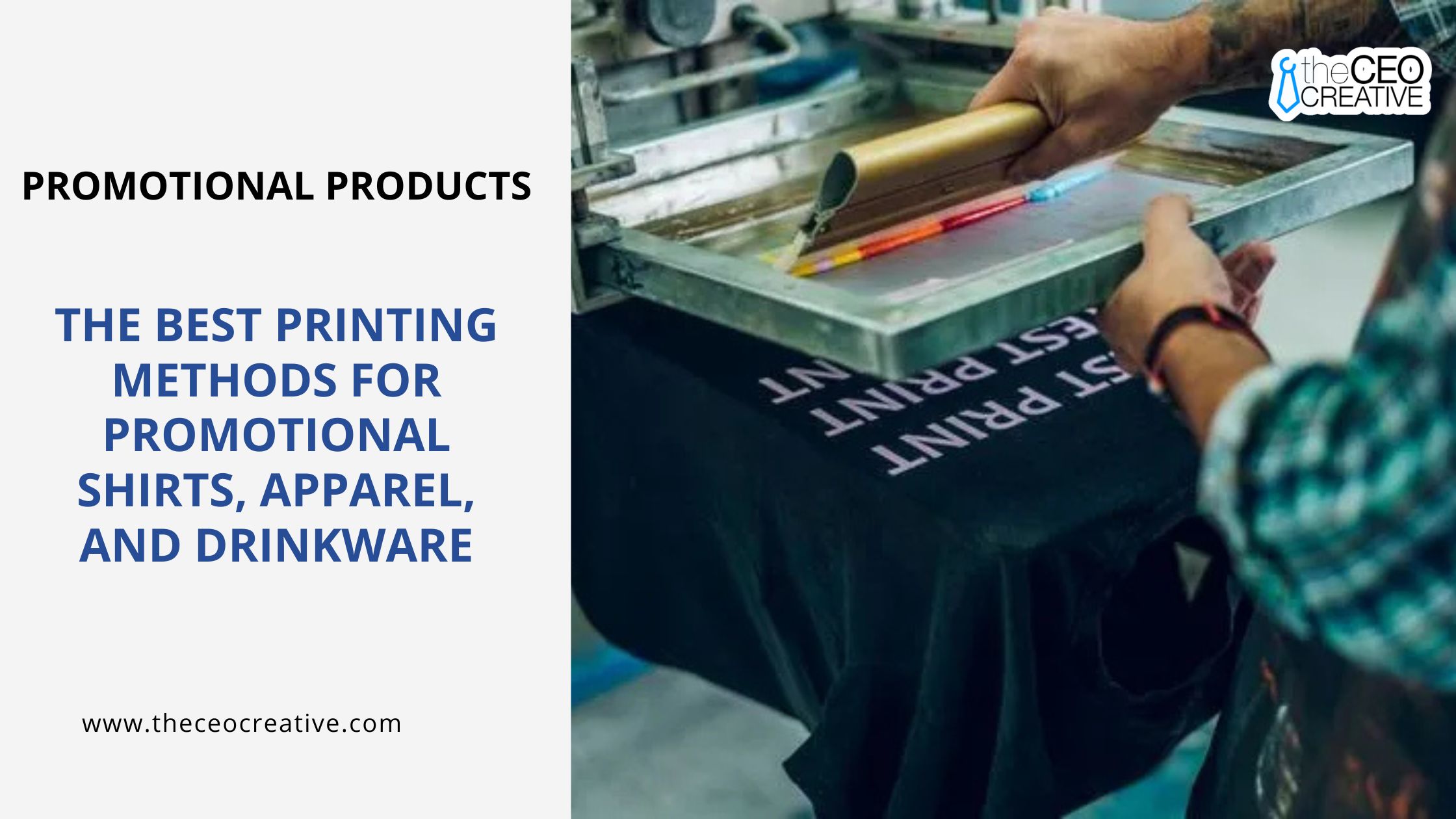
When printing on clothes, some methods give bright colors, long-lasting prints, and great results. Whether you want to make custom t-shirts, hoodies, or other clothing, choosing the right printing method is very important.
Screen Printing
Screen printing is a very common and effective way to print designs on clothes. This method creates strong and bright prints by pushing ink through a special mesh onto the fabric. Each color in your design uses its own mesh, which helps make the prints look colorful and solid.
- Durability: The ink stays on top of the fabric, making the prints very resistant to fading.
- Versatility: Works on many fabrics like cotton, polyester, and blends.
- Cost-Effective: Ideal for large orders with the same design.
While screen printing can be time-consuming, especially with multi-color designs, its durability and vibrant results make it worth considering.
Dye-Sublimation
This technique uses heat to transfer dye into polyester fabrics, creating prints that are not only colorful but also soft to the touch.
- Full-Color Designs: Ideal for complex, photo-like artwork.
- Soft Feel: The dye becomes part of the fabric for a smooth finish.
- Perfect for Polyester: Works best on synthetic fabrics.
Dye-sublimation is great for creating eye-catching designs, but is limited to light-colored polyester.
Pad Printing
Though often used on hard surfaces, pad printing plays a role in apparel—especially for fabric labels or small areas like neckbands.
- Flexibility: Can wrap around curved or uneven surfaces.
- Detail: Excellent for small logos or fine elements.
Niche Use: Best for specific applications rather than full garments.
Direct-to-Garment (DTG) Printing
DTG uses inkjet technology to apply ink directly to cotton shirts, similar to how a home printer works.
- Detailed Designs: Great for high-resolution images and full-color prints.
- No Minimum Orders: Suitable for small runs.
- Soft Touch: The ink soaks into the fabric.
DTG is perfect for detailed or photographic designs but may be costlier for large batches.
Heat Transfer Printing
This method uses heat and pressure to apply designs from vinyl or transfer paper onto fabric.
- Versatile: Works on both synthetic and natural fabrics.
- Vibrant: Bright colors and special effects like metallics are possible.
- Accurate Placement: Great for logos and custom names.
Ideal for small batches or one-off personalized items.
Embroidery
Embroidery sews the design directly into the fabric, creating a textured and professional finish.
- Durable: Holds up well over time.
- Elegant: Adds a premium feel.
- Polished Look: Ideal for logos and uniforms.
Embroidery is not suited for detailed images but excels at brand marks and monograms.
Effective Drinkware Printing Techniques
Drinkware needs durable, attractive printing methods to make a lasting brand impression.
Pad Printing for Curved Surfaces
A top method for mugs and bottles with rounded shapes.
- Adapts to Shapes: Silicone pads can conform to curves.
- Precise: Great for logos and text.
- Material Flexibility: Works on glass, ceramic, plastic, etc.
Dye-Sublimation for Mugs
Like with apparel, this method delivers vivid designs that bond to the drinkware surface.
- Full-Color Wraps: Great for photo prints and creative artwork.
- Durable: The ink becomes part of the material.
- Best for Ceramics and Plastics: Ideal for white mugs or coated surfaces.
Laser Engraving for Metal & Glass
This technique etches the surface using a focused laser.
- Permanence: Will not fade or peel.
- Premium Look: Sharp, elegant finish.
- Eco-Friendly: No ink or chemicals needed.
Perfect for high-end drinkware like thermoses and glass tumblers.
Benefits of Using Net 30 for Bulk Printed Orders
When ordering large quantities of promotional items, managing finances wisely is key. Net 30 payment terms can help.
Improved Cash Flow
You get up to 30 days to pay after receiving goods, helping you:
- Keep cash longer
- Sell products before paying suppliers
Stronger Supplier Relationships
Using Net 30 shows you’re reliable, which can lead to:
- Better terms or discounts
- Priority on future orders
Flexibility in Scaling Orders
As your promotional needs grow:
- Net 30 helps manage inventory
- Reduces financial strain during expansion
Conclusion
There are many ways to print on promotional shirts, apparel, and drinkware. Choosing the right method—like screen printing for bold shirts, dye-sublimation for vibrant mugs, or embroidery for a premium touch—ensures your items reflect your brand effectively. Consider your design, material, and budget to make the best choice and turn everyday products into eye-catching promotions.
Building business credit? Net 30 Apparel & T-Shirt Vendor — EIN only, no personal guarantee, $60 minimum order, credit lines up to $5,500, a decision in one business day, and every on-time payment reported monthly to Equifax Business, Creditsafe and FairFigure.
Frequently Asked Questions
How do imprint methods differ for apparel versus drinkware and tech items?
Imprint methods differ mainly because of the material: apparel takes methods that work into woven fibers, like screen printing, DTG, DTF transfers, and embroidery, while drinkware and tech items are hard, often curved surfaces that call for pad printing, laser engraving, or sublimation instead. The shape and material of the item usually decide the method more than the design does. A logo set up for embroidery on a polo shirt often has to be re-rendered as a vector file before it can be engraved on a tumbler or a phone stand.
How can you make sure a logo’s color prints accurately on promotional items?
Send the printer a vector file (AI, EPS, or PDF) with the exact Pantone (PMS) codes rather than a screenshot or a JPEG, since screen colors in RGB don’t translate directly to ink. Ask for a proof before the full run goes to print and check it against the Pantone code, not against how it looks on your monitor. Some methods, like screen printing, can hit a Pantone match closely, while DTG, DTF, and sublimation build color from CMYK inks and will only approximate it.
How do you print on hoodies?
Hoodies are usually decorated with screen printing, which holds up well through repeated washing and works efficiently for larger orders, or with embroidery for a raised, stitched logo on the chest or sleeve. For full-color or photo-style artwork, direct-to-garment (DTG) or direct-to-film (DTF) printing can reproduce more detail and gradient than screen printing allows. Fleece and blended fabrics take ink a little differently than a plain cotton tee, so it’s worth asking for a pre-production sample on a new design.
What is DTF printing?
DTF, or direct-to-film, printing is a method where a design is printed in reverse onto a special film with pigment inks, coated with an adhesive powder, then heat-pressed onto the garment. It doesn’t need a separate screen for each color the way screen printing does, so it handles detailed, multi-color designs and smaller runs well. It also works across a wider range of fabrics and colors, including dark garments and blends, than DTG typically handles.
Ordering branded goods for a business? A net 30 business account covers promotional products on terms, with one approval across every category.