
Rather apply than read? The CEO Creative offers open a net 30 account — EIN only, no personal guarantee, credit lines up to $5,500.
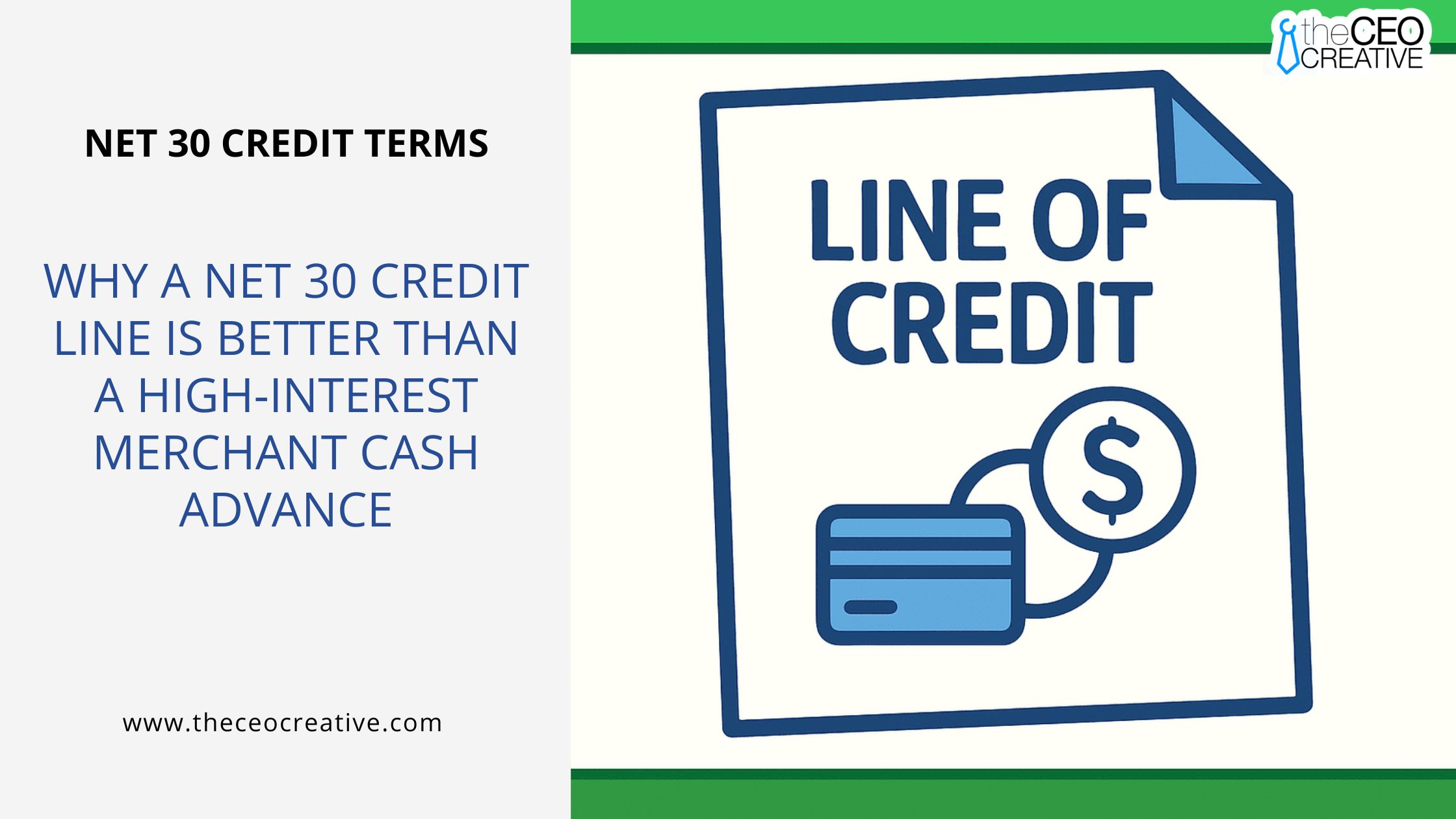
Running a business is like navigating a ship through stormy seas. You need the right tools to stay afloat and reach your destination. One crucial tool is how you handle your business financing. Have you heard of a Net 30 credit line? It might just be your lifesaver! Unlike high-interest merchant cash advances, a Net 30 credit line offers a friendlier way to manage cash flow and build business credit. Let’s dive into why it could be the better option for your business growth.
Pitfalls of High-Interest Merchant Cash Advances
If you’re in the process of considering business financing options, you might be weighing the benefits of merchant cash advances versus a Net 30 credit line. At first glance, merchant cash advances seem appealing – quick access to cash without the long approval process. But, as they say, not all that glitters is gold. Let’s dive into some potential pitfalls associated with these high-interest financial products.
The True Cost of Cash Advances
The concept of receiving a lump sum of cash in exchange for a percentage of your future sales might sound straightforward. However, it’s crucial to understand the true cost behind this deal. Merchant cash advances (MCAs) typically come with eye-watering interest rates. Unlike a traditional loan, MCAs use a factor rate instead of an annual percentage rate (APR), often making the real cost of borrowing unclear.
For example, an MCA might list a factor rate of 1.5 on a $10,000 advance, meaning you’ll be repaying $15,000. This might not sound shocking until you calculate that your effective rate could range between 60% to 100% APR, depending on how quickly you pay it off. If cash flow is tight, this can be financially crippling.
Impact on Short-Term Cash Flow
Now, let’s talk cash flow. MCAs deduct payments directly from your daily card sales or through automatic bank account withdrawals. This daily or weekly drain on your revenue means less cash available for day-to-day operations. Consider the impact during slow sales periods; your business could find itself in a cash crunch, struggling to manage operational expenses while the MCA demands its share.
Furthermore, this constant siphoning of income can impede your ability to seize other business opportunities, like stocking up on inventory at a discount or launching a marketing campaign. Constantly seeing a portion of your revenue vanish can feel like running in a hamster wheel—working hard but not moving forward.
Long-Term Financial Implications
The implications of high-interest merchant cash advances aren’t just short-term problems; they can have ripple effects on your business’s long-term financial health. Over-relying on costly cash advances can lead to a vicious cycle of borrowing just to cover past debts, thereby hindering growth and progress.
Moreover, frequent use of MCAs can negatively impact your creditworthiness. Since they don’t build business credit, future lenders might see them as a red flag, perceiving your business as high-risk, which can limit or make traditional financing opportunities more expensive.
Comparing Interest Rates and Fees
Understanding how much your financing actually costs could make all the difference for your business. A crucial distinction between Net 30 credit lines and merchant cash advances is how they handle interest rates and fees.
How Net 30 Terms Reduce Interest Payments
A Net 30 credit line is straightforward: you repay your supplier 30 days after the purchase. Sometimes suppliers may offer an incentive like a small discount for early payment, sweetening the deal even further. This mechanism allows you to manage timing better, keeping cash in your hands for longer to satisfy other business needs before settling the bill.
The beauty of Net 30 terms is that they often come with little to no interest. Even when fees are involved, they are typically much lower than the sky-high interest associated with MCAs. This means more of your hard-earned dollars stay in your pocket, allowing you to reinvest back into your business for growth. Plus, maintaining good credit terms with suppliers can boost your business credit, setting you up for more favorable financing deals in the future.
Hidden Fees in Merchant Cash Advances
While the upfront presentation of MCAs might seem straightforward, beware of hidden fees lurking beneath the surface. Apart from the high borrowing cost due to the factor rate, you might encounter additional fees such as origination fees, processing fees, and early payoff penalties. These can significantly increase your overall repayment amount.
Moreover, because MCAs tend to focus on daily or weekly repayments, any lapse in cash flow could mean additional penalties or fees for missed payments. This creates a situation where, even when you think you’re done with fees, more might pop up unexpectedly, resembling a game of financial whack-a-mole.
Conclusion – Choosing Wisely for the Future
While merchant cash advances might seem appealing for their quick access to cash, the associated costs often make them an unfavorable choice compared to a Net 30 credit line. By allowing businesses to maintain healthier cash flows, reduce unwanted debt strain, and keep more money available for reinvestment, Net 30 terms can offer a more sustainable, promising path to financial stability and growth.
At the end of the day, understanding your financing options is like choosing the right tool for the job. Take control of your business’s financial future—make informed decisions that build a stronger, more resilient foundation for growth. After all, financing should work in your favor and not against you!
Enhancing Business Credit and Financial Stability
Whether you’re a small business owner trying to keep your expenses in check or an entrepreneur looking to scale, maintaining financial stability is crucial. A Net 30 credit line can be a game-changer here. Unlike high-interest merchant cash advances, this type of credit line not only supports cash flow management but also plays a significant role in building your business credit.
Building Better Business Credit with Net 30
When it comes to establishing your business credit file, a Net 30 credit line is like your best friend. Here’s why:
– Payment History: With a Net 30 credit line, you have 30 days to repay creditors. Consistently paying on time helps in reporting positive payment history to credit bureaus. Over time, this builds your business credit file.
– Minimal Interest Burden: Since Net 30 terms usually come with little to no interest, you’re more motivated to use this mode of financing. Unlike high-interest merchant cash advances that can quickly balloon your debt, Net 30 offers a manageable way to leverage credit for your business needs.
– Supplier Relationships: Many suppliers offer Net 30 terms to build long-standing relationships with reliable businesses. This can lead to additional financial opportunities, like better pricing or increased credit limits, strengthening your credit profile even further.
Not only does this support your credit score, but it also signals to lenders and partners that you’re a responsible business owner. Over time, you’ll find it easier to negotiate favorable terms and get access to larger credit lines, paving the way for sustained growth.
Avoiding Debt Traps
A high-interest merchant cash advance may seem appealing in moments of urgent need, but it often becomes a high-risk option. Here’s how a Net 30 credit line helps you avoid the pitfalls of such debt traps:
– Predictable Payments: Net 30 agreements let businesses plan their cash flow with predictable, set payment schedules. This helps avoid the surprise factor that often comes with cash advances, where the repayment amounts could vary drastically based on sales or revenue fluctuations.
– Sustainable Financing: With a merchant cash advance, businesses repay lenders by a fixed percentage of credit card sales, which can lead to an unpredictable cycle of debt. As a result, you might find yourself sinking deeper into high-interest commitments. In contrast, a Net 30 credit line encourages disciplined financial practices, ensuring you leverage short-term credit without creating unsustainable debt.
– Lower Stress: High-interest debts can be incredibly stressful, especially when you find yourself trapped in repayment cycles that impede business growth. Opting for Net 30 credit lines takes away that stress, allowing you to focus on running and expanding your business instead of constantly worrying about debt repayments.
In short, a Net 30 credit line is not only a tool for credit building but also a strategy to maintain financial health. By choosing this pathway over high-interest merchant cash advances, you can foster a more resilient credit profile while avoiding overwhelming debt, keeping your business strong and ready for the next opportunity.
Conclusion
In the world of business financing, playing it smart is crucial. A Net 30 credit line provides a low-interest, manageable path to cash flow management and healthy business credit. Unlike high-interest merchant cash advances, it avoids spiraling debt and provides clear, predictable payment terms. By opting for a Net 30 credit line, you position your business for growth. Choose wisely today, and pave the way for a stable and prosperous tomorrow.
Building business credit? Net 30 Promotional Products Vendor — EIN only, no personal guarantee, $60 minimum order, credit lines up to $5,500, a decision in one business day, and every on-time payment reported monthly to Equifax Business, Creditsafe and FairFigure.
Frequently Asked Questions
What are the red flags in a merchant cash advance offer?
Red flags in a merchant cash advance offer include a factor rate quoted instead of a clear APR, daily or weekly automatic withdrawals from your business bank account or card sales, and a confession of judgment clause that lets the lender get a court judgment against you without a hearing. Other warning signs are stacking multiple advances against the same future revenue, an unclear holdback percentage, and repayment amounts that stay fixed even when your sales drop. A large origination fee taken off the top before you receive the funds is also common.
Should I take a business loan with high interest?
Whether you should take a high interest business loan depends on whether your cash flow can comfortably cover the repayments without straining day-to-day operations. Compare the total cost of borrowing, not just the headline rate, and check whether repayment is a fixed monthly amount or a daily/weekly debit that keeps taking the same cut even in a slow sales week. If the math doesn’t work, look at lower cost options first, a business line of credit, an SBA loan, or trade credit from suppliers, before agreeing to a high interest advance.
How does a merchant cash advance affect cash flow?
A merchant cash advance affects cash flow by taking a fixed percentage of your daily or weekly card sales, or a fixed daily/weekly withdrawal, regardless of how slow business gets, which can leave less working capital for payroll, inventory or rent in a down week. Because repayment doesn’t flex down when revenue does, some businesses end up needing a second advance to cover the gap, a cycle known as stacking. That’s different from a traditional loan or trade credit, where a fixed monthly payment or a set due date is easier to plan around.
What are the alternatives to a merchant cash advance?
Alternatives to a merchant cash advance include a business line of credit, an SBA or bank term loan, invoice factoring, a business credit card, and net-30 trade credit from suppliers who let you buy now and pay the invoice later. Each spreads the cost differently: a line of credit or term loan charges interest, invoice factoring sells your receivables at a discount, and supplier trade credit is often interest free if paid within the term. The CEO Creative extends net-30 trade credit lines up to $5,500 on print, apparel, office and promotional orders, assessed on the business EIN with no personal guarantee.