

Looking to open an account rather than read about one? The CEO Creative offers net 30 accounts on your EIN, with no personal guarantee, a decision within one business day, and monthly reporting to Equifax Business, Creditsafe and FairFigure.
Related: Net 30 Accounts With No Personal Guarantee — why a starter account should not put your personal assets behind it.
Introduction to Net 30 Invoicing
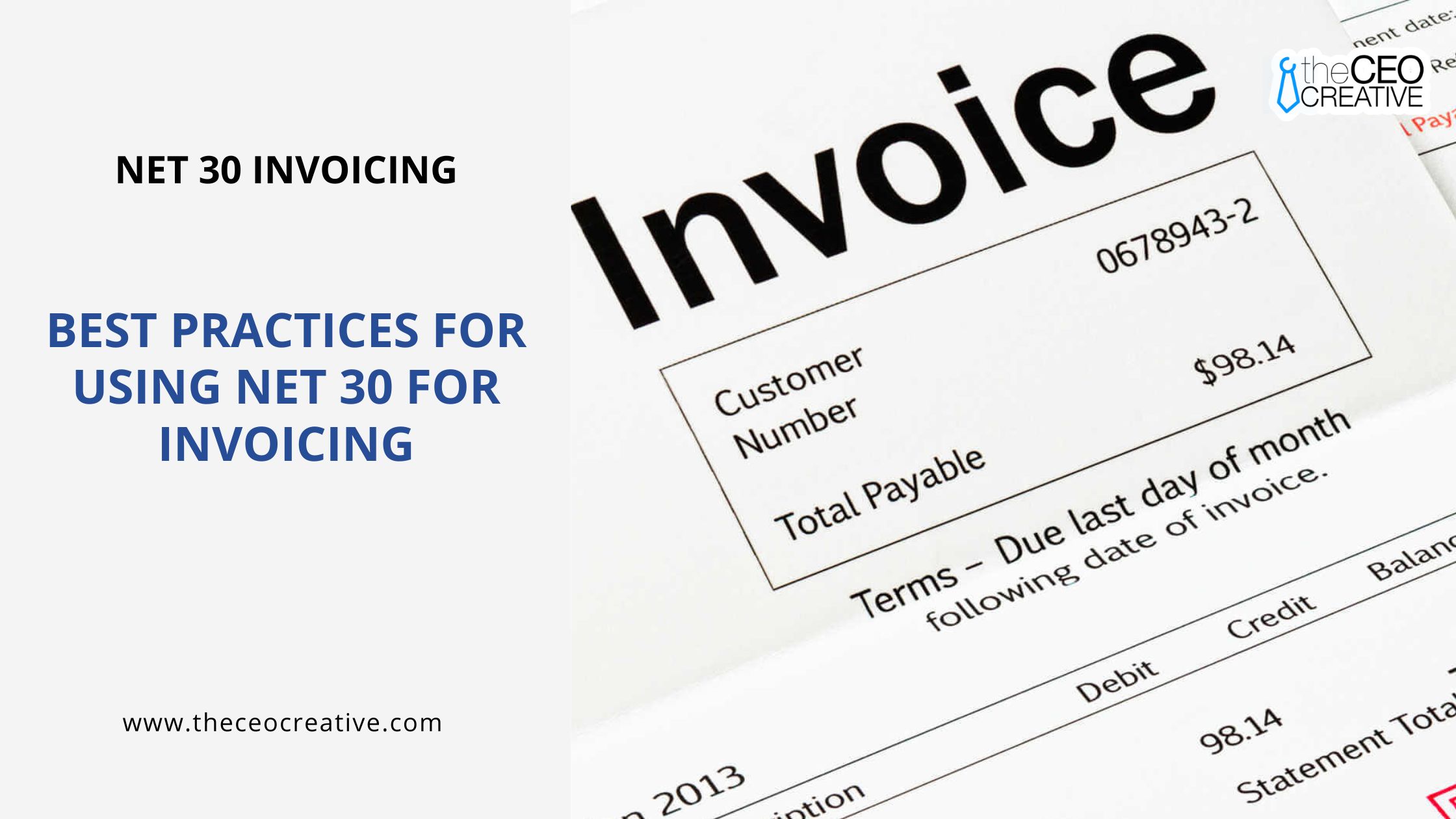
Net 30 invoicing is a common payment term used by businesses to balance flexible payment timing for customers with steady cash flow management. Net 30 means a client has 30 days from the invoice date to pay the full amount. However, simply stating “Net 30” on an invoice isn’t enough to ensure timely payments and avoid confusion. This guide offers actionable tips to make your Net 30 invoicing clear, professional, and efficient so you get paid on time.
How to Clearly State Net 30 on an Invoice?
When extending Net 30 payment terms, clarity is key to avoiding confusion and potential delays in payment. Here’s how to make sure your invoice leaves no room for misunderstanding:
Using Clear and Concise Language
Although “Net 30” is a common term, it’s important to make sure there’s no confusion, especially when working with new clients or those who might not know about typical billing practices. Instead of simply saying “Net 30,” try using clearer words that explain when payment is expected. For instance:
- “Payment is due in full within 30 days of the invoice date.”
- “This invoice is payable within 30 days from the date of issue.”
Using full sentences and avoiding short forms or technical language will help all clients, no matter their accounting knowledge, clearly understand your payment terms.
Specifying the Due Date
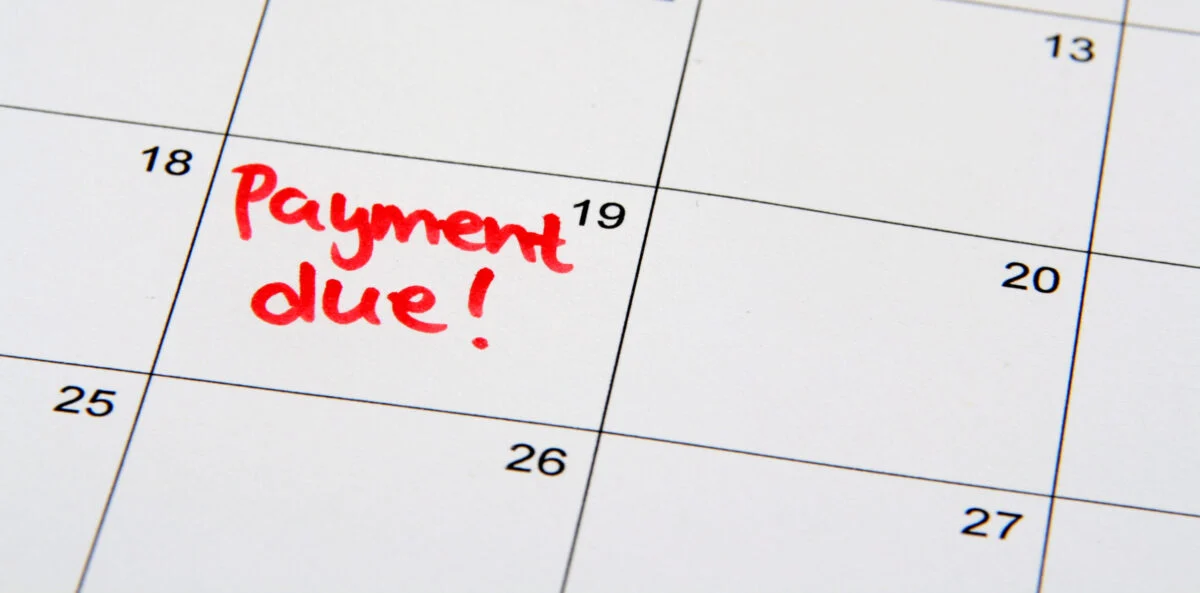
When you say “Net 30,” it gives a general idea of when payment is due, but it’s better to include the exact due date. This makes it clear when the payment should be made and helps clients remember to pay on time. To find the due date, just add 30 days to the date on the invoice and write it clearly on the invoice. For example:
- “Invoice Date: 2023-12-12”
- “Payment Due Date: 2024-01-11”
Offering both Net 30 terms and the exact due date shows openness and professionalism, which helps clients manage their payments better and lowers the chance of late payments.
What are the Benefits of Using a Premade Net 30 Invoice Template?
Efficiency and professionalism go hand in hand in invoicing. Using a premade template has several advantages:
- Consistency: Templates ensure all invoices follow the same format, including your logo, contact details, and clear line items, giving your business a professional image.
- Accuracy: Automated calculation fields reduce human errors like incorrect amounts or totals.
- Time-saving: Pre-filled common terms such as “Net 30” speed up invoice creation and help you focus on core business activities.
Many invoicing software offers customizable Net 30 templates with automated reminders and easy online payment options, streamlining your billing process.
How to Incentivize Clients to Pay Earlier than the Requested Date?
Getting paid early improves your cash flow and lowers the risk of late payments. Here are practical strategies:
Offering Early Payment Discounts
A common practice is a small discount if payment is made before the due date. For example:
Clearly articulate these discounts on the invoice to encourage prompt payment.
Building Strong Customer Relationships
Good communication fosters timely payments. Build rapport by:
- Sending personalized payment reminders before the due date.
- Thanking customers promptly after receiving payment.
- Being available to answer billing questions and resolve concerns quickly.
Mutual respect and clarity motivate clients to adhere to payment terms.
Establishing Clear Payment Terms for Net 30 Invoices
Communicating Payment Expectations Upfront
Before starting work, clearly share your Net 30 payment terms through proposals, contracts, or your website.
- State: “Payments must be made within 30 days of the invoice date.”
- List accepted payment methods—checks, credit cards, bank transfers.
- Provide billing contact details for any queries.
Setting Consequences for Late Payments
To protect your business:
- Add late fees or interest charges for overdue invoices.
- Consider suspending services until payment is received.
- Clearly display these policies on invoices and contracts.
Clear late-payment rules discourage delays and ensure financial security.
Maintaining Good Communication with Suppliers Regarding Net 30 Invoices
Just as you expect prompt payment, cultivating strong supplier relationships with clear communication benefits your business.
- Keep suppliers updated about payment status.
- Inform them proactively if payment will be delayed and discuss solutions.
- Listen to their feedback on invoice processes.
- Show appreciation for timely deliveries.
Strong supplier partnerships help maintain supply chain reliability.
Utilizing Invoicing Software for Net 30
Modern invoicing software automates Net 30 billing workflows:
- Sends professional invoices quickly
- Automates payment reminders before and after due dates
- Tracks invoice status in one centralized dashboard
- Enables clients to pay online, speeding up collections
Automation reduces manual errors, saves time, and improves cash flow management.
Monitoring Credit Scores When Using Net 30 for Invoicing
Offering Net 30 terms can be good for both you and your business cash flow, but it’s important to know that how well you pay your bills affects your business credit score. Keeping an eye on your credit score and making sure it stays good is very important for your business to grow and stay strong in the long run.
Understanding the Impact of Payment History on Credit
Your payment history is a critical component of creditworthiness. Timely payments:
- Build a strong credit record
- Improve chances of better loans and vendor terms
- Attract investor confidence
Missing or late payments can damage credit scores, impacting future financing options.
Maintaining a Good Credit Score for Business Growth
A strong credit score is very important for any business.
To keep your credit healthy:
- Always pay invoices by their due date
- Regularly review your business credit reports for accuracy
- Use credit responsibly without maxing out limits
Strong credit opens doors to financing and supplier benefits.
Managing Disputes Related to Net 30 Invoices
Even with good intentions and clear communication, disagreements about Net 30 invoices can sometimes happen. It’s important to handle these situations well to keep good customer relationships and protect your business’s reputation.
Addressing Customer Concerns and Complaints
- Listen carefully and empathize with client issues.
- Review all relevant documents, including the contract and previous invoices.
- Correct errors promptly or issue refunds if warranted.
Resolving Payment Issues Professionally
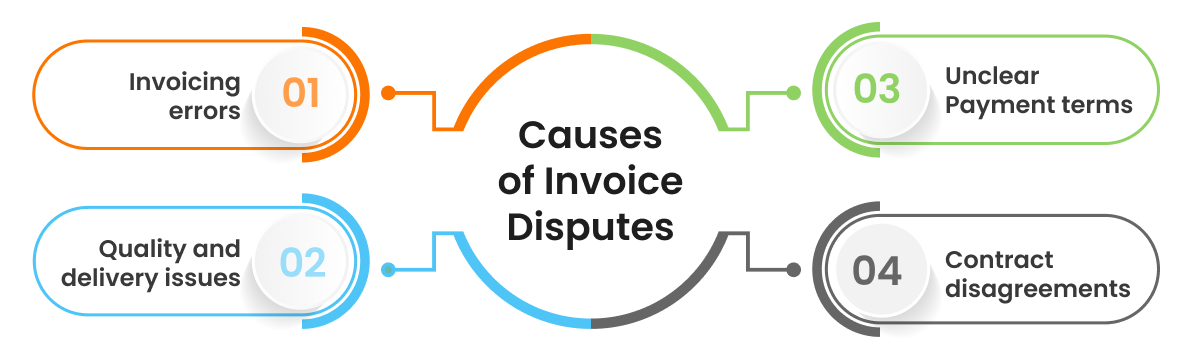
- Send polite reminders immediately after a missed due date.
- Offer payment plans if clients face cash flow challenges.
- Use mediators or legal counsel as necessary while maintaining respectful communications.
Effective dispute management preserves client relationships and reduces financial risk.
How to Create a Net 30 Account for Your Business
New businesses can establish Net 30 accounts to build credit and improve cash flow:
- Register your business with proper legal structures and tax IDs.
- Open business bank accounts
- Apply for Net 30 accounts with vendors who report payments to credit bureaus.
- Maintain timely payments to build credibility.
- Consider obtaining a D-U-N-S number to facilitate credit recognition.n
Gradually expanding trade credit options helps new businesses scale responsibly.
Conclusion
Understanding and leveraging Net 30 invoicing can significantly improve your business’s financial health. By clearly communicating payment terms, using professional templates and invoicing software, incentivizing early payments, and managing disputes effectively, you ensure timely cash flow and strong customer relationships. Monitoring your credit score and using Net 30 accounts wisely can further strengthen your business growth prospects.
Implement these Net 30 payment terms best practices to optimize your invoicing process, reduce late payments, and support sustainable success. Happy invoicing!
Frequently Asked Questions (FAQs)
Is Net 30 a good payment term?
Yes. It balances customer flexibility with predictable cash flow, making it suitable for many B2B engagements.
How to implement Net 30 terms responsibly in your business?
Clearly state terms, use detailed invoices, incentivize early payments, monitor due dates, and manage late payments professionally.
What should be included on invoices for Net 30 payment terms?
Invoice date, exact due date, clear wording of payment terms, payment methods, early payment discounts, and late payment consequences.
How to write Net 30 on an invoice?
Use clear phrasing like “Payment due within 30 days of invoice date” along with the explicit payment due date.
What’s the best way to manage Net 30 invoices?
Automate invoicing and reminders, track payments closely, communicate openly with clients, and establish clear late payment policies.
What is a Net 30 account for business credit?
A credit arrangement allowing payment within 30 days, helping to build business credit through timely payments.
Net 30 Invoicing Software Options, Compared
Most invoicing platforms handle net 30 as a standard preset, so the real choice is which extra features matter for the business. QuickBooks is the default pick for businesses that want invoicing and bookkeeping in one place, since net 30 invoices flow straight into the same reports used for taxes and reconciliation. FreshBooks leans toward service businesses and freelancers, with a simpler interface and strong time-tracking-to-invoice workflow. Wave is free and covers the basics well — invoice creation, due-date tracking, and payment reminders — making it a reasonable starting point for a business not ready to pay for a platform yet.
Bill.com and similar AR-focused tools are built for higher invoice volume, with automated reminder sequences, online payment collection, and reporting on which customers pay late versus on time. None of these tools change what net 30 means; they just automate sending the invoice, tracking the due date, and following up as it approaches or passes. The right choice usually comes down to volume: a handful of net 30 invoices a month rarely justifies a paid AR platform, while dozens or hundreds a month make the automation worth the cost quickly.
Net 30 You Extend vs. Net 30 You Receive: Two Different Things
This page is mostly about net 30 as something a business offers its own customers — giving them 30 days to pay an invoice, which is a receivables and cash-flow decision. That’s a different arrangement from a net 30 vendor account, where a business is on the receiving end of the credit instead, ordering supplies or products from a vendor and getting 30 days to pay that vendor’s invoice.
The two aren’t mutually exclusive, and many small businesses use both at once: extending net 30 to their own customers while also opening net 30 vendor accounts to buy what they need without paying cash upfront. The distinction matters because the risks run in opposite directions — extending net 30 means waiting on someone else’s payment, while receiving net 30 means someone is waiting on yours. Vendor accounts like The CEO Creative’s are built specifically as the receiving side: EIN-based approval, no personal guarantee, and monthly reporting to Equifax Business, Creditsafe and FairFigure when payments are made on time.
Frequently Asked Questions
What does net 30 mean on an invoice?
Net 30 means the full invoice balance is due 30 days after the invoice date, with no discount for paying on the standard schedule — it's a payment term, not a discount term. Some invoices pair it with an early-payment incentive, written as something like "1/10 net 30," meaning a 1% discount applies if the customer pays within 10 days instead of waiting the full 30.
What is the best invoicing software for net 30 billing?
Widely used options include QuickBooks and FreshBooks for small businesses that want accounting built in, Wave for a free option, and Bill.com for teams that want automated reminders and online payment collection at higher volume. Most support net 30 as a preset payment term and calculate the due date automatically once the invoice date is entered.
How do accounts receivable teams manage net 30 and net 60 invoices at scale?
At volume, AR teams typically use invoicing or ERP software to track due dates automatically, send reminders before and after the deadline, and flag accounts that are consistently late for follow-up or a tighter term going forward. Aging reports, grouped into 30/60/90 days past due, are the standard tool for seeing which invoices need attention first.
Can net 30 invoicing help a business get funded or hire faster?
Not directly — net 30 terms affect when cash arrives, not whether financing is available. Businesses that extend net 30 to customers sometimes use invoice factoring or a line of credit to bridge the gap between billing and payment, freeing up cash to cover payroll or hiring in the meantime. That's a separate financing decision layered on top of the invoice terms themselves.