


Ready to open one? The CEO Creative offers net 30 account on your EIN, with no personal guarantee, a decision within one business day, and monthly reporting to Equifax Business, Creditsafe and FairFigure.
Related: EIN Only Net 30 Vendors — what is actually checked when approval rests on your EIN rather than your personal credit.
Key Takeaways
|
Are you searching for a comprehensive list of Net 30 companies that can help you establish and build your business credit file? Securing reliable Net 30 accounts is one of the fastest and most effective ways for startups and established firms to build a positive trade history.
This curated net 30 vendors list features the most credible net30 businesses known for reporting payments to major credit bureaus. This essential business vendors list is the starting point for any company aiming for financial stability and higher funding limits.
Top Net 30 Companies Reporting to Credit Bureaus in 2025:
- The CEO Creative
- Uline
- Quill
- Amazon Business
- Dell Financial Services
- MSC Industrial
- Fastenal
- Vistaprint
- 4imprint
They extend 30-day trade credit, report to reputable bureaus like D-U-N-S, Experian, or Equifax, and assess applications on the EINs for new firms.
“Net 30” means the buyer agrees to pay the full invoice amount within 30 days. It acts like a short-term, interest-free loan that helps improve cash flow and establishes trade lines that credit bureaus can track and score.
Likewise, Net 45, Net 60, and Net 90 act like short-term loans for 45, 60, and 90 days, respectively.
Why Net 30 Accounts Matter for Start-ups
Using trade credit from a reliable net 30 accounts list is crucial for early-stage growth:
- Stronger Cash Flow: You hold onto working capital an extra month, freeing up immediate funds for other operational needs.
- Building Business Credit: On-time payments feed Dun & Bradstreet’s PAYDEX®, Experian Business, and Equifax commercial files, adding to your business payment history.
- Higher Funding Limits Later: Three to five well-maintained net 30 tradelines are enough to generate an 80 PAYDEX in most cases.
- Stronger Supplier Relationships: Positive payment history with net30 businesses may unlock better deals, higher credit limits, and future discounts.
Best Net 30 Vendors for New Businesses
Office Supply Vendors
Office supply companies are a great place to start for businesses looking to build their credit history with vendors. These suppliers provide many important items needed for everyday work, such as paper, pens, furniture, and electronics. Below are some of the best Net 30 vendors you should think about for your business.
1. The CEO Creative

The CEO Creative is known for supporting businesses by providing high-quality office supplies, custom branding solutions, and flexible financing. By opening a net 30 account with The CEO Creative, businesses can build a partnership that not only provides their office needs but also helps in shaping a unique brand identity.
Moreover, The CEO Creative doesn’t ask for personal credit card checks. You can open a Net 30 account with The CEO Creative.

2. Uline
Uline is a market leader providing a massive range of office, shipping, and packaging supplies. Known for its extensive catalog, it’s ideal for businesses that rely heavily on shipping and industrial materials.
3. Quill
Quill helps small businesses by providing office, cleaning, and breakroom supplies. It also has an easy-to-use online shopping platform with good prices. While the approval process typically includes a credit check, Quill is known for being flexible and supportive of new businesses, even those with low credit scores.
4. Staples
Staples needs no introduction, as it is a well-known brand in the office supplies industry across the US. It allows businesses to buy a wide variety of products, from basic office items to the newest tech gadgets. Moreover, businesses that open a credit account with Staples can also enjoy rewards and special discounts, making this Net 30 option even more beneficial.
5. WB Mason
WB Mason is all about providing more than just office supplies—they also offer excellent customer service. With their famous slogan, “Who But WB Mason?”, it sells a wide range of products, from office furniture to cleaning supplies, and often delivers them right to your doorstep.
6. Office Depot/Office Max
Office Depot (now merged with Office Max) is a well-known company that helps businesses by providing easy and quick access to office supplies, furniture, and technology.
7. Amazon Business
Amazon Business offers the familiar convenience of Amazon’s massive product selection, along with special features for businesses, including multi-user accounts and detailed spending reports. Pay By Invoice gives approved customers the popular 30-day terms.
Technology Vendors
Technology Net 30 accounts allow you to buy the latest and greatest tech without disrupting your business budget. While many tech companies offer credit, the following are rated among the top list of Net 30 companies for tech:
1. Dell
Dell offers products that meet the needs of all kinds of businesses, from small companies to large corporations.
2. HP
HP, or Hewlett-Packard, is another top company in the tech world, providing products like computers, printers, and accessories. The HP Business Account offers a variety of products that allow you to choose exactly what your business needs, whether it’s a powerful computer or dependable printers.
3. Lenovo
Lenovo offers a Net 30 account through its partnership with Behalf. Lenovo also provides flexible financing options, helping businesses build their credit while giving them access to the newest devices.
4. Microsoft
Although it dominates the software industry, Microsoft also offers reliable tech hardware. One benefit of opening a Net 30 account via The Microsoft Business Payment Plan is that Microsoft regularly updates its technology, so businesses always have the latest and best tools.
5. Apple
Apple’s Business Credit Account allows businesses to access high-quality tech products and services with strong longevity.
Industrial Supply Vendors

For companies in manufacturing, construction, or other heavy industries, a dependable supply chain is essential. The following industrial supply companies belong on any reliable net 30 vendors list:
1. MSC Industrial Supply
MSC Industrial Supply is a place where you can find all the tools and equipment you need for industrial and metalworking work. It sells everything from hand tools to safety gear with the assurance of having items almost always in stock with quick delivery times.
2. Fastenal
Fastenal is well-known for offering industrial and construction supplies, including fasteners. It’s known for its dependable service, helping you grow your trade credit opportunities.
3. Zoro
Zoro is a key player in the industrial supply industry and focuses on providing products for industrial use, maintenance, repair, and business operations at highly competitive prices. Its user-friendly online platform makes it simple to find and buy what you need.
Marketing and Print Vendors
Using marketing and printing Net 30 accounts is a strategic way to build business credit while gaining access to tools that promote and grow your company.
1. Vistaprint
Vistaprint is a popular choice for small businesses looking to create personalized marketing materials at an affordable price. It offers everything from business cards to flyers and banners, covering a wide variety of marketing needs, including easy-to-use online design tools.
2. Moo
If your business relies on creativity, Moo is a company you might want to check out. Moo is well-known for its high-quality business cards and unique printed products, making it a great choice for businesses that want to stand out.
3. 4imprint
4imprint is one of the top companies known for its wide variety of products and great customer service. You should choose 4imprint if you need custom branding for clothes, gadgets, and drinkware.
4. GotPrint
GotPrint is a great choice for businesses that want affordable and dependable printing services. Known for its high-quality business cards, brochures, and postcards, and top-notch customer service, this company is a reliable option for anyone looking to build or improve their business credit.
Choosing the Right Business Vendors List
Before signing up, it’s vital to assess a vendor beyond the promise of Net 30 terms. When reviewing a business vendor’s list, consider:
- Reporting Bureaus: Ensure the vendor reports to the bureau you are trying to build credit with (e.g., D&B, Experian, Equifax). Not all net30 businesses report to all three.
- Minimum Order Requirement: Many vendors impose a minimum purchase to activate reporting. Make sure you can meet this requirement without overspending.
- Approval Requirements: Do they require a D-U-N-S number, EIN, or a personal guarantee? Start with vendors like The CEO Creative, which assess applications on the EIN.
- Product Relevance: Only purchase what your business genuinely needs. Never buy inventory just to get a credit line.
Tips to Manage Net 30 Accounts Like a Pro
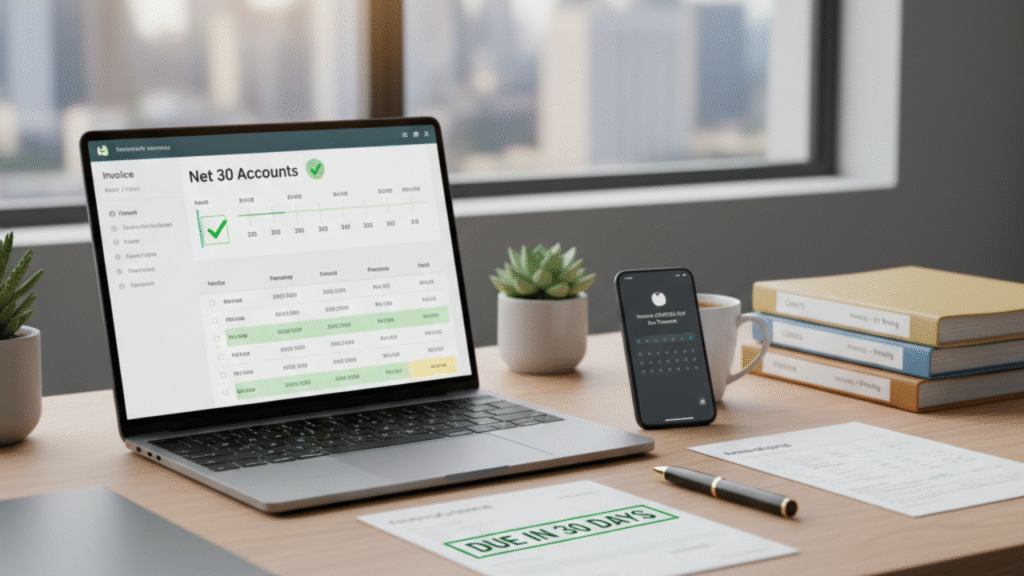
Managing your new tradelines is the key to an 80 PAYDEX score.
- Pay Early: Paying 10-15 days before the due date signals exceptional financial management to both the vendor and the credit bureau. Vendors often auto-increase credit lines when they see consistent early remittance.
- Set Automatic Reminders: Log all invoice due dates in a calendar and set reminders 5 days ahead of time.
- Review Reports: Check your commercial credit reports quarterly and immediately dispute any errors to ensure your score is accurate.
So, What Net 30 Vendor are You Going With?
Regardless of your business niche, you cannot go wrong with the vendors on this list of net 30 companies. If you’re a startup looking for the easiest approval to kickstart your history with no personal credit check required, choosing The CEO Creative for your creative needs and office supplies is the smartest first step toward achieving an 80 PAYDEX score.
Frequently Asked Questions
Q1. What are net 30 vendors?
Vendors that let you buy goods now and pay the full invoice in 30 days. Most of these companies report your payment history to at least one business credit bureau.
Q2. How do I get approved for a net 30 account?
Ensure you have an EIN, a D-U-N-S number, consistent business addresses, and no unpaid tax liens. Start with low-risk, easy-approval suppliers like Quill, Uline, or The CEO Creative.
Q3. Which Net 30 companies report to Dun & Bradstreet?
Uline, Quill, Grainger, MSC, and 4imprint.
Q4. How many net 30 accounts do I need for an 80 PAYDEX?
Generally, three well-maintained tradelines with consistent, on-time (or early) payments can generate a score, but five give your credit file greater stability.
Q5. Is Amazon a net 30 vendor?
Yes, the Pay By Invoice program gives approved Amazon Business customers 30-day terms, qualifying them for the net 30 vendors list.
Before you choose a vendor: we analysed 32,861 of our own orders and found that 74% of businesses place a single order and never return, and only 7.3% are still active after 12 months — the point at which a credit file starts to matter. Worth reading before you open any account.
Net 30 vs. Net 60 Vendors: What’s the Difference?
Every vendor on this page offers net 30 terms: you receive the order and have 30 calendar days to pay the invoice in full. Net 60 vendors work the same way but give you a 60-day window instead of 30 — twice the float, but usually not the first tier a new business gets offered. Most suppliers that extend net 60 want to see an existing payment history first, either with them directly (after a run of on-time net 30 invoices) or on your business credit file more broadly.
That’s why a ‘net 30 vendors list’ and a ‘net 60 vendors list’ aren’t really interchangeable for a business just getting started: net 30 accounts, including the ones on this page, are the entry point precisely because approval is based on your EIN rather than a long track record. Once you’ve built three to five well-managed net 30 tradelines, some of the same vendors — and others that specialize in longer terms — may extend net 60 or net 90 on request.
If your business specifically needs the longer runway now rather than as a later step, it’s worth comparing net 15, net 30, net 45 and net 60 side by side rather than assuming every ‘net’ vendor list means the same term length.
How to Read a Net 30 Vendor Comparison
Every vendor on a list like this one differs on four things that matter more than the fact that they all say ‘net 30’: which bureau they report to, what the minimum order is to trigger reporting, whether they require a D-U-N-S number or credit check on top of your EIN, and how quickly a missed payment turns into a suspended account. Skipping any one of these can mean an account that looks approved but never actually builds a tradeline.
Reporting bureau matters because a payment history only helps your business credit file if it reaches a bureau lenders actually check. Minimum order matters because some vendors won’t report an account until a purchase clears a dollar threshold — an account you never actually use for a large-enough order sits idle on your file. Approval requirements matter because a vendor that runs a personal credit check defeats the purpose of building credit under your EIN alone, and payment-grace terms matter because a single missed invoice with a strict vendor can do more damage to a thin file than several late payments would to an established one.
Reading a vendor list with those four columns in mind — rather than just the net 30 headline — is what separates an account that builds real credit from one that just extends short-term trade credit without moving your score.
Frequently Asked Questions
Are there net 60 vendors on this list too, or is it net 30 only?
This list covers net 30 vendors specifically — 30-day trade credit accounts, which are the easiest tier for a new business with a thin credit file to get approved for. Net 60 and net 90 terms exist too and are usually offered to businesses with an established payment history rather than to first-time applicants; see our net 15 vs. net 30 vs. net 45 vs. net 60 comparison for how those longer terms differ and who typically qualifies.
Is a 'list of net 30 companies' the same as a 'net 30 vendors list'?
Yes, they describe the same thing: a roster of B2B suppliers that extend 30-day payment terms and report that payment history to a business credit bureau. The phrasing varies by searcher, but the underlying list — office supply, technology, industrial and marketing/print vendors that offer net 30 terms — is identical.
Do all the net 30 companies on this list report to the same credit bureaus?
No. Reporting bureau varies by vendor — some report to Dun & Bradstreet, some to Experian Business, others to Equifax Business, Creditsafe or FairFigure, and a few report to more than one. Before applying, confirm which bureau a specific vendor reports to and make sure it's one you're actually trying to build history with, since not every net 30 company reports everywhere.
How often does a net 30 vendors list like this get outdated?
Vendor terms, minimum orders and reporting bureaus change often enough that a list older than 12 months should be re-verified before you apply — companies get acquired, tighten approval criteria, or stop reporting to a given bureau without much notice. This list is reviewed and updated for 2026; always confirm current terms directly with the vendor before ordering.